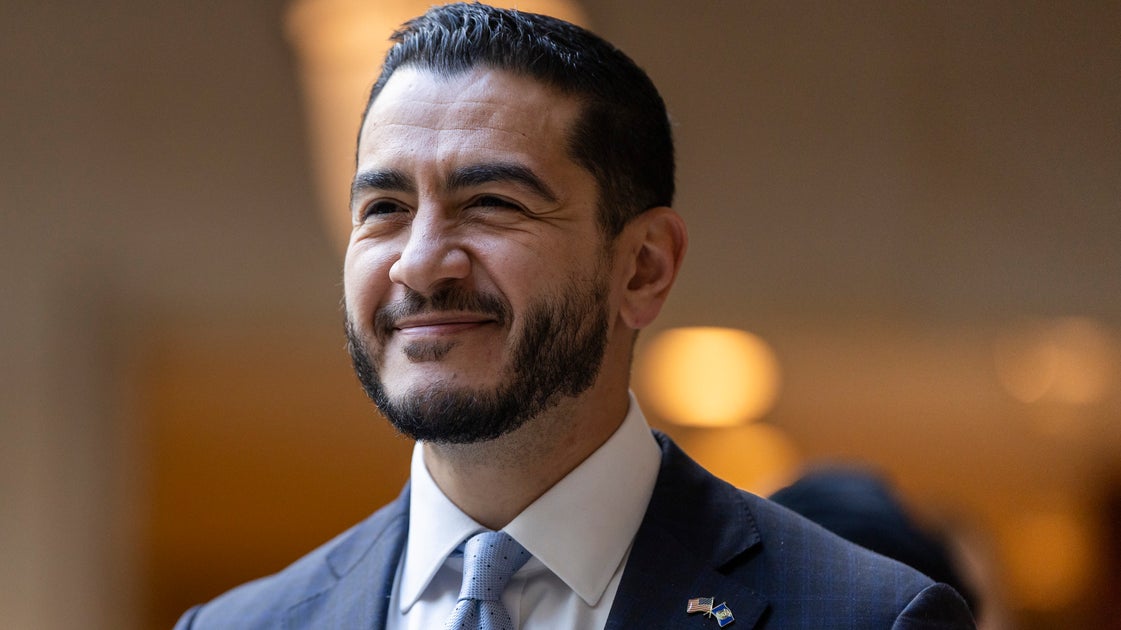
Sen.-elect Abdul El-Sayed (D-Mich.) has proposed that President Donald Trump enact a "Medicare for All" style healthcare system, suggesting the program be branded as "TrumpCare." The proposal, shared through social media and interviews following the recent midterm elections, includes the idea of providing every person in the United States with a gold-colored insurance card. El-Sayed stated that his primary concern is ensuring healthcare coverage for citizens rather than the name attached to the legislation.
This effort represents a broader debate among Democrats, who will take control of Congress in January, regarding whether to seek deals with the president or focus on passing standalone legislation that reflects their campaign platforms. While President Trump recently praised El-Sayed as a "smart guy" in an interview with the New York Post and shared one of El-Sayed's posts on Truth Social, the White House has not signaled support for the plan.
A White House official criticized the "Medicare for All" concept in an email, citing a Council of Economic Advisers analysis. The official stated the program would increase budget deficits by $47 trillion, fund over one million gender-affirming surgeries, and result in higher taxes. This follows a period where the administration's healthcare policy focused on reducing Medicaid funding and allowing subsidies for the Affordable Care Act to expire.
Democratic leaders Sen. Chuck Schumer (D-N.Y.) and Rep. Hakeem Jeffries (D-N.Y.) have vowed to enact an "affordability agenda." Their stated goals include reversing the president's tariffs, restoring Medicaid funding, reviving insurance subsidies, and increasing the federal minimum wage. Strategy discussions within the party involve whether to send several smaller bills to the White House to force the president to either sign them into law or exercise his veto power.
The outcome of these negotiations could affect healthcare access and costs. If a plan like "Medicare for All" were enacted, it would shift the country to a single-payer system, though the specific impacts on individual paychecks through tax changes or premium eliminations were not detailed beyond the White House's deficit projections. If Democratic leaders focus on their "affordability agenda," changes would relate to Medicaid eligibility and minimum wage levels.
The scale of the fiscal impact is noted as a $47 trillion increase to the federal deficit, according to the White House. This debate occurs against a historical backdrop where divided government has occasionally produced legislation, such as the 2007 minimum wage increase signed by President George W. Bush. However, past attempts at bipartisan deals with the current president, including a 2018 immigration proposal and a 2019 infrastructure plan, ended without becoming law after the White House withdrew support.
What happens next depends on the new Congress taking office in January. Democratic leaders must decide on the specific text and volume of bills they will advance. President Trump has recently suggested he may be open to bipartisan cooperation on immigration, but he has also threatened to use his veto power liberally. No specific dates for votes or bill introductions have been finalized.