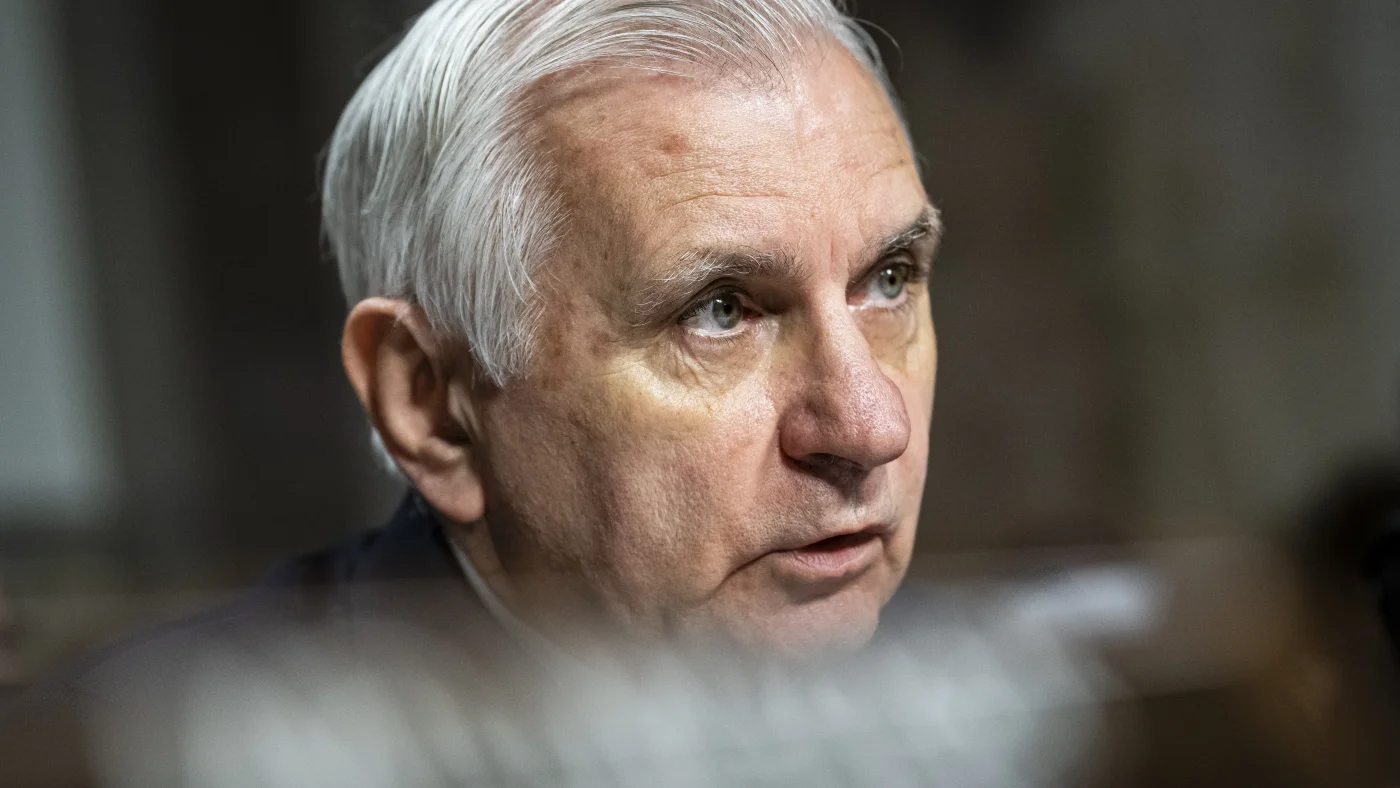
Sen. Jack Reed (D-RI) questioned the Federal Aviation Administration’s (FAA) oversight of contractors and criticized a $50 billion funding request from the Trump administration on Tuesday, November 17. The comments followed a nationwide ground stop that occurred on Friday, November 13, which the FAA attributed to an equipment issue during a telecommunications network upgrade.
The four-hour service disruption on Friday took place while a federal contractor was replacing copper wiring with fiber optic cables at an FAA facility in Arkansas. While federal officials stated there is no evidence of a cyberattack, the exact cause of the failure remains under investigation. The event has prompted renewed debate in Congress regarding the funding and modernization of the nation’s aging aviation infrastructure.
Transportation Secretary Sean Duffy initially requested $30 billion in additional funding for the agency before increasing the request to $50 billion. Sen. Reed, a member of the Senate Appropriations Committee, argued that the administration has not presented a detailed plan for the funds. He noted that Congress previously provided $14.5 billion for FAA modernization, of which approximately $9 billion remains unspent.
Sen. Reed stated that the FAA must demonstrate it is capable of supervising contractors following the creation of the Department of Government Efficiency (DOGE). He also expressed agreement with Sen. Ted Cruz (R-TX), who questioned whether the proposed $50 billion would be directed toward airport improvements instead of core safety systems. Sen. Reed stated that his priority is returning the aviation system to full operational speed.
The concrete day-to-day impact for travelers involves the reliability of the national airspace. A four-hour ground stop, like the one occurring on November 13, results in thousands of delayed or canceled flights, affecting passenger schedules and airline operations across every state. If the FAA and Congress do not reach an agreement on how to manage these upgrades, passengers may continue to face similar systemic disruptions during the transition from copper to fiber optic technology.
The debate sets a precedent for how much oversight the executive branch must provide to Congress before receiving large-scale infrastructure appropriations. It also highlights a growing bipartisan concern regarding whether funds are being prioritized for visible airport upgrades or the technical "backbone" of the air traffic control system. The next steps involve ongoing investigations into the Arkansas facility failure and future hearings by the Senate Appropriations Committee to evaluate the $50 billion request.