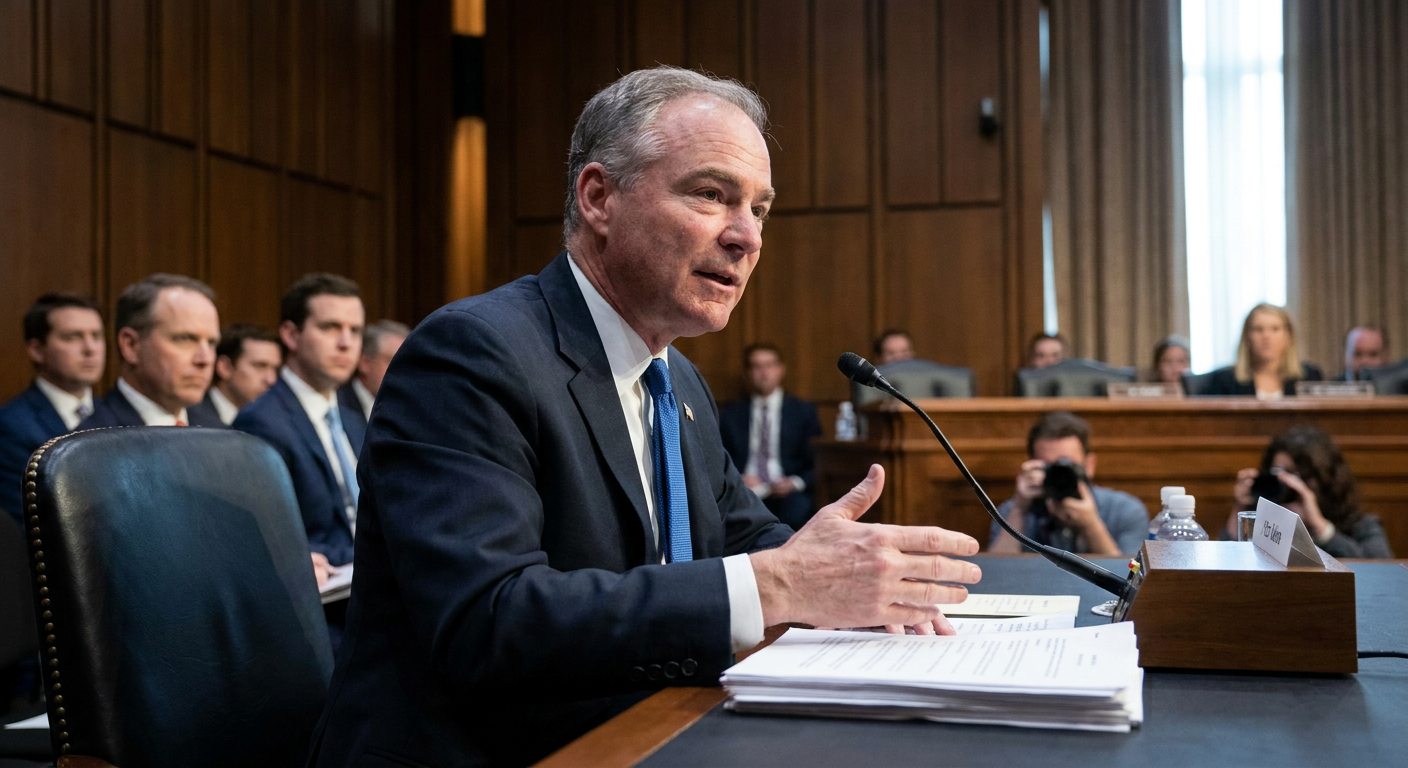
Sen. Tim Kaine (D-VA) announced his continued opposition to President Trump's tariff policies in a radio interview, citing concerns over inflation and the delegation of constitutional power. Kaine stated that he has supported multiple pieces of legislation intended to either refund current tariffs or limit the executive branch's authority to impose new ones without congressional approval. The senator argued that current trade strategies have failed to meet stated goals regarding manufacturing jobs and the trade deficit.
The disagreement over trade policy comes as the Trump administration maintains that tariffs are necessary to counter unfair foreign trade practices. While the United Steelworkers union has expressed support for the measures, calling them long overdue, Kaine pointed to his claim that overall U.S. manufacturing jobs have declined during the current term. He also attributed a reported 6% increase in the cost of Thanksgiving meals and broader inflation to the impact of tariffs and international conflict.
Kaine outlined several legislative strategies to reclaim trade authority, which the Constitution grants to Congress. One proposal would allow a president to impose emergency tariffs for a 60-to-90-day window, after which they would expire unless affirmatively validated by a vote in Congress. Kaine noted that he worked alongside Sen. Rand Paul (R-KY) on a legal challenge against the administration's use of the International Emergency Economic Powers Act (IEEPA) to implement tariffs, adding that the Supreme Court ultimately struck down the use of that statute for tariffs.
The conflict between the two branches of government centers on whether trade decisions should remain with the president or return to Congress. If Kaine's proposed 60-to-90-day limit were to pass, every new tariff would require a public vote in the House and Senate to remain in effect. This would move the debate over costs and benefits from the White House into a public legislative forum.
Looking ahead, the legislative path depends on the composition of the Senate, where Democrats hold 56 seats. Kaine stated his belief that there is enough Republican support to pass tariff-limiting bills, though he acknowledged that reaching a two-thirds majority to override a potential presidential veto would be more difficult. The senator indicated that Democrats may also use budget reconciliation—a process requiring only a simple majority—to advance their agenda. No specific dates for votes on these bills were reported.