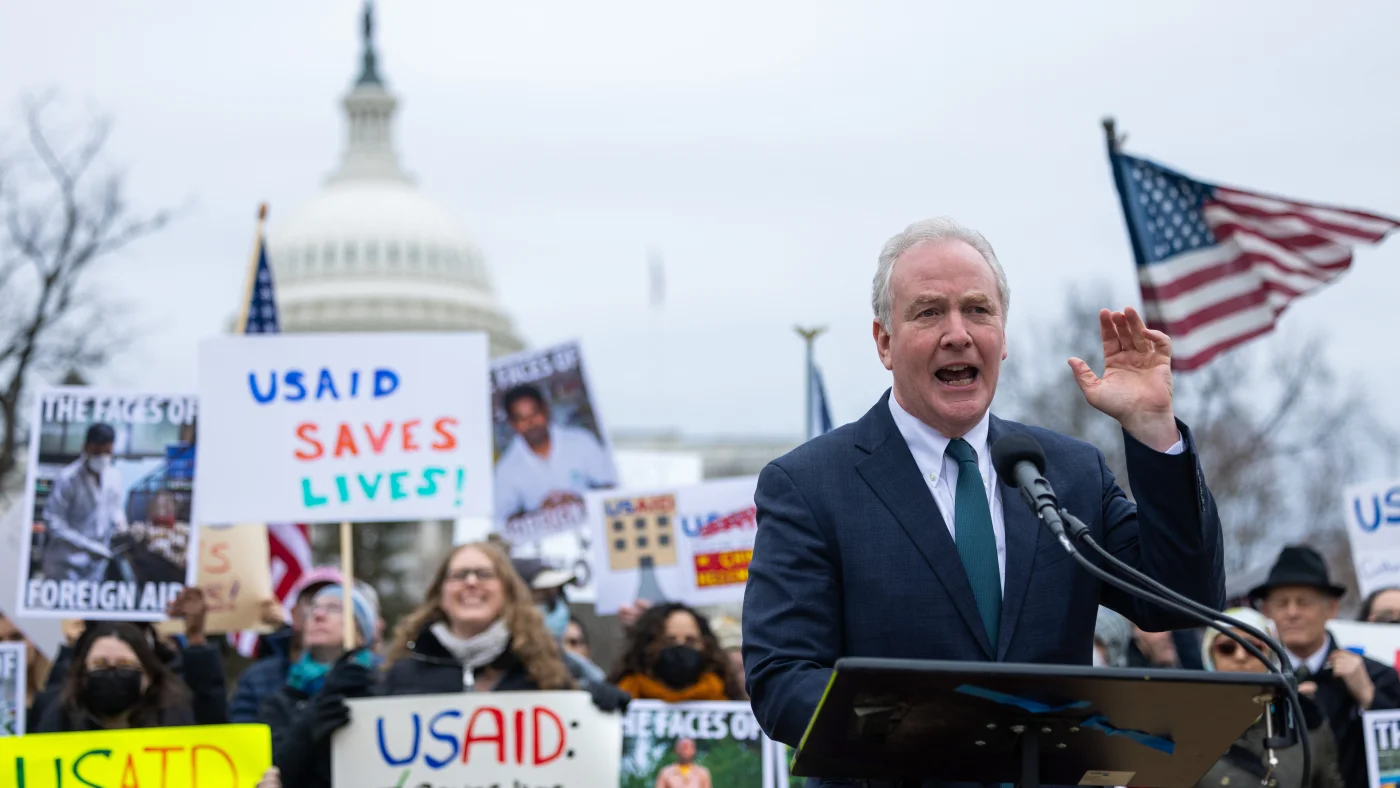
Sen. Chris Van Hollen (D-MD) announced on a Thursday that he will challenge Sen. Chuck Schumer (D-NY) for the position of Democratic leader. Van Hollen, who serves as the ranking member of the Senate Foreign Relations Subcommittee, stated his intent to use a potential Democratic majority to investigate and legislate against the Trump administration's changes to foreign aid and global health programs.
The announcement follows a period of changes to U.S. foreign assistance. Van Hollen has been a critic of the administration's actions, including the dissolution of the United States Agency for International Development (USAID) and the tying of health aid to mineral deals. In a hearing last year, Van Hollen told Secretary of State Marco Rubio that specific administrative actions resulted in deaths.
Van Hollen cited analyses reporting that more than 700,000 people died globally between January 2025 and January 2026 due to cuts to USAID. He stated that a Democratic majority would use public hearings to examine the consequences of cuts made by the administration and Elon Musk, specifically regarding Ebola containment in the Democratic Republic of Congo. Van Hollen alleged that the administration appeared to be using approximately $1.5 billion intended for global public health to fund the winding down of USAID.
To counter these actions, Van Hollen proposed converting "report language"—non-binding congressional guidance on how funds should be spent—into legally binding statutes. He argued that the Trump administration has ignored traditional guidance because it lacks the force of law. By codifying these requirements, Van Hollen stated that Congress could seek court intervention if the executive branch attempts to divert appropriated funds.
For federal workers, the concrete change would be a shift in how federal agencies like the State Department and the remnants of USAID operate. Rather than following the "report language" typically found in committee documents, agency officials would be bound by specific laws that dictate where money must go. Van Hollen noted that this would allow the judicial branch to adjudicate spending disputes, potentially leading to court-ordered releases of funds that the White House might otherwise attempt to hold back or repurpose.
The knock-on effects include a potential change in the power balance between the executive branch and Congress regarding the "power of the purse." By making spending guidance legally binding, Van Hollen seeks to set a precedent that limits presidential discretion over foreign policy spending. While he does not advocate for a simple return to the status quo, his plan envisions a reconstructed version of the role USAID performed. The next steps involve the internal Democratic leadership vote to determine if Van Hollen will lead the caucus, followed by legislative efforts to codify spending requirements if the party secures a majority.