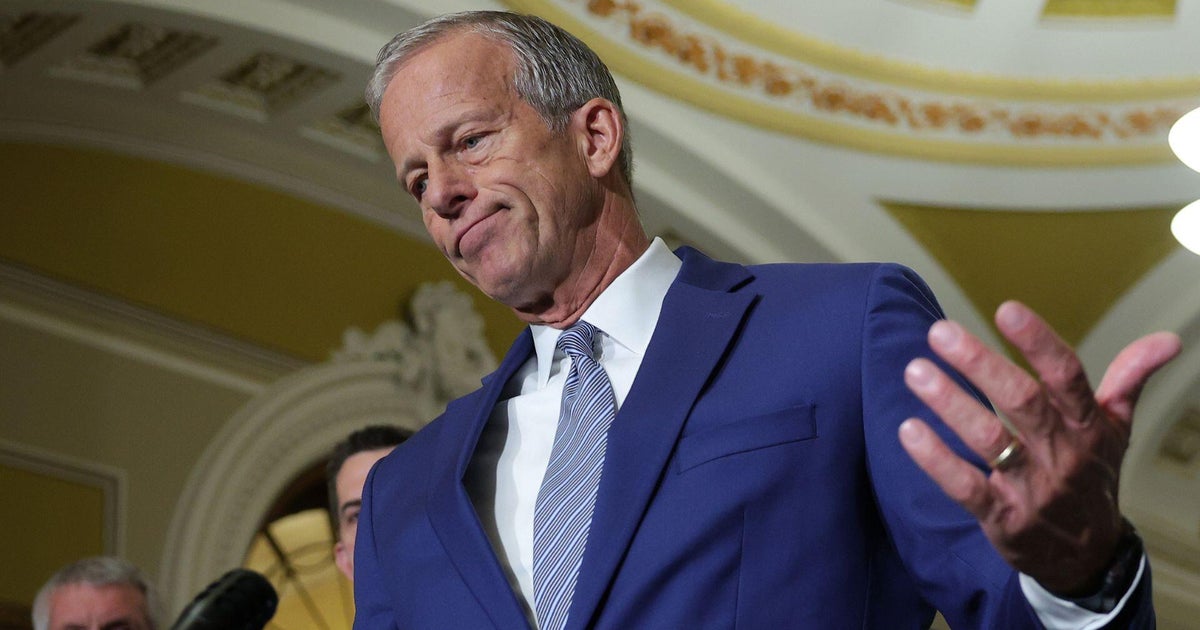
Senate Majority Leader John Thune (R-SD) stated on a Wednesday that it remains an "open question" whether Senate Republicans have enough votes to pass a $350 billion defense funding package before the end of the year. The Trump administration has requested the funds, but Senate leadership is currently weighing whether to use a party-line voting process or seek bipartisan support through standard procedures.
The deliberation follows recent calls from the administration for a funding infusion before Democrats assume control of the Senate in the new year. Some Republicans have expressed concern that Democrats might not support the defense funds due to opposition to the war with Iran. The Senate is currently scheduled to remain in session for three weeks before the winter holiday recess.
Republicans are considering the use of budget reconciliation, a legislative process that allows certain spending bills to pass with a simple majority of 50 votes rather than the 60-vote threshold typically required to bypass a filibuster. However, this process requires a lengthy period of votes on amendments that can last overnight. Sen. Ron Johnson (R-WI), chairman of the Senate Budget Committee, said the process would likely not begin this week but remains under consideration.
Deputy Defense Secretary Steve Feinberg met with Senate Republicans in a closed-door meeting on Wednesday to justify the $350 billion request. Thune noted that Feinberg needs to convince at least 50 Republicans of the necessity of the funds, citing arguments from defense-focused lawmakers that military resources are depleted. Thune also indicated that Republicans might still explore whether Democrats would support the funding through the normal appropriations process.
In addition to defense spending, the Trump administration is seeking $50 billion for the Federal Aviation Administration (FAA) to overhaul its systems following a nationwide ground stop caused by an outage. Transportation Secretary Sean Duffy met with Republicans on a Tuesday to advocate for the request, though some members expressed skepticism regarding the $50 billion figure. Republicans previously used reconciliation for tax and policy agendas last year and for Department of Homeland Security funding earlier this year.
For the American public, the outcome of these negotiations will determine the level of funding for national defense and aviation safety in the coming year. If Republicans choose the reconciliation process, the bill could pass without Democratic input, but it would require total unity within the GOP caucus. Conversely, if they pursue the standard appropriations process, the final spending levels would likely require compromise with Democratic lawmakers who will take over the chamber in January.
The next steps depend on whether Republican leadership can secure 50 votes within their own party to initiate the reconciliation process before or after the Thanksgiving holiday. If they cannot reach a consensus, they will have to negotiate with Democrats or delay the funding requests until the next session of Congress. The current Senate session has approximately three weeks remaining before the winter recess, creating a deadline for any immediate legislative action on these multi-billion dollar requests.