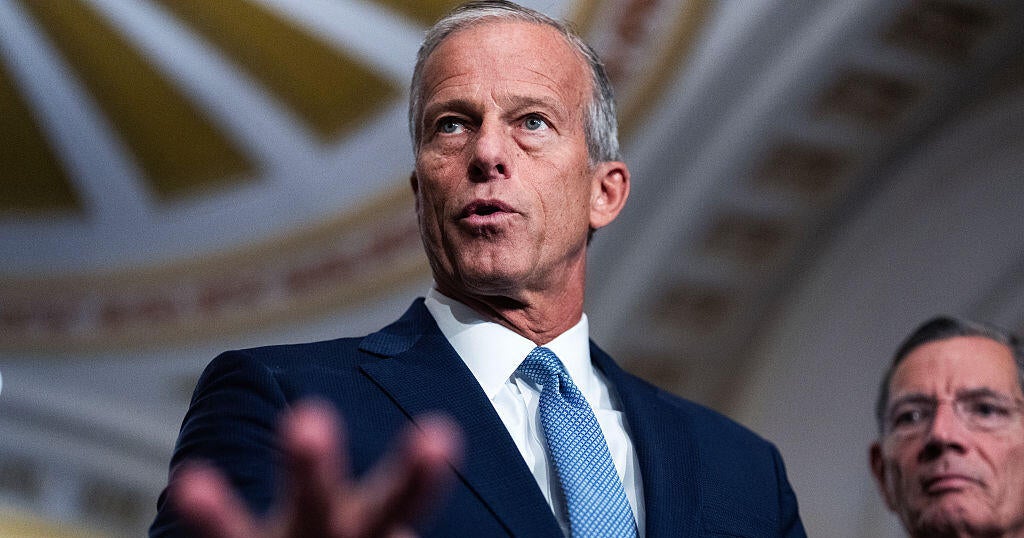
Washington — Senate Republicans reelected Sen. John Thune as their leader on Tuesday, maintaining the current leadership structure as the party prepares to transition into the minority. Thune was selected by acclamation for another two-year term during a closed-door meeting in the Old Senate Chamber. The vote followed midterm election results in which Republicans lost at least seven Senate seats to Democrats, including in Ohio, North Carolina, South Carolina, Kansas, and Texas.
The reelection followed Thune's first term as leader, which began after the 2024 elections. He previously served as the No. 2 Republican under Sen. Mitch McConnell. During the last two years, Thune led the conference as it passed legislation related to taxes, border security, and defense, and confirmed presidential nominees. However, his tenure also included two record-breaking government shutdowns. Frustrations among some members also grew over the SAVE America Act, an election bill that Thune said did not have sufficient support to move forward.
The leadership vote faced a brief delay after Sen. Ron Johnson and four colleagues—Sens. John Kennedy, Ted Budd, Rick Scott, and Mike Lee—petitioned for a conference meeting to discuss the party's strategy. Johnson argued that the "stunning defeat" at the polls necessitated a change in how the conference operates, though he noted his efforts were not directed specifically against Thune. The push to postpone the leadership election ultimately fell short.
The loss of at least seven seats means the Republican conference will have less leverage to influence legislation. With two additional races in Alaska and Mississippi still unresolved, the final size of the Republican minority remains undetermined. Thune stated the election results gave the party "an opportunity to reflect on what we as a party need to do better" and said the coming Congress needs to "double down on the work that we've been doing on affordability."
The outcome ensures that Thune will remain the negotiator for Senate Republicans through the end of the term. He will be responsible for coordinating the party's response to the administration’s agenda and managing the priorities of a conference that remains divided over how to respond to the election losses. The next steps for the conference include finalizing committee assignments and developing a strategy for the new session of Congress.