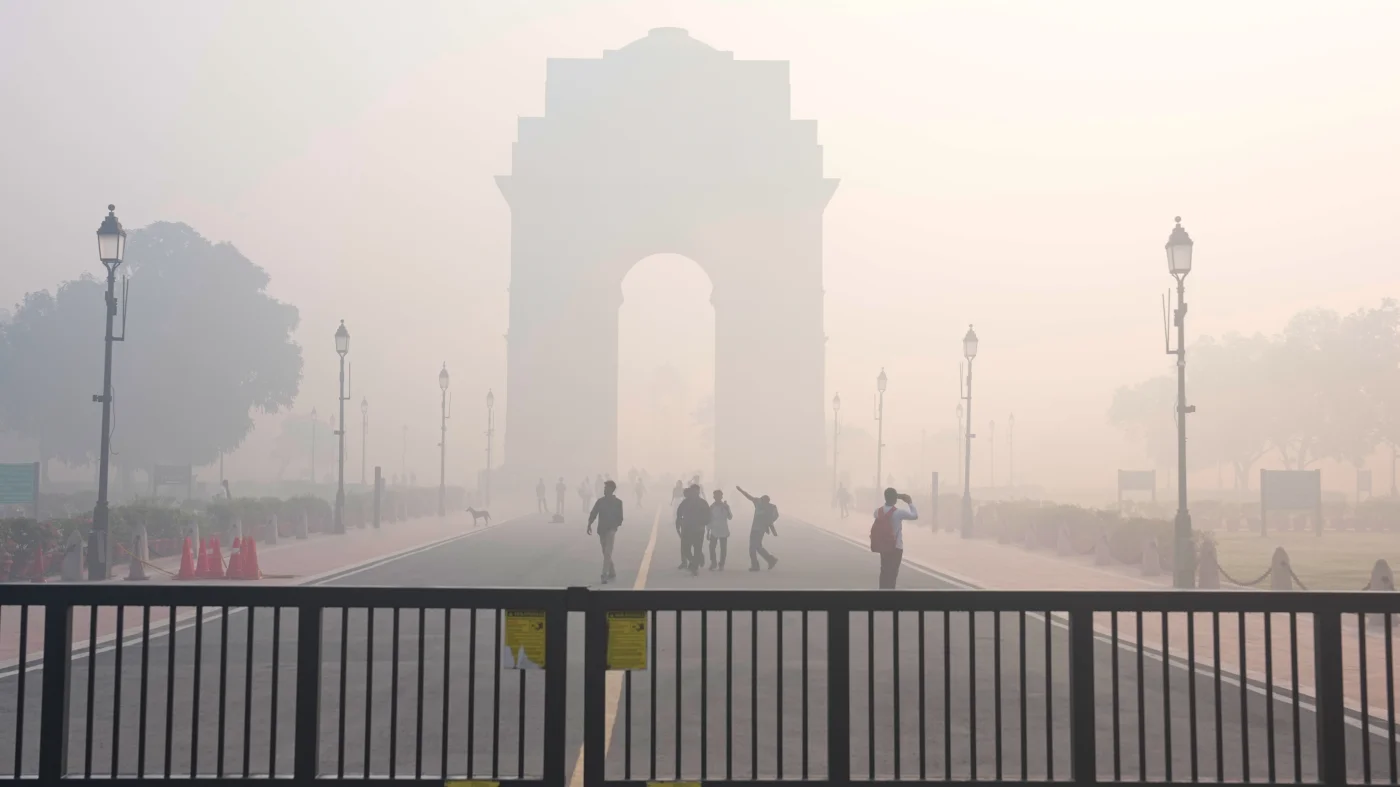
Air quality in New Delhi reached the "severe" category on Monday, Nov. 9, 2026, as a thick layer of smog covered the city following Diwali celebrations. The air quality index exceeded 350 in several parts of the capital on Monday morning after residents used firecrackers during the Hindu festival of lights on Sunday evening.
The pollution spike followed a series of restrictions issued by India's Supreme Court in October. The court had attempted to limit conventional firecrackers, permitting only "green firecrackers"—which produce fewer emissions—to be used during specific three-hour windows on Saturday and Sunday. Despite these rules, monitoring stations across the city recorded alarming pollutant levels and a gray haze that reduced visibility.
The seasonal air crisis in the metropolitan region, which is home to more than 30 million people, is caused by several factors during the winter months. Low wind speeds and cooler temperatures trap pollutants near the ground, while smoke from fireworks coincides with agricultural residue burning in the neighboring states of Punjab and Haryana. Local pollution from vehicles, construction dust, and industry also contributes to the stagnant haze.
The scale of the issue is reflected in the city's consistent ranking as one of the world's most polluted areas during the winter season. Local authorities have implemented temporary measures, including restrictions on diesel generators and limits on construction activity. However, public health experts like Shweta Narayan of the Global Climate and Health Alliance characterize these as "knee-jerk" reactions. The immediate impact of the current smog is a deterioration in visibility around high-rise buildings and landmarks like India Gate, along with a documented increase in fine particulate matter in the atmosphere.
The ongoing crisis sets a precedent for continued tension between traditional celebrations and environmental regulation. While the Supreme Court's October ruling aimed to mitigate the impact by mandating green firecrackers, environmentalists argue that these alternatives still release significant pollutants. What happens next depends on the weather and the duration of crop burning in neighboring states; if wind speeds remain low and temperatures remain cool, the thick haze is expected to linger. Long-term policy discussions continue to focus on cleaner energy and stricter vehicle emission controls, though no specific implementation dates for new measures were reported.