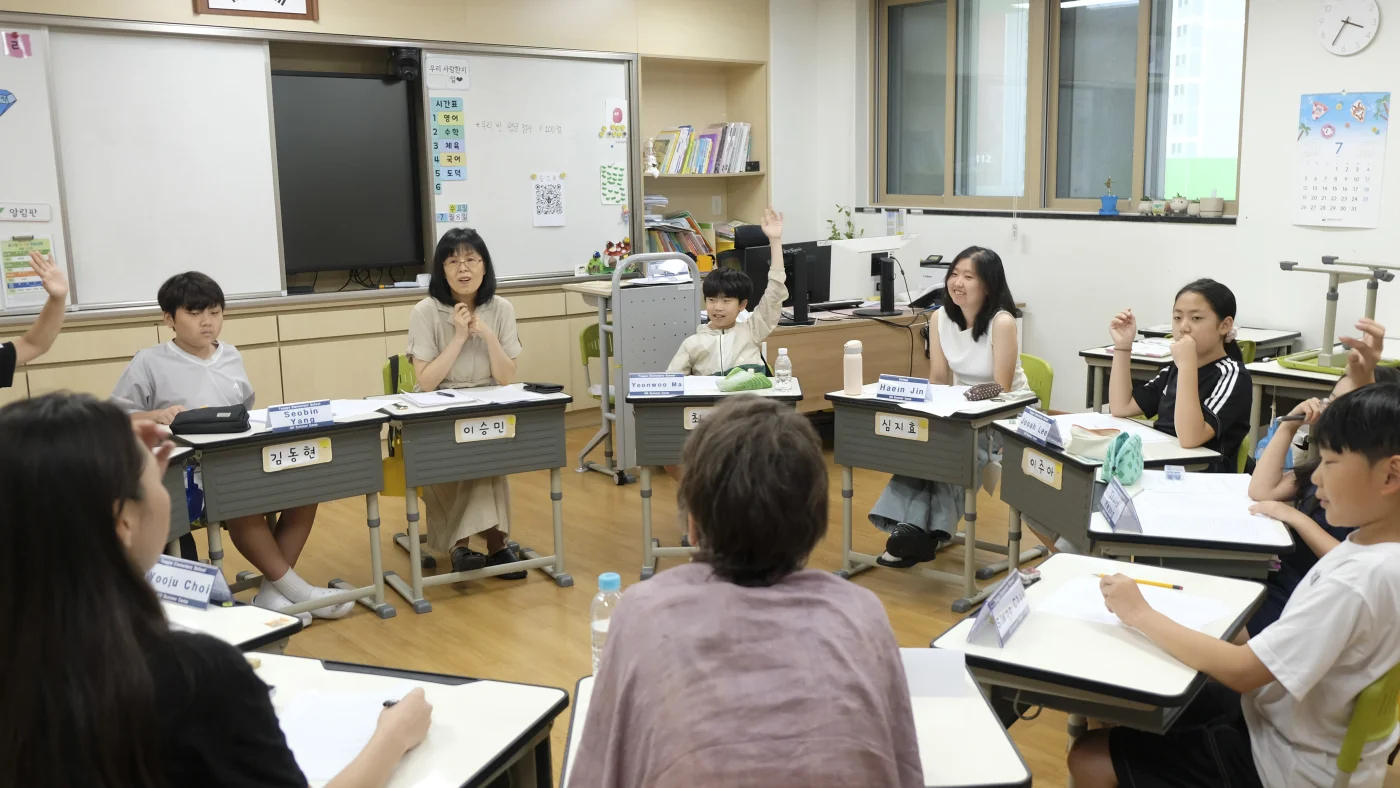
The city of Chuncheon, South Korea, has established an academic partnership with St. John’s College in Maryland to implement the "Great Books" educational model. The program, which avoids lectures and internet research in favor of peer-led discussions on classical texts, is being used to address declines in reading skills and the rapid integration of artificial intelligence in South Korean schools.
The partnership follows a period of shifting educational outcomes in South Korea. While the country’s students historically outperformed U.S. counterparts, recent PISA (Program for International Student Assessment) tests showed a post-COVID decline in reading skills. Additionally, figures from the Organization for Economic Cooperation and Development (OECD) indicate that 51% of South Korean students use AI chatbots for studying at least once a week.
Lee Yonghwa, a professor at Incheon National University and a St. John's College graduate, established the first Great Books program in South Korea in 2019. Lee reported that there are currently 120 college students, 770 younger students, and 40 teachers in training participating in the program nationwide. Chuncheon Mayor Yook Dong-han, who initiated the partnership last year, stated the program is intended to provide an alternative to the country's competitive test-focused system, which he described as leaving students little time for independent reasoning.
The curriculum involves reading works by authors such as Aristotle, Shakespeare, Euclid, Martin Luther King Jr., and Nobel laureate Han Kang. In these seminars, teachers act as guides rather than lecturers, and students are encouraged to rely solely on their own reasoning and the provided texts. During a summer camp at Toegye elementary school, students discussed Mary Shelley’s Frankenstein to debate the nature of humanity and its relationship to artificial intelligence.
The initiative serves as a response to the specific pressures of the South Korean education system, where intense competition often leads families to enroll children in private "cram schools." By partnering with a U.S. institution, local officials in Chuncheon are attempting to establish a precedent for "liberal education" as a tool for civic participation. St. John’s College President J. Walter Sterling described these seminars as "miniature republics" where students learn to cooperate despite clashing ideas, a skill supporters argue is necessary to maintain democratic structures.
What happens next involves the continued expansion of teacher training and the integration of these programs into public schools like Toegye elementary and Chuncheon High School. While Mayor Yook described the current scale as a "small" achievement, the partnership aims to challenge established educational practices. The specific dates for further program expansion or future curriculum evaluations were not reported.