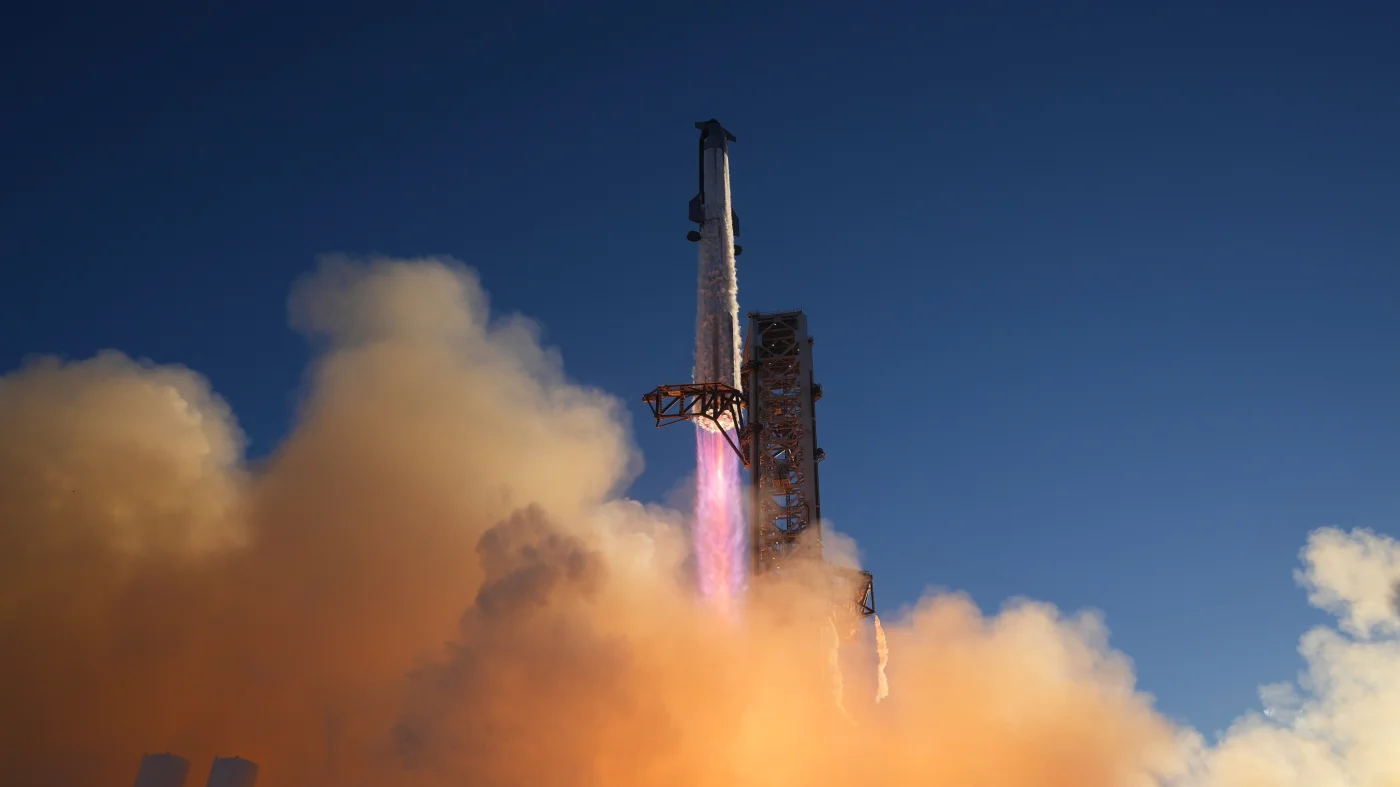
SpaceX's Starship spacecraft returned to Earth on Saturday, where it was caught in midair by mechanical arms at its Texas launch site. The mission marked the first time the vehicle was captured after returning from space, though the company did not achieve a double recovery after the first-stage booster exploded following Friday's launch.
The flight was the 15th test of a full-scale Starship since 2023 and its second trip to orbit. During the mission, the spacecraft completed 14 laps around the Earth at an altitude of 165 miles while deploying 26 Starlink satellites. SpaceX officials stated the recovery validates the vehicle's design for full reusability, intended for moon and Mars travel.
While the spacecraft was secured by the launch tower's arms, the first-stage booster failed to reach the pad. SpaceX representative Kate Tice reported that the booster's engines stopped firing prematurely during its return. The vehicle's guidance system detected it was out of position and redirected the booster into the Gulf of Mexico, where it self-destructed. Engineers are investigating the cause of the engine malfunction.
NASA has allocated billions of dollars to SpaceX to develop Starship to land astronauts on the moon and help build a permanent lunar base. The achievement of full reusability is also a requirement for Elon Musk’s goal of launching a fleet of ships to Mars.
The rocket system stands 407 feet (124 meters) tall. NASA is currently targeting 2028 for the Artemis IV mission, which would represent the first human moon landing since the Apollo era ended more than 50 years ago. The success of these tests determines when crews will begin lunar lander practice in Earth's orbit.
SpaceX plans to begin launching Starship vehicles from the Kennedy Space Center in Florida within the next few months. These future flights are part of the preparations for NASA's next Artemis mission, where astronauts will practice docking their capsules with Starship and Blue Origin’s Blue Moon lander. NASA and SpaceX have not yet reported a specific date for the next flight test.