The Plain Record

Neutral daily news — clear headlines, complete facts.

National

SpaceX Completes First Starship Spacecraft Capture After Booster Failure

SpaceX successfully caught its Starship spacecraft using mechanical launch tower arms on Saturday following a Friday launch that saw the mission's booster explode.

Published November 14, 2026 at 4:37 PM EST

The short answer

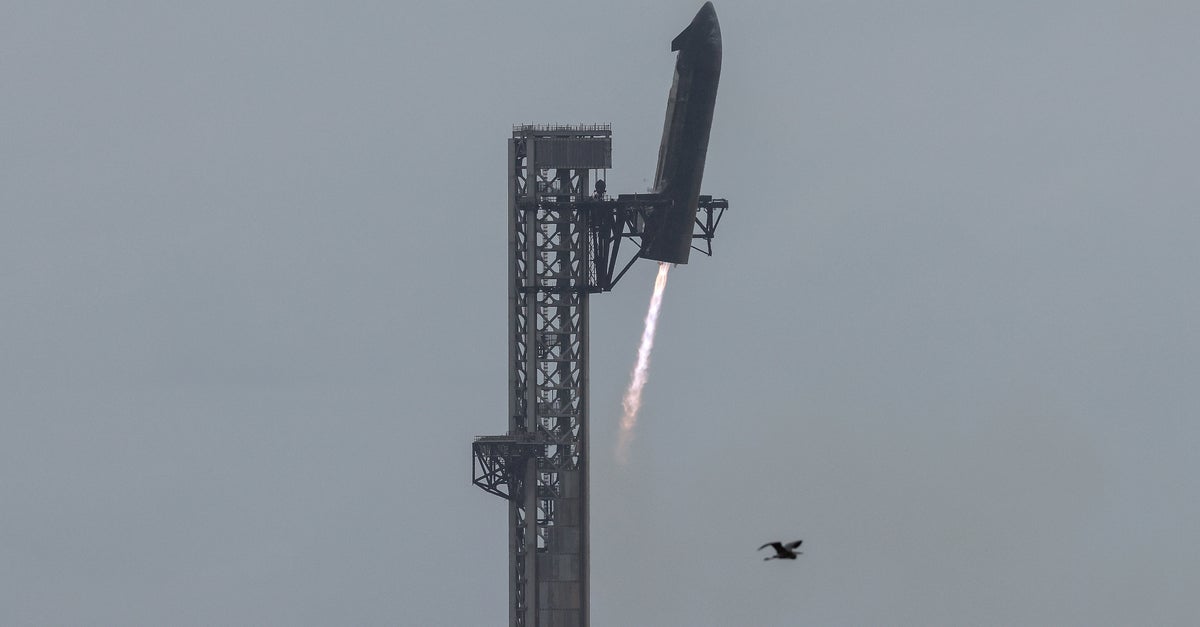
SpaceX successfully caught its Starship spacecraft using mechanical launch tower arms on Saturday following a Friday launch that saw the mission's booster explode. SpaceX completed the first recovery of its Starship spacecraft at its Texas launch pad on Saturday, November 14, 2026. The stainless steel spacecraft was caught in midair by mechanical arms attached to the launch tower approximately 22 hours after its initial liftoff.

SpaceX Completes First Starship Spacecraft Capture After Booster Failure

The Facts

Who
SpaceX and NASA
What
SpaceX Starship recovery via mechanical arms
When
Saturday, November 14, 2026
Where
South Texas launch pad near the U.S.-Mexican border
Why
To demonstrate spacecraft reusability for future NASA Artemis missions to the moon and SpaceX's goals for Mars.

SpaceX completed the first recovery of its Starship spacecraft at its Texas launch pad on Saturday, November 14, 2026. The stainless steel spacecraft was caught in midair by mechanical arms attached to the launch tower approximately 22 hours after its initial liftoff. The event followed a failure during the mission's first stage, when the rocket's booster exploded after launching on Friday, November 13, 2026.

The mission began late Friday afternoon from the SpaceX base near the U.S.-Mexico border. While the booster failed to return for a planned catch, the upper-stage Starship reached orbit and successfully deployed 26 Starlink satellites. The spacecraft circled Earth 14 times at an altitude of 165 miles (265 kilometers) before returning to the launch site for the upright capture. SpaceX reported that the spacecraft’s heat shield and other systems functioned as intended during the flight.

SpaceX officials stated that Saturday's recovery demonstrates the potential for full reusability of the 407-foot (124-meter) rocket system, which the company aims to use for frequent, low-cost space travel. Regarding the failed booster recovery, SpaceX representative Kate Tice reported that the engines stopped firing prematurely during descent. The booster's guidance system detected the misalignment and triggered an automatic detour into the Gulf of Mexico followed by self-destruction. Wreckage from the booster remained in the Gulf, marked by buoys, as engineers began an investigation into the cause.

The scale of this development involves the world’s largest rocket, standing 124 meters tall, and its ability to return to a specific set of mechanical arms on a launch tower rather than landing in the ocean. For NASA, the project represents a multi-billion dollar investment toward returning humans to the lunar surface for the first time since the Apollo era. The agency is targeting a moon landing as early as 2028 for the Artemis IV mission.

In the coming months, SpaceX expects to begin Starship launches from NASA's Kennedy Space Center in Florida. These upcoming flights will support the next Artemis mission, where astronauts will practice docking their capsules with Starship and Blue Origin’s Blue Moon lander in Earth orbit. The project establishes a precedent for private companies—SpaceX and Blue Origin—to take turns delivering government crews to the lunar surface. Future missions and the timeline for a permanent lunar base depend on the continued refinement of these reentry and capture techniques.

Timeline of what happened

Key dates and decisions, in the order they occurred.

  1. November 13, 2026

    Starship launch and booster failure

    The 407-foot rocket launched from South Texas, but the first-stage booster exploded during its return attempt.

  2. November 14, 2026

    First-ever Starship capture

    The upper-stage spacecraft was caught by mechanical arms at the launch pad after 14 orbits.

Summaries are written by The Plain Record to state the facts of a story plainly and without political slant. Drafted with AI assistance and checked against the source record before publication. See how we report, or report a correction.

← Back to the front page

Questions readers ask

What happened: SpaceX Completes First Starship Spacecraft Capture After Booster Failure?

SpaceX completed the first recovery of its Starship spacecraft at its Texas launch pad on Saturday, November 14, 2026. The stainless steel spacecraft was caught in midair by mechanical arms attached to the launch tower approximately 22 hours after its initial liftoff.

Who is involved?

SpaceX and NASA

When did this happen?

Saturday, November 14, 2026

Where did this happen?

South Texas launch pad near the U.S.-Mexican border

Why does this matter?

To demonstrate spacecraft reusability for future NASA Artemis missions to the moon and SpaceX's goals for Mars.