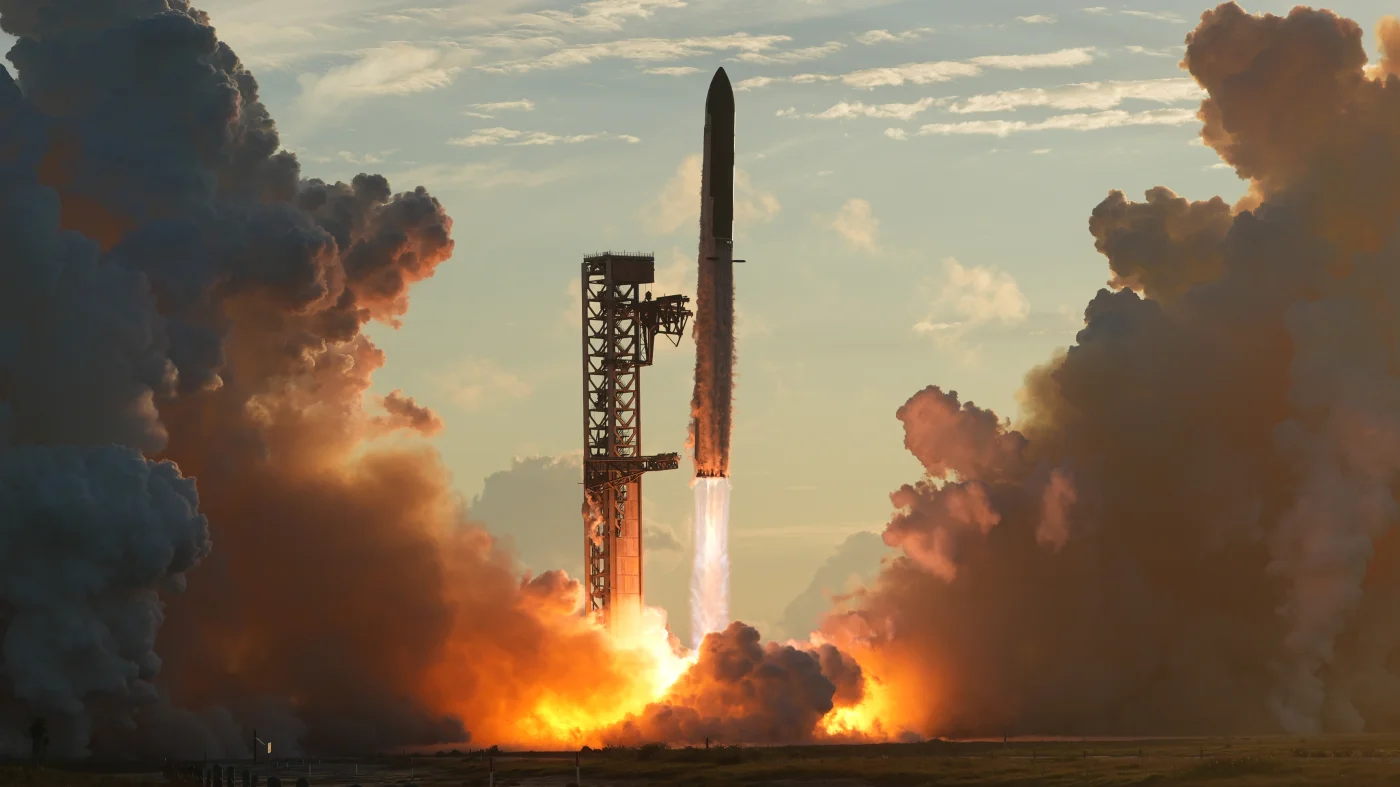
SpaceX is preparing for an ambitious test flight of its Starship rocket, a development that coincides with company plans to eventually retire its Falcon 9 rocket and Dragon capsule. The Starship vehicle, launched from South Texas, is designed to circle the Earth and attempt a vertical landing at its launch site approximately 22.5 hours later. While company founder Elon Musk intends for Starship to eventually transport astronauts to Mars, its development has raised questions regarding NASA’s continued access to the International Space Station (ISS).
The Falcon 9 rocket and Dragon capsule currently serve as the primary American means of transporting astronauts to and from the ISS. SpaceX previously relied heavily on NASA and Pentagon contracts for revenue, particularly following a 2008 contract that Musk stated saved the company from bankruptcy. However, SpaceX’s financial structure has shifted; the company reported $12.8 billion in revenue from its Starlink satellite internet service through September 2026, compared to approximately $2.1 billion from space launches.
Company leadership has indicated a desire to move resources from older technology to Starship. SpaceX President Gwynne Shotwell recently compared the Dragon capsule to a "minivan," noting that while it is functional for short trips, it is not the intended vehicle for long-duration missions like a six-month journey to Mars. Musk stated on social media that once Starship is flying reliably several times per week, the company plans to wind down Falcon production to focus engineering resources on the newer, larger rocket.
The retirement of the Falcon 9 affects NASA astronauts and U.S. Space Force operations, as the rocket is currently the only operational American vehicle for crewed orbital missions. According to a September 2026 NASA announcement, the agency has contracted SpaceX for three additional flights, which would sustain Dragon missions through 2028 if flown in six-month increments. Without further contracts or a transition to Starship, NASA would lose its current primary transport to the ISS, which is scheduled for retirement in 2030. The scale of this transition also impacts the broader launch market; an analysis by Quilty Space suggests the commercial market could face a shortage of 150 launches between now and 2030.
Federal agencies and commercial partners will notice a shift in available launch slots and potentially higher competition for remaining vehicles. While the U.S. Space Force stated it has secured Falcon 9 launches through 2028 and is "confident" other providers can fulfill its requirements, the Pentagon has reportedly been searching for alternative rides for national security satellites. For NASA, the alternative is Boeing’s Starliner capsule, which Shotwell suggested should take over more of the ISS business. However, Starliner has faced technical delays, including a 2024 mission where thruster issues extended an eight-day stay to nine months, requiring the astronauts to return on a SpaceX vehicle in March 2025.
The timeline for the full retirement of Falcon 9 remains unconfirmed by SpaceX. The next major milestone for NASA’s alternative transport is a Starliner test flight scheduled for this winter, with a goal of a crewed Boeing flight in 2028. As SpaceX integrates Starship into its Starlink V3 satellite deployments, the space agency must determine if Starship can be human-rated in time to replace the technology SpaceX intends to phase out. ISS operations are currently planned through 2030.