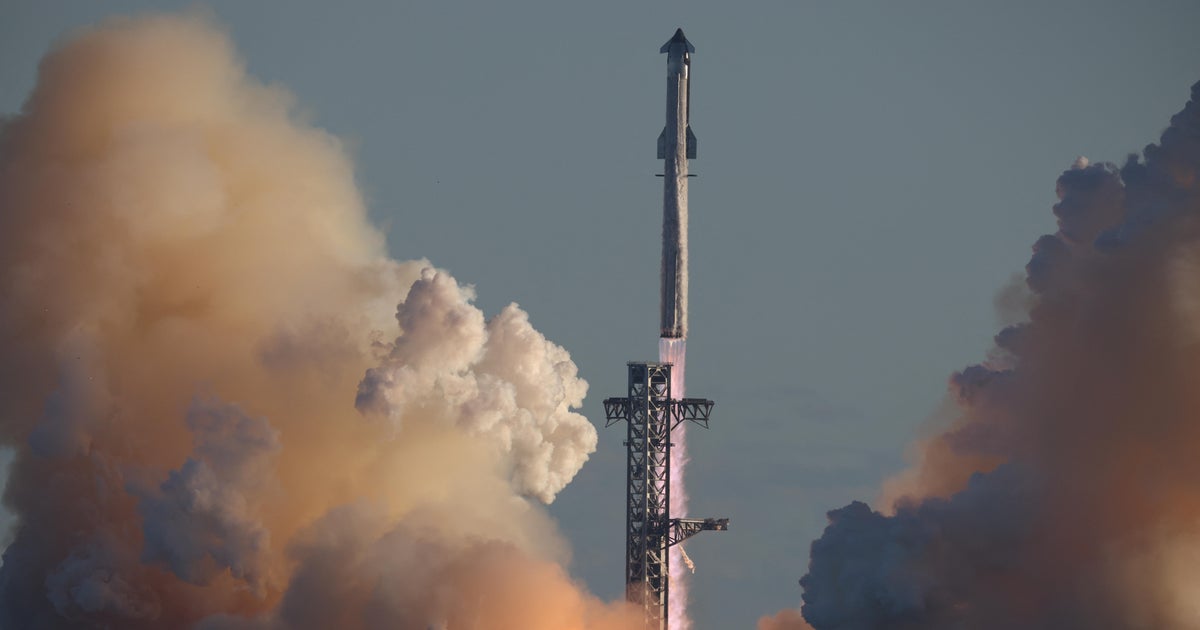
SpaceX launched its Starship rocket from the Texas Gulf Coast on a mission intended to demonstrate the full reusability of the vehicle. During the flight on Friday at 5:45 p.m. EST, the Super Heavy booster propelled the rocket toward space but did not successfully land back at the launch site, instead splashing down in offshore waters. The mission was designed to last 22 hours and included plans to deploy 26 Starlink satellites into orbit.
The Starship program is designed to create a launch system where both the booster and the spacecraft can be recovered and reused, a concept SpaceX describes as a way to reduce launch costs. This 15th test flight involved a 236-foot-tall first stage powered by 33 Raptor engines and a 171-foot-tall Starship upper stage. While the booster fell away two minutes and 20 seconds after liftoff, the Starship continued toward its trajectory.
The flight plan for the Starship included a coast phase followed by a 10-second engine burn to reach orbit. After deployment of the version 3 Starlink satellites, the vehicle was scheduled to remain in space until Saturday afternoon. The mission plan included a 56-minute reentry, during which SpaceX intended to use mechanical arms at the launch pad to catch the spacecraft as it descended, provided all systems remained functional and safe.
For commercial and government satellite operators, the scale of this launch vehicle represents a shift in payload capacity. The Starship is designed to carry 26 upgraded version 3 Starlink satellites in a single mission. If SpaceX achieves its goal of a fully reusable rocket, the company says it would allow for a rapid "airplane-like" flight cadence. This would potentially lower the cost per launch by eliminating the need to build new hardware for every flight.
The safety protocols for these tests affect residents and local governments in the Rio Grande Valley and northern Mexico. During reentry, the vehicle is programmed to perform maneuvers to avoid populated areas. SpaceX noted that flight controllers have multiple options to intentionally break up the vehicle in the atmosphere or divert it to the ocean if systems fail. The next steps for the program involve reviewing data from the booster's water splashdown and preparing for future attempts to recover both stages of the rocket at the Texas launch site.