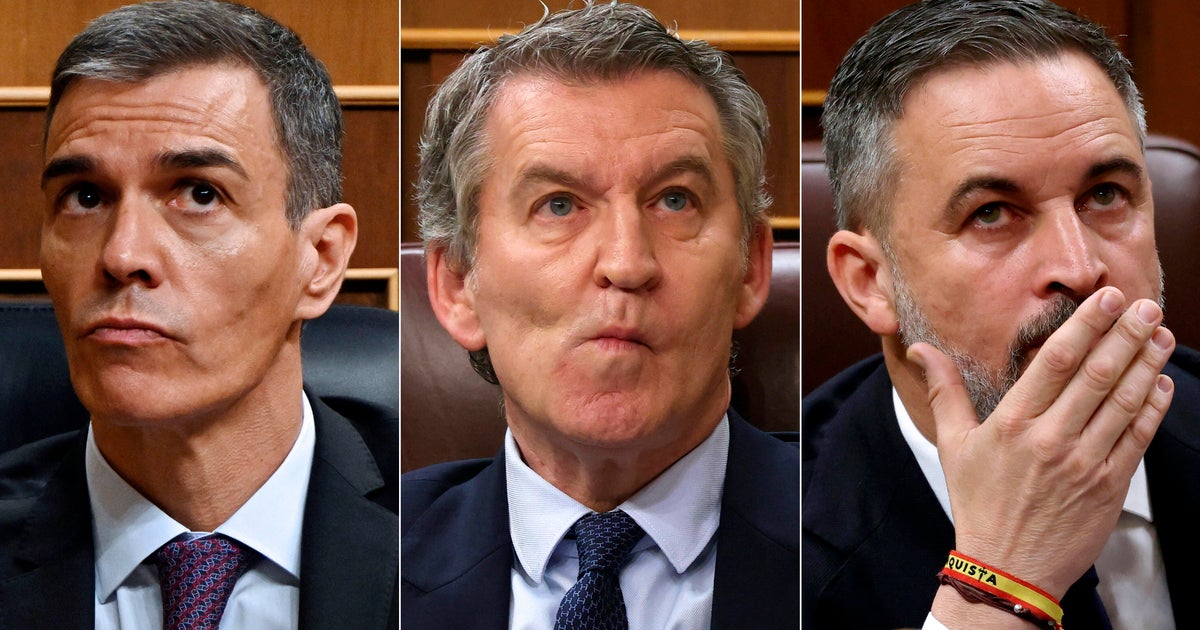
Spanish voters go to the polls on Sunday in a snap election that could shift the country's leadership toward the political right. Prime Minister Pedro Sánchez, a member of the Socialist party, seeks to maintain power against challenges from the center-right People's Party (PP), led by Alberto Núñez Feijóo, and the Vox party, led by Santiago Abascal. Sánchez called for the early election after his emergency housing measures, which included rent increase restrictions, were defeated in parliament.
The election followed public concern regarding housing costs, immigration, and corruption. A central symbol in the housing debate was the case of 87-year-old Maricarmen Abascal, who was evicted from her Madrid home of 70 years after her landlord attempted to more than triple her rent to $1,900. Though the landlord later offered to let her return at a lower rate, she died in a hospital two weeks after the eviction. The incident triggered nationwide protests and highlighted a crisis where soaring rents have impacted residents across the country.
Immigration has also been a focal point of the campaign. In July, a mass arrival of migrants occurred in Ceuta, a Spanish territory in North Africa, and earlier this year, the Sánchez government offered legal status to hundreds of thousands of undocumented migrants. The Vox party has responded by calling for mass deportations and prioritizing Spanish nationals for public services, while the PP has called for tightened immigration controls. Additionally, the Sánchez administration has faced criticism over corruption scandals involving political associates and family members, as well as two deadly train crashes that occurred this year.
Undocumented migrants face different potential futures depending on the results. Under the Sánchez administration, hundreds of thousands were offered legal status; however, Vox has called for mass deportations and restricted access to public services. For the general public, the cost of living remains a primary concern, with the PP centering its campaign on reducing these costs.
On a broader scale, Spain is the only large European Union country governed by the left. A shift in leadership would alter the balance of political forces at the EU level. Political scientist Hugo Marcos-Marne noted that while Spain was historically resistant to the radical-right due to its history under dictator Francisco Franco, recent polling shows the PP may need to form a coalition with Vox, which was polling at around 18%, to achieve a majority. The final results will determine whether the next government expands tenant protections or rolls back rights for women and migrants, as Sánchez warned.