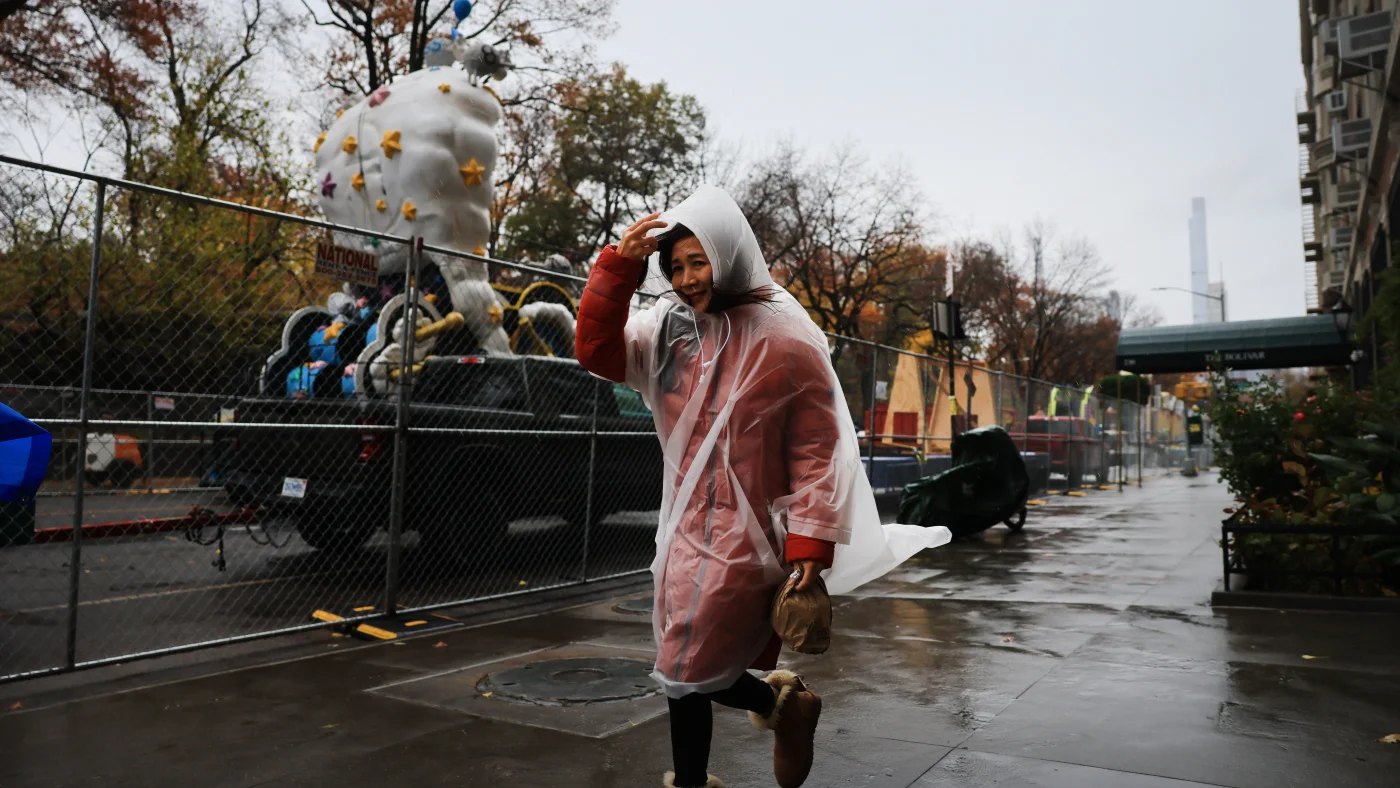
A powerful storm moved across the East Coast and Midwest on Thursday, Nov. 26, 2026, causing power outages for hundreds of thousands of customers. The weather event resulted in the cancellation of hundreds of flights and delays for thousands of travelers during the Thanksgiving holiday period.
Flooding caused the majority of damage and logistical disruptions, according to NPR. In New Jersey, authorities closed several bridges, while coastal Virginia experienced street flooding that led to residents using kayaks for transportation. These conditions coincided with "King Tides"—exceptionally high tides—that have also been affecting the West Coast.
In the retail sector, the National Retail Federation (NRF) projected that holiday retail spending will increase by 4.2% this year compared to last year. Despite inflation and cost-of-living concerns, consumers are expected to reach record spending levels this Black Friday. Retail analysts noted that while housing and gas prices have driven inflation, the prices for gift goods have not increased as significantly.
The NRF's projected 4.2% increase in sales indicates that households are prioritizing holiday purchases even as they report cutting back in other areas of their budgets. For the average consumer, this suggests that while the cost of essentials like housing remains high, the specific prices of retail goods may be perceived as more stable. Additionally, while online shopping remains the primary method for holiday purchases, retailers are seeing a shift toward more in-person shopping.
What happens next: Weather conditions are expected to improve as the storm moves out and tides recede leading into Saturday, potentially easing the return travel for holiday commuters. In the legal system, the U.S. Supreme Court is scheduled to hear arguments in December regarding immigration policies. These include a ban on asylum claims at the U.S.-Mexico border and the policy of deporting immigrants to third countries for asylum processing. The court will determine if the president has the authority to unilaterally suspend asylum protections established by federal law.