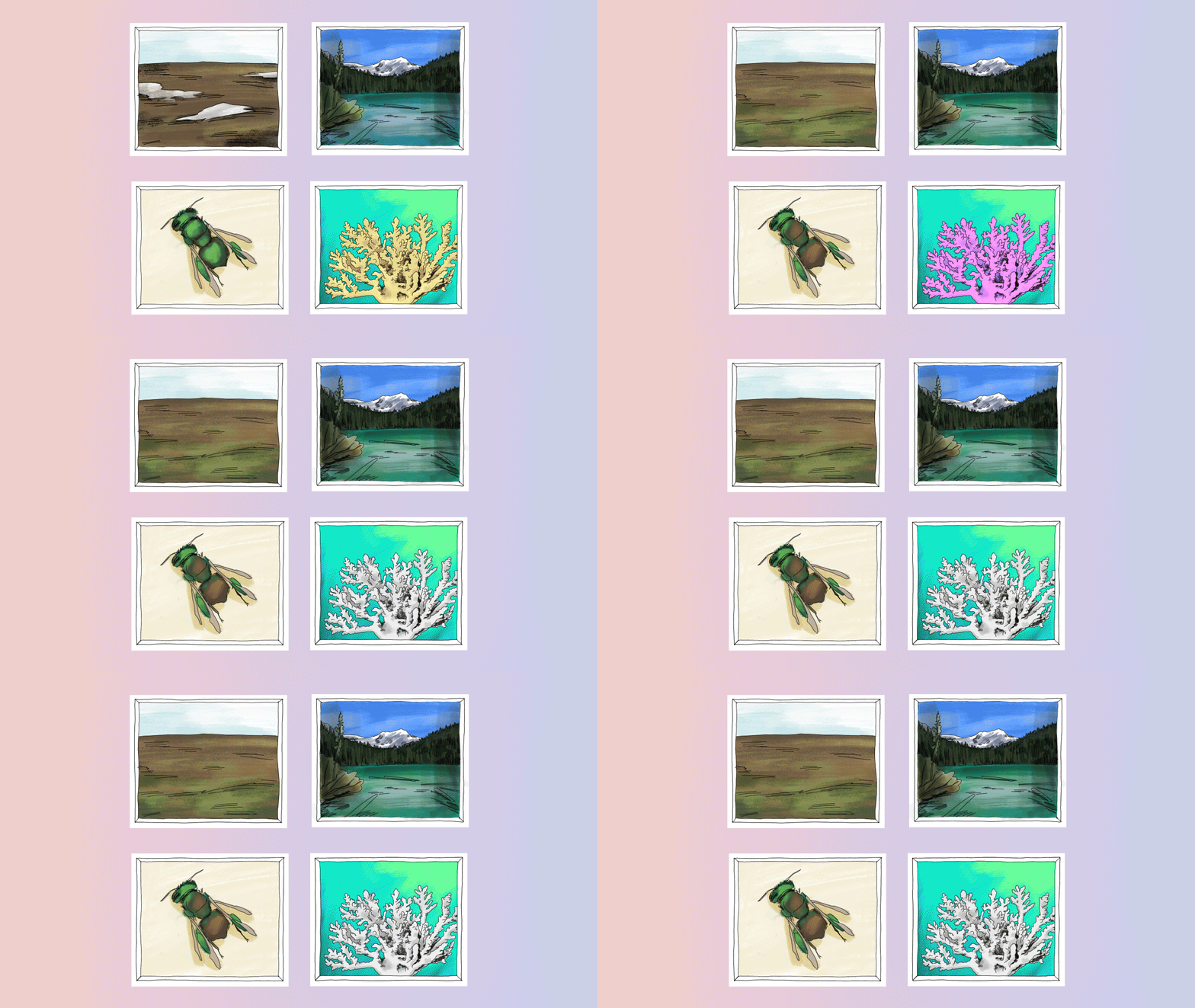
Scientific research indicates that rising global temperatures and environmental shifts are altering the colors of landscapes and wildlife. These changes have been documented across diverse ecosystems, from the Arctic tundra to tropical coral reefs. Researchers attribute these shifts to factors such as thawing permafrost, increased wildfire soot, and rising ocean temperatures, which affect how light is absorbed or reflected in the natural world.
In the Arctic, satellite data analyzed in a 2020 study published in Nature Communications revealed that 38% of thousands of sites across Alaska, Canada, and western Eurasia showed increased "greening" between 1985 and 2016. Logan Berner, a terrestrial ecologist at the University of Alaska Southeast, stated that as permafrost thaws, deeper-rooted plants like shrubs and trees gain a foothold, increasing the average greenness of the region. Conversely, a 2021 study in PNAS found that green wavelengths in over 400,000 boreal Arctic lakes declined by 15% between 1984 and 2019, making the water appear darker to the naked eye.
Wildlife is also displaying color variations linked to climate stress. A study in PNAS observed that male dragonflies in North America are losing wing pigmentation to stay cooler in warmer climates. In Costa Rica, Sevan Suni of the University of San Francisco has documented a shift in champion's orchid bees from blue-green to orange-red in areas with faster temperature increases. Additionally, coral reefs are experiencing bleaching, a process where heat-stressed corals expel algae and turn white. Anya Salih, a scientist at the University of Technology Sydney, noted that some corals produce fluorescent neon pigments as a "sunscreen" response before bleaching, which can aid recovery if heat stress is mild.
The darkening of Arctic lakes and the bleaching of coral reefs have significant implications for ecosystems and biodiversity. Darker lakes absorb more heat, disrupting fish life cycles and algae production, while the breakdown of organic matter in these lakes produces methane, a potent greenhouse gas. For the estimated 31% of the world's lakes that are blue, researchers Xiao Yang and Catherine O'Reilly predict a decline in number as winter ice cover decreases. In the oceans, coral bleaching threatens the foundation of reef ecosystems; a 2022 study found fewer colorful fish species in the Great Barrier Reef following bleaching events, suggesting a long-term loss of marine biodiversity.
What happens next depends on the frequency and severity of heat events. While some ecosystems like coral reefs can recover from individual bleaching events, Salih noted that rising ocean temperatures are reducing the window for such recovery. Scientists continue to monitor satellite data and field sites to quantify these transitions. No specific legislative deadlines were reported, but researchers emphasize that these visible changes serve as indicators of environmental instability. Future studies are expected to further investigate how color loss in insects, such as dragonflies, might affect their ability to attract mates.