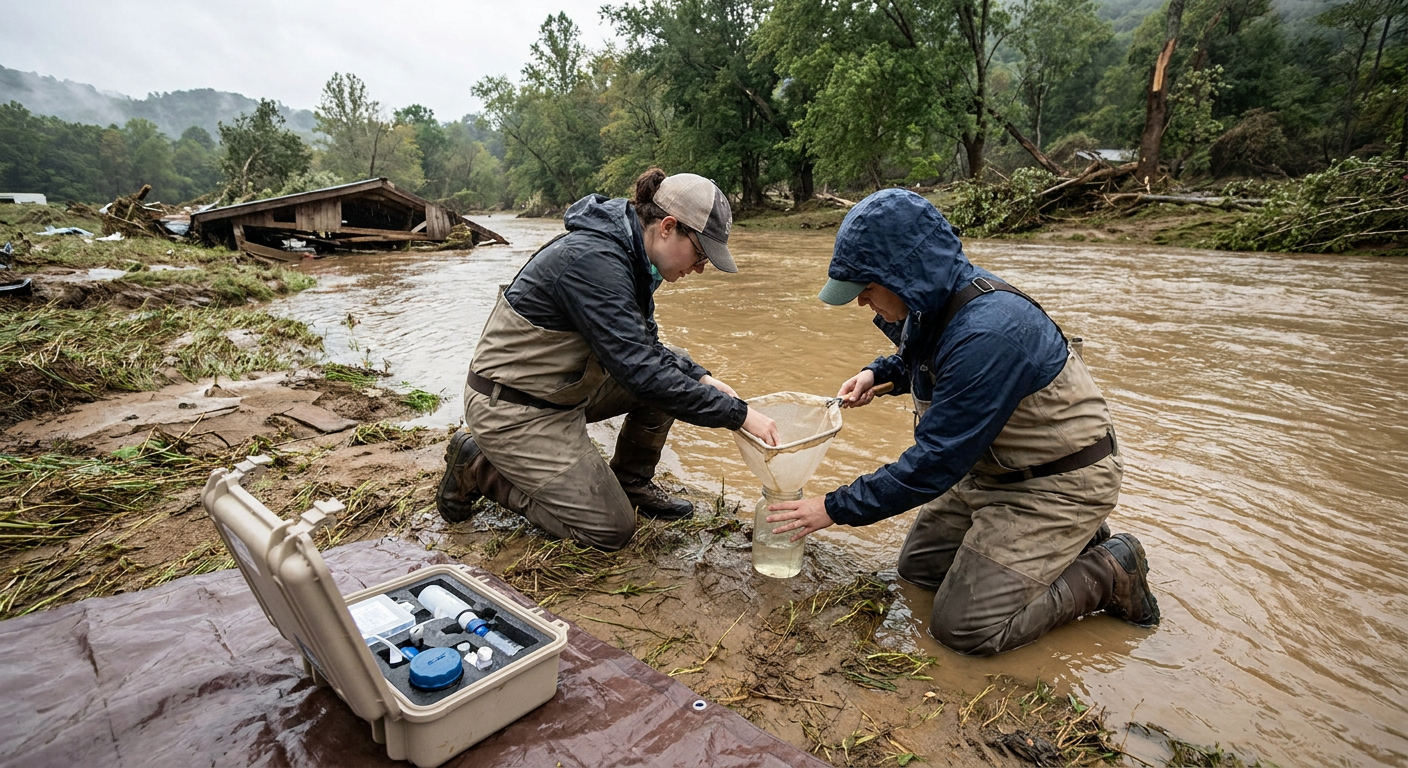
Researchers from Virginia Tech and the Highlands Biological Station are analyzing how major weather events impact the distribution of microplastics in the environment following Hurricane Helene. The team had collection samplers positioned in western North Carolina before the 2024 storm arrived, allowing them to compare microplastic levels before, during, and after the event. Microplastics are microscopic fragments resulting from the breakdown of materials like water bottles, shopping bags, and tires.
The study provides a rare look at microplastic deposition from a tropical system in the Western Hemisphere. Biologist Austin Gray noted that most previous research on hurricanes and typhoons has focused on Asia, with only one other comparable study conducted in the Western Hemisphere following Hurricane Larry in 2021. Helene reached Category 4 status and dropped trillions of gallons of water across Georgia, Tennessee, Florida, and the Carolinas.
Data from the Highlands Biological Station showed that during the peak days of the storm, collection buckets recorded over 10,000 microplastics per square meter. Jason Love, the station's associate director, stated that the three days of the storm accounted for approximately 20% of the total microplastics typically collected at that site over a full year. The team uses filters to capture debris from samples, which are then analyzed under microscopes to identify the plastic fragments.
For individuals, these findings highlight a concrete change in how environmental hazards are distributed. Rather than a slow, steady accumulation, residents may notice that intense storms serve as "super depositors," rapidly increasing the presence of fragments from tires, fast fashion, and single-use containers in their immediate surroundings. Researchers stated that these particles can be projected into the atmosphere by clashing waves in oceans or turbulent river networks, meaning the material is not just in the water but also in the air.
The knock-on effects concern future public health policy and plastic manufacturing regulations. As plastic production increases annually and climate change leads to more intense storms, researchers like Gray and Love suggest the volume of deposited microplastics will likely rise. The study establishes a baseline for understanding how these tiny materials move through inland waterways, which could influence future health assessments regarding human exposure. The researchers did not report specific dates for the publication of their final peer-reviewed results, but the collection and analysis of the Helene data is currently ongoing.