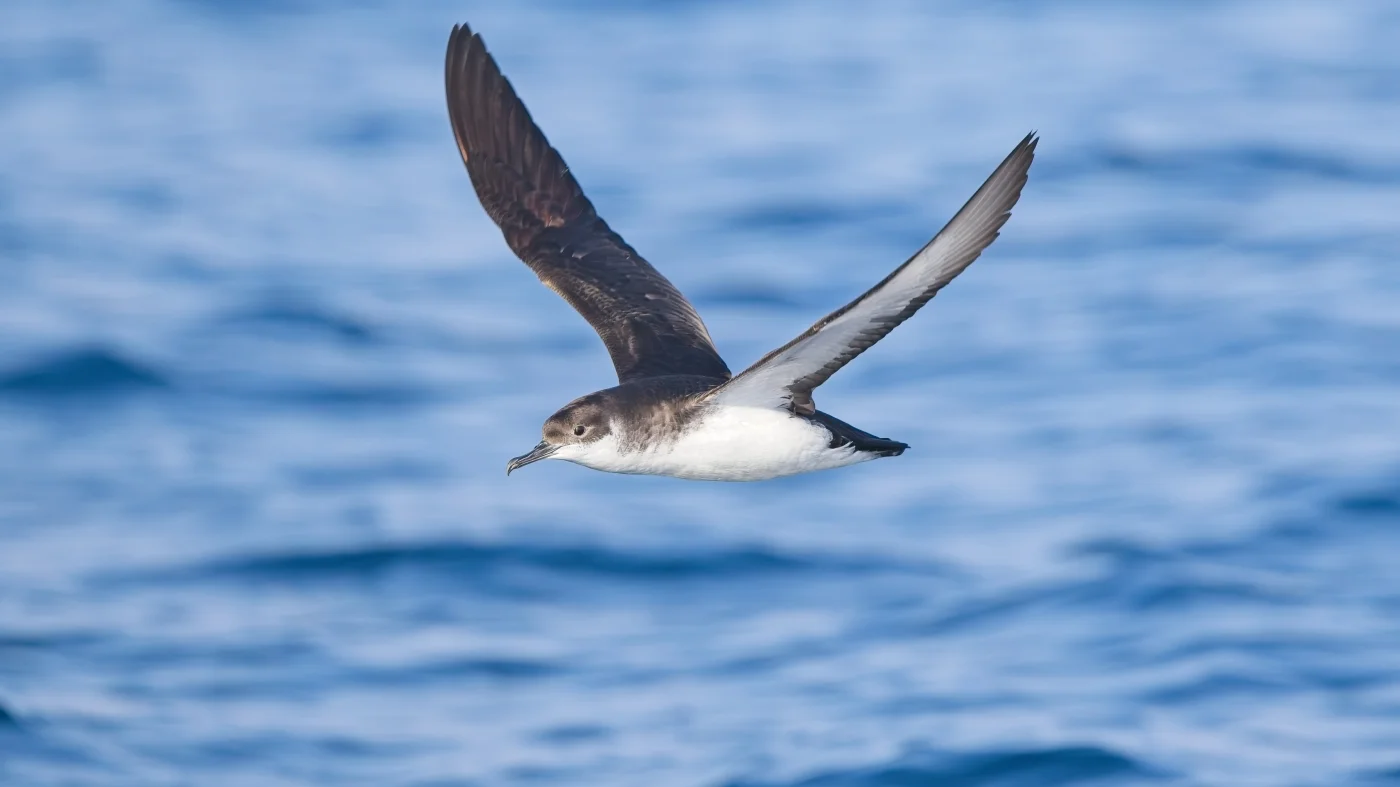
A study published in the journal Science indicates that Manx shearwaters, a species of seabird, experience disorientation similar to human jet lag during long-distance flights. Researchers found that as these birds travel across time zones in the North Atlantic, their internal biological clocks fall out of sync with the sun's position. This misalignment causes the birds to deviate slightly from their intended flight paths when returning to their colonies.
Manx shearwaters, which are related to albatrosses and commonly found in the British Isles, engage in long hunting trips while their mates incubate a single egg. According to Patrick Lewin, a behavioral ecologist at the University of Oxford, one partner stays at the nest while the other spends up to two weeks at sea searching for fish and squid. After feeding, the birds return to their colonies, often covering hundreds of miles in approximately a day.
To track this behavior, Lewin analyzed 20 years of GPS data collected by his colleagues. The study focused on how the birds use the sun as a compass, which requires an accurate sense of the time of day to determine direction. The data showed that birds flying back veered off course by a maximum of seven degrees. This error added approximately three miles to a 600-mile journey, a deviation Lewin described as a "really small addition."
For the birds involved, the day-to-day impact is a measurable change in flight trajectory. A bird returning from a two-week hunting trip across the North Atlantic would notice the sun’s position does not align with its internal clock, resulting in a three-mile detour. While this specific distance is minor for an individual bird, the study confirms that the mechanism of solar navigation is dependent on a circadian rhythm that can be disrupted by rapid movement across longitudes.
The findings establish a precedent for studying how other migratory animals navigate remote environments. Alice Boyle, a biologist at Western University who was not involved in the research, noted that while most creatures must navigate, it is rare to observe these decisions in action. The use of two decades of GPS tracking data allows scientists to model how internal biological systems interact with external environmental cues. The study does not report any immediate changes to conservation policy.