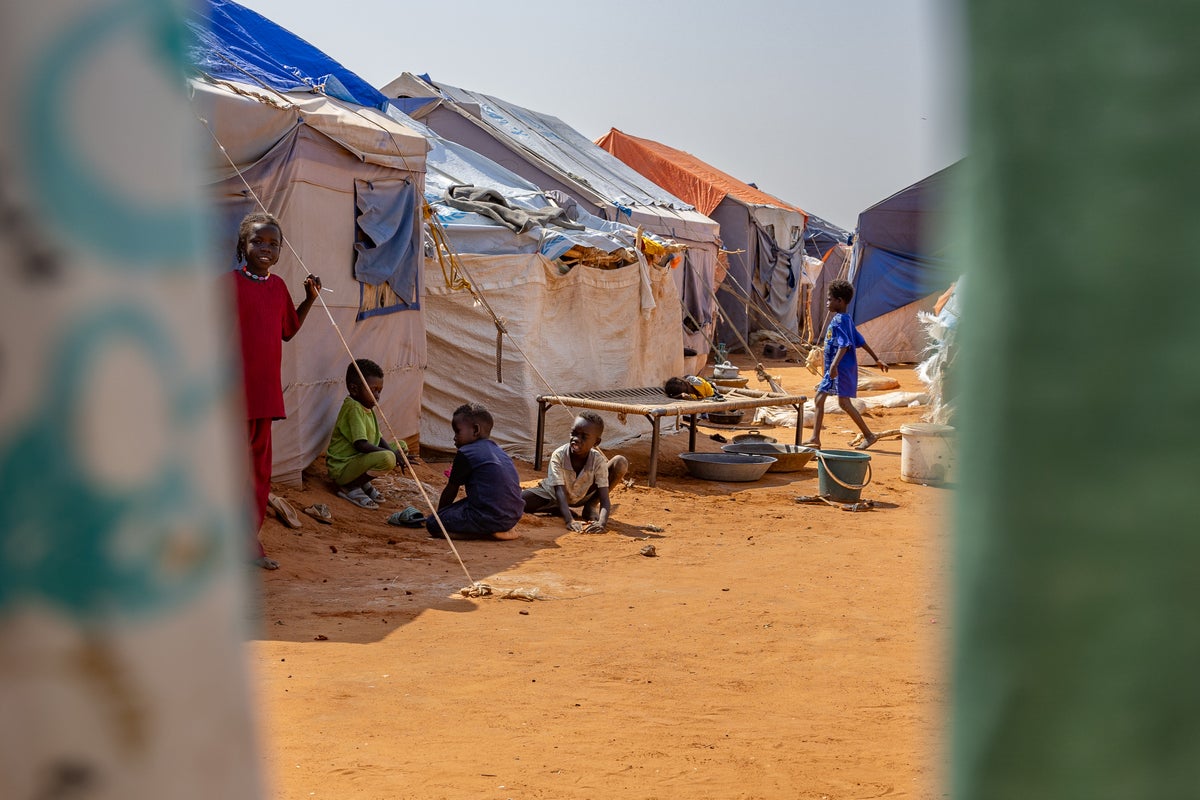
A conflict between the Sudanese Armed Forces (SAF) and the paramilitary Rapid Support Forces (RSF) has continued since April 2023, resulting in what international organizations describe as the world’s largest humanitarian, displacement, and hunger crises. The fighting originated from a power struggle between SAF chief General Abdel Fattah al-Burhan and RSF head General Mohamed Hamdan Dagalo, known as "Hemedti." The two leaders were formerly allies who collaborated to unseat autocrat Omar al-Bashir in 2019 and later staged a coup in 2021 before their relationship collapsed over plans to integrate the 100,000-strong RSF into the national army.
The conflict has shifted across several regions, with the SAF retaking the capital, Khartoum, in March 2025, while the RSF captured the Darfur stronghold of El Fasher in October 2025. Currently, the center of fighting has moved to the Kordofan region, specifically the strategic city of El Obeid. United Nations (UN) investigators and human rights groups have accused both sides of atrocities, including ethnically targeted killings and sexual violence. A UN fact-finding mission stated in 2026 that RSF atrocities bore the "hallmarks of genocide" against non-Arab communities in Darfur. Both the SAF and RSF have denied these accusations.
International involvement has also been reported, with Human Rights Watch citing evidence that the United Arab Emirates (UAE) has funded the RSF in violation of arms embargoes, a claim the UAE denies. Conversely, the RSF has accused Egypt and Iran of supporting the Sudanese army. As of October 2026, the UN reports that its $2.9 billion humanitarian appeal remains 40 percent unfunded, and there are no signs of an immediate ceasefire.
For the average citizen, the war has resulted in a near-total breakdown of essential services and physical safety. In 2026, 37 percent of health facilities were reported as non-functional following 217 verified attacks on healthcare since the war began. Families face the direct threat of widespread sexual violence and drone strikes, particularly in El Obeid, a city of 500,000 now hosting 100,000 displaced persons. Children are among the most severely impacted; an estimated 825,000 children under the age of five are expected to suffer from severe acute malnutrition in 2026, while UNICEF has documented cases of sexual violence against children as young as one year old.
The knock-on effects extend to the environment and regional stability. A Super El Niño-induced drought now covers more than half of the country, compounding the effects of the conflict on food production. As of November 16, 2026, the conflict remains active with no set dates for peace negotiations, and the UN has warned that patterns of violence seen in El Fasher are now emerging in El Obeid.