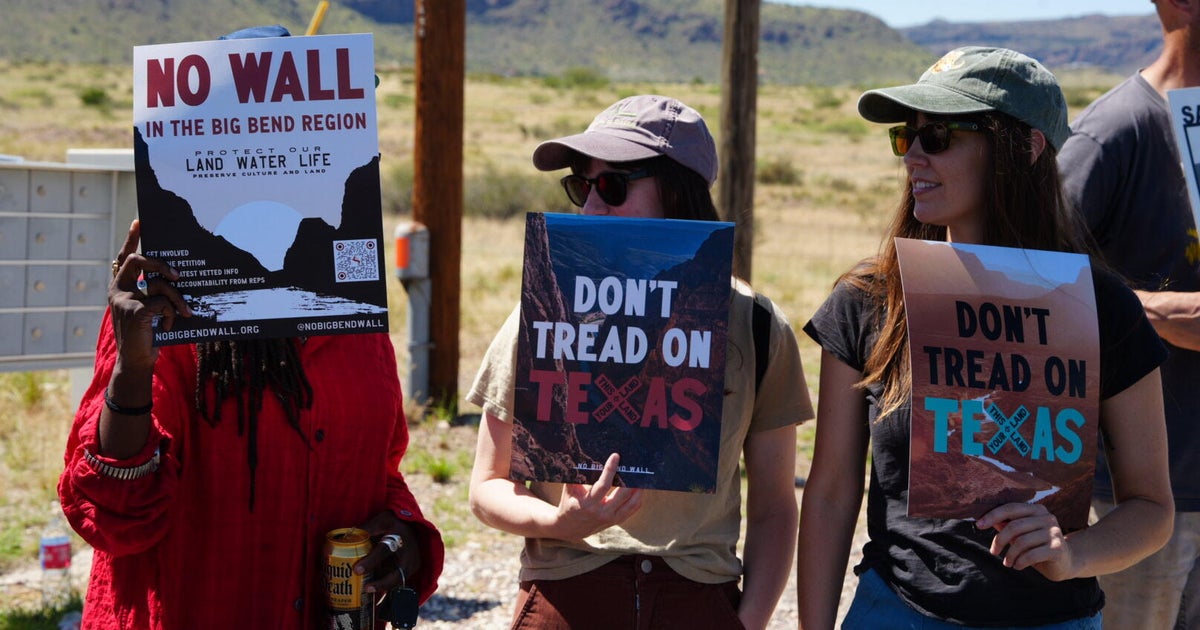
The Supreme Court on Monday issued an unsigned decision allowing the Trump administration to resume construction of a border wall and infrastructure in the Big Bend sector of West Texas. The ruling lifts a preliminary injunction issued by a lower court that had temporarily halted the project while legal challenges continue. Justice Ketanji Brown Jackson noted she would have denied the government's request for emergency relief.
The case originated after the Department of Homeland Security (DHS) invoked a 1996 federal immigration law to waive environmental protection and conservation requirements to speed up construction. U.S. District Judge Kathleen Cardone previously halted the work, finding that the DHS secretary had exceeded their authority when issuing these waivers. The Big Bend sector covers more than 500 miles of the southern border and includes Big Bend National Park and the Rio Grande Wild and Scenic River corridor.
Solicitor General D. John Sauer argued that blocking construction created a "massive vulnerability" that could be exploited by cartels for drug trafficking and illegal entry. The government reported that immigration officers apprehended more than 89,000 people in the sector between 2021 and 2025. Conversely, a group of plaintiffs including an environmental nonprofit, a riverboat guide, and a religious organization argued the project would permanently damage an "irreplaceable landscape" and destroy wildlife habitats.
The Supreme Court stated that the lower court's order impeded the government's interest in border security. The court noted that federal law permits the DHS secretary to waive conservation laws, reflecting a legislative preference for "expeditious border construction" over the environmental harms asserted by the challengers. While Customs and Border Protection (CBP) stated the 30-foot wall will not cut through Big Bend National Park itself, the project includes 200 miles of patrol roads and 17 miles of vehicle barriers that will cross through the park area.
The scale of the project involves the security management of approximately 25% of the total U.S.-Mexico border. While the government cites 89,000 apprehensions over a four-year period as justification for the wall, plaintiffs noted that the Big Bend sector historically accounts for only 0.3% to 2.2% of total border-wide apprehensions. For local landowners and residents, the resumption of work means the return of heavy machinery and ground-disturbing activities that were previously paused by the district court. The government warned that further delays would have resulted in significant operational costs and "irreversible" logistical harms to federal border protection efforts.
The legal precedent reinforces the executive branch's broad authority under the 1996 immigration law to waive dozens of other federal laws to facilitate border security projects. This sets a standard that prioritized infrastructure speed over the environmental and property concerns raised by regional stakeholders. The litigation regarding the legality of the DHS waivers will continue in the lower courts, but construction is now permitted to proceed during that process. A 47-mile stretch of the wall in Hudspeth County had already begun in September, and further infrastructure work across the sector is expected to resume following this order.