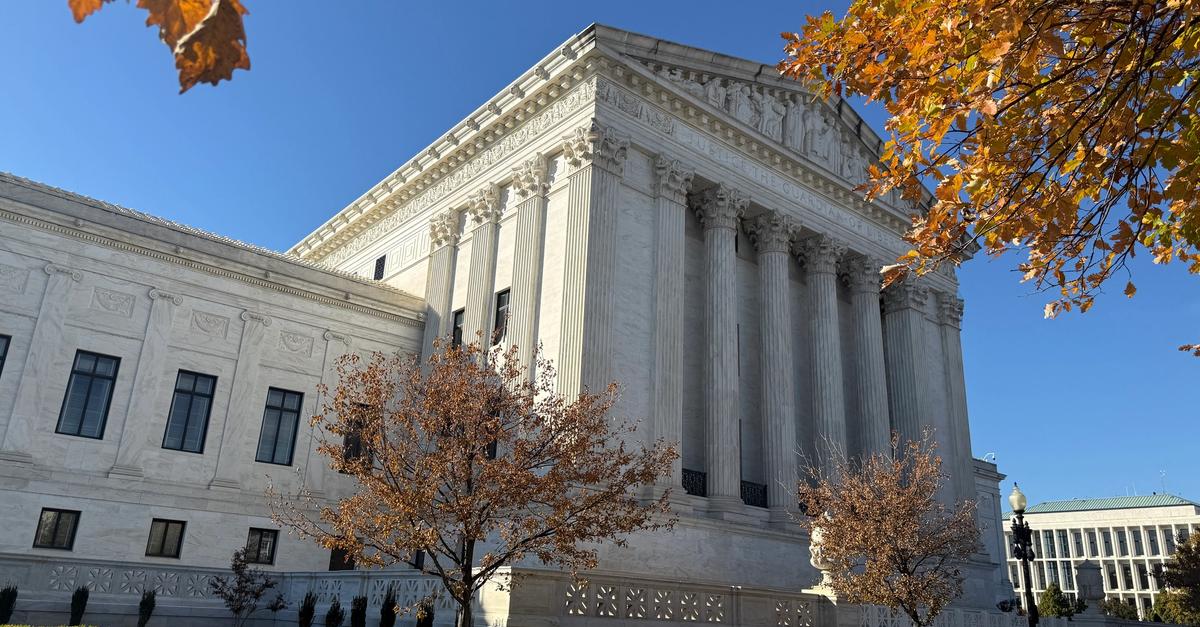
In June 2023, the U.S. Supreme Court ruled in *Students for Fair Admissions, Inc. v. University of North Carolina* that race-conscious admissions programs at Harvard and the University of North Carolina violated the Constitution. The majority opinion, written by Chief Justice John Roberts and joined by a concurrence from Justice Brett Kavanaugh, cited a 2003 prediction by Justice Sandra Day O’Connor that racial preferences would likely be unnecessary within 25 years.
According to Brooklyn Law School Professor Yuvraj Joshi, the court’s reliance on that timeline did not account for O'Connor’s later stated misgivings. In interviews with her biographer following her retirement, O'Connor acknowledged the 25-year estimate "may have been a misjudgment." When asked for a revised timeframe, she stated there was "no timetable" and that "you just don't know."
The Supreme Court has a history of justices expressing personal or institutional regret over past rulings. In 1990, retired Justice Lewis Powell stated he "probably made a mistake" in his 1986 vote to uphold a Georgia law criminalizing private homosexual acts in *Bowers v. Hardwick*. Powell told his biographer he had not understood the implications of the law or the community it affected. The court later overturned that precedent in 2003.
Other justices have retracted votes or expressed remorse for broader social impacts. In 1942, three justices publicly disavowed their votes from a case two years prior that allowed schools to mandate flag salutes, after the ruling led to violence against Jehovah’s Witnesses. Additionally, Justice Harry Blackmun used a 1994 dissent to repudiate his previous support for the death penalty, stating he would "no longer tinker with the machinery of death" due to what he described as irreparable flaws in the system.
The scale of this shift is significant, as it impacts the admissions criteria for thousands of degree-granting institutions and the demographic makeup of incoming classes for years to come. While the 2023 decision established a new legal standard, the reported regret of the justice who authored the 2003 "25-year" timeline highlights a tension in how the court uses historical predictions to set permanent constitutional law. For a student or parent, this means a concrete change in how applications are evaluated and a shift in the perceived "fairness" of the process depending on their interpretation of the 14th Amendment.
The knock-on effects extend to corporate diversity programs and state-level policies that modeled their rules on the prior *Grutter* standard. The revelation of O’Connor’s "misjudgment" regarding the 25-year deadline suggests that the expiration date used by the current majority to justify ending race-conscious admissions was viewed as flexible by its original author. What happens next depends on ongoing litigation regarding "race-neutral" alternatives; however, the 2023 ruling remains the active law of the land, with no further votes or court dates currently scheduled to revisit the core holding of *Students for Fair Admissions*.