The Plain Record

Neutral daily news — clear headlines, complete facts.

On the Hill

Trump Administration Implements New Global Health Aid Strategy Through Bilateral Agreements

The Trump administration has shifted U.S. global health aid to a transactional model involving 36 bilateral agreements worth $16 billion.

Published November 7, 2026 at 3:06 AM EST

The short answer

The Trump administration has shifted U.S. global health aid to a transactional model involving 36 bilateral agreements worth $16 billion. The Trump administration has implemented a new approach to international aid titled the America First Global Health Strategy, transitioning from traditional donor models to bilateral partnerships.

Trump Administration Implements New Global Health Aid Strategy Through Bilateral Agreements

The Facts

Who
The Trump Administration, the U.S. State Department, and the newly elected Democratic Congress.
What
The Trump administration is implementing a new "America First Global Health Strategy" that replaces traditional aid with transactional bilateral agreements.
When
The strategy was developed in mid-2025 and implementation is ongoing as of November 2026.
Where
The policy is directed by the U.S. State Department and affects 36 countries, including Zambia.
Why
The administration seeks to transition recipient countries toward self-reliance and domestic health spending, while critics raise concerns about a 34% drop in total aid and a lack of public transparency regarding the specific terms of the new agreements.

The Trump administration has implemented a new approach to international aid titled the America First Global Health Strategy, transitioning from traditional donor models to bilateral partnerships. Under this strategy, the U.S. government has signed 36 Memoranda of Understanding (MOUs) with individual nations, totaling $16 billion in commitments. This shift follows the 2025 dismantling of the U.S. Agency for International Development (USAID), which the administration cited as necessary due to alleged fraud, waste, and abuse.

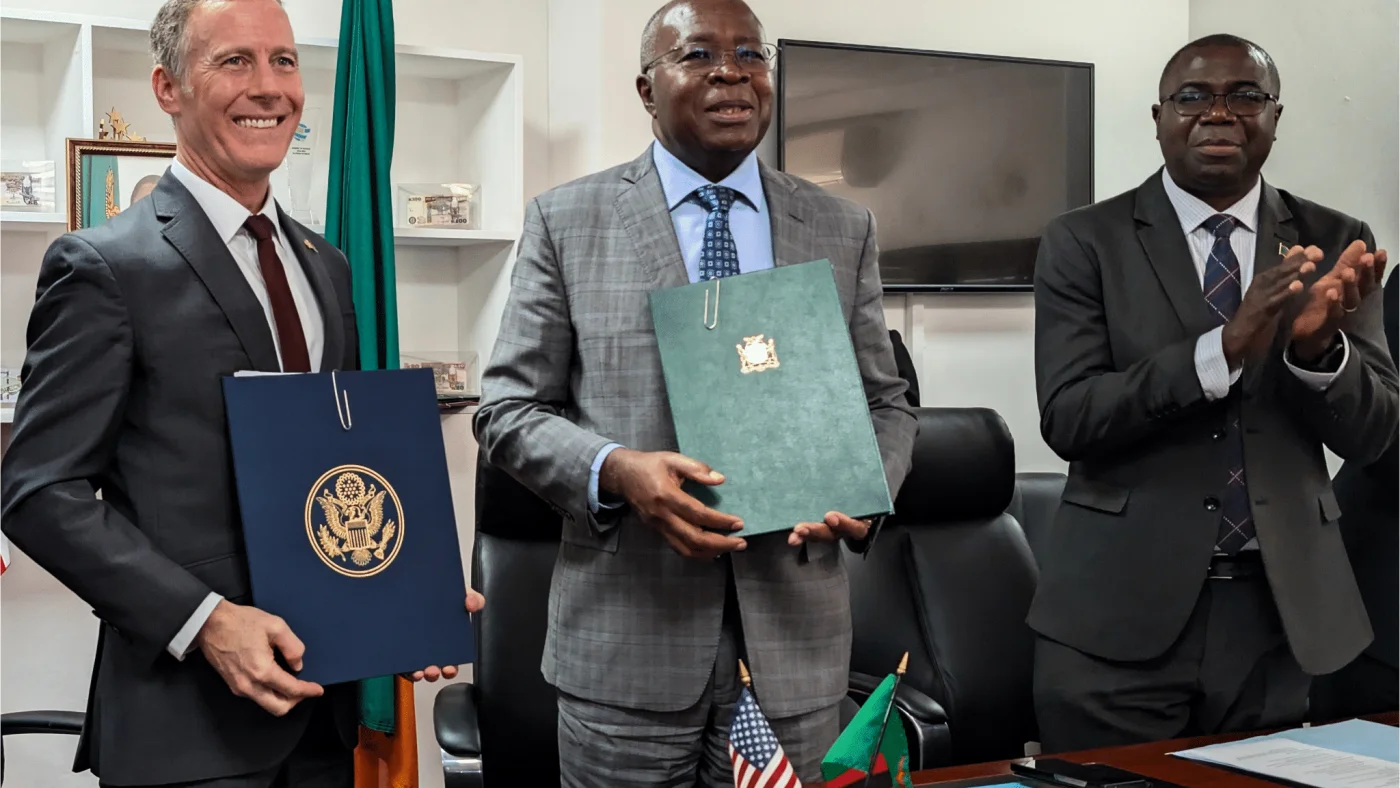
Global health experts report that the transition began with a period of significant disruption in early 2025. Jennifer Kates of KFF stated that clinics in several countries faced sudden closures and medication shortages during the first half of the year. Following this period, the State Department developed the current strategy, which emphasizes recipient country leadership and domestic financial contributions. For example, a recent agreement with Zambia involves $1.5 billion in U.S. funding over five years, while Zambia committed to increasing its own health spending by $975 million.

The new strategy has faced criticism regarding its transparency and implementation. Unlike previous initiatives like PEPFAR, which published regular data, the current MOUs and their specific implementation plans have not been released to the public by the U.S. government. Asia Russell of Health GAP noted that one initial proposal in Zambia reportedly sought to link health funding to access to copper and rare earth minerals, though that provision was separated following public pushback. The State Department maintains that it shares all signed MOUs with Congress and will determine a broader public release after all negotiations conclude.

The transition carries immediate consequences for patients who rely on U.S.-funded medical supplies. During the initial reorganization of aid in early 2025, some patients reported running out of HIV medications and facing clinic closures. The current strategy sets a compressed timeline for countries to become self-reliant and "transition off" U.S. aid entirely. This sets a precedent for transactional foreign policy, where health funding may be tied to shared pathogen data or, as initially proposed in some cases, access to natural resources.

What happens next depends largely on the incoming Democratic-controlled Congress, which is scheduled to convene on January 3, 2027. Lawmakers are expected to use their majority to demand the public release of the full texts of the 36 MOUs and their detailed implementation plans. While the State Department asserts that embassies are currently operationalizing these plans, activists have called for Congress to exert oversight and potentially pause funding until greater accountability measures are established. The administration has stated it will finalize its determination on the release of documents once all ongoing country negotiations are finished.

Timeline of what happened

Key dates and decisions, in the order they occurred.

  1. January 1, 2025

    USAID dismantled at start of second Trump term

  2. June 1, 2025

    State Department begins developing America First Global Health Strategy

  3. October 8, 2026

    U.S. and Zambia sign health cooperation memorandum in Lusaka

  4. January 3, 2027

    Democratic-controlled Congress scheduled to convene

Summaries are written by The Plain Record to state the facts of a story plainly and without political slant. Drafted with AI assistance and checked against the source record before publication. See how we report, or report a correction.

← Back to the front page

Questions readers ask

What happened: Trump Administration Implements New Global Health Aid Strategy Through Bilateral Agreements?

The Trump administration is implementing a new "America First Global Health Strategy" that replaces traditional aid with transactional bilateral agreements.

Who is involved?

The Trump Administration, the U.S. State Department, and the newly elected Democratic Congress.

When did this happen?

The strategy was developed in mid-2025 and implementation is ongoing as of November 2026.

Where did this happen?

The policy is directed by the U.S. State Department and affects 36 countries, including Zambia.

Why does this matter?

The administration seeks to transition recipient countries toward self-reliance and domestic health spending, while critics raise concerns about a 34% drop in total aid and a lack of public transparency regarding the specific terms of the new agreements.