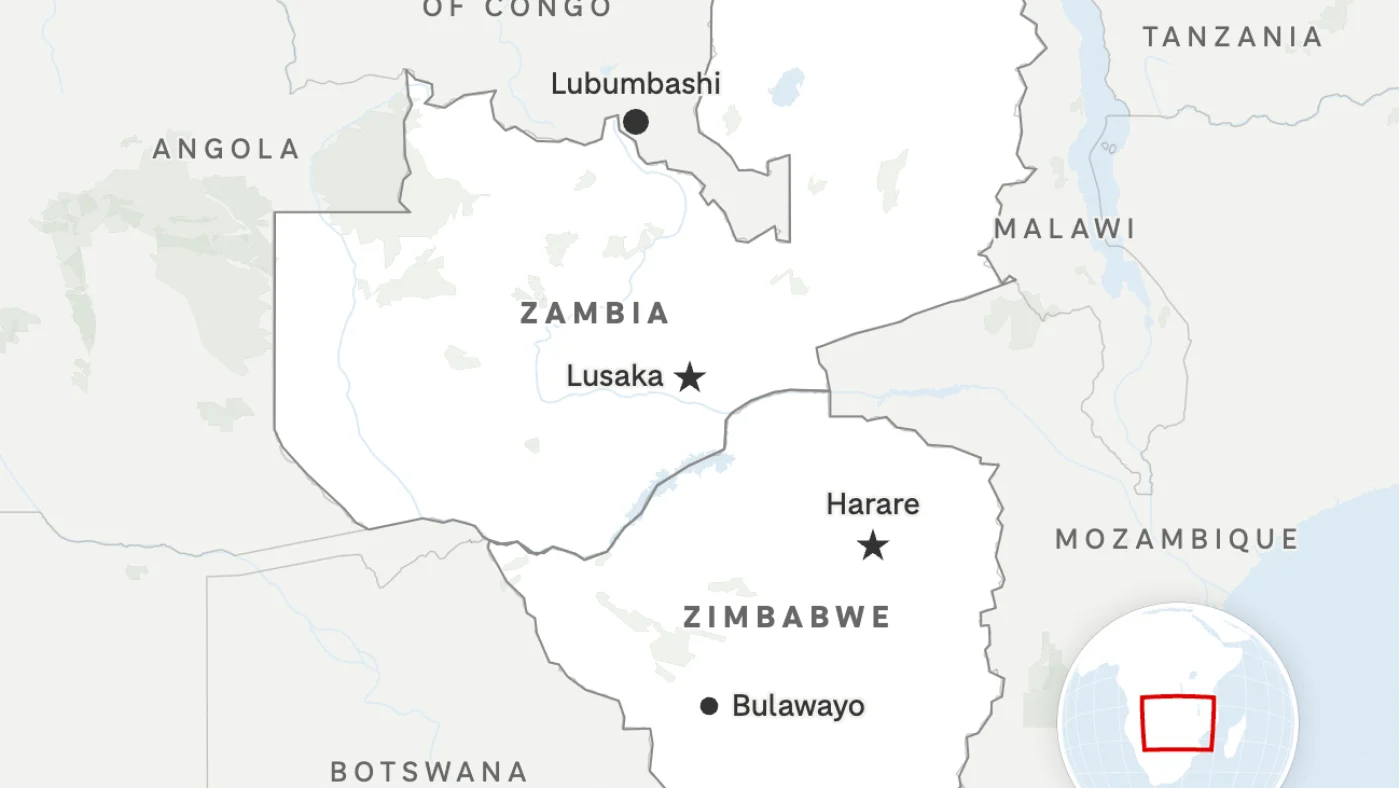
The Trump administration has introduced a new global health strategy that replaces the former aid model with direct government-to-government agreements. This shift follows the 2025 dismantling of the U.S. Agency for International Development (USAID), the agency previously responsible for administering such programs. While Zambia recently signed a new aid agreement under this framework, negotiations with neighboring Zimbabwe collapsed, resulting in a loss of U.S. health funding for that nation.
The changes come after more than two decades of U.S. investment in Southern Africa, which health officials credit with significantly reducing HIV/AIDS rates. Between 2000 and 2025, new infections fell by 76% in Zambia and 80% in Zimbabwe. Data from the Joint United Nations Programme on HIV/AIDS shows that in both countries, more than 95% of infected individuals have been identified, with 95% of those individuals receiving treatment.
In Zambia, U.S. and Zambian officials signed a new memorandum of understanding on October 8. According to Asia Russell, executive director of the advocacy group Health GAP, early negotiations faced scrutiny over proposals to link health funding to U.S. access to Zambia's copper and rare earth minerals. Those provisions were eventually decoupled from the final agreement. In Zimbabwe, talks ended in February after Zimbabwean officials characterized the proposed terms as lopsided, citing requirements to provide biological samples without guaranteed access to resulting treatments.
The scale of the change is marked by a shift in how dollars are distributed. In Zambia, the new agreement provides less annual funding than in previous years and moves away from supporting non-governmental organizations (NGOs). Previously, these NGOs provided specialized outreach to vulnerable groups, such as the LGBTQ+ community, who may avoid government clinics due to the illegality of homosexuality in Zambia. Zambian Health Minister Roma Chilengi stated the government intends to recruit 40,000 health care workers, including 15,000 frontline professionals, to build a national health system rather than a parallel one.
The long-term impact involves the potential loss of reliable health data and the risk of rising infection rates if outreach programs falter. Independent health workers in both countries expressed concern to NPR that government-run systems may lack the capacity or quality of the previous U.S.-monitored infrastructure. The U.S. State Department said it remains committed to working with partner governments to advance "shared global health priorities," but the new model uses government-to-government contracts as the primary vehicle for foreign assistance. Observers from the research organization KFF are now monitoring the implementation in Zambia to determine if the new framework can sustain the progress made over the last 25 years.
What happens next: In Zambia, the government is tasked with beginning the recruitment of 40,000 health workers to manage the transition. In Zimbabwe, the government faces the challenge of sourcing HIV medications for its citizens following the cessation of U.S. aid. No dates for a resumption of U.S.-Zimbabwe negotiations have been reported.