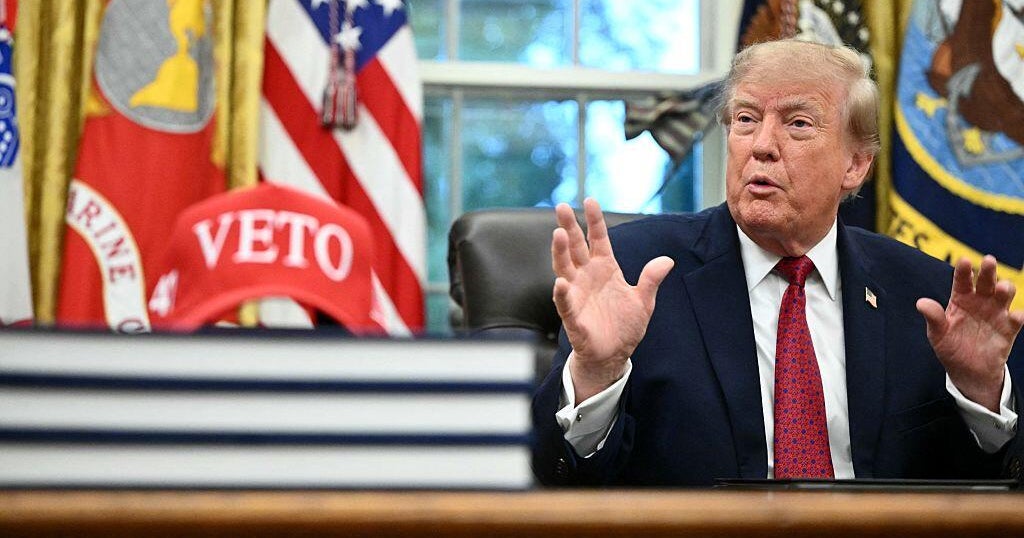
U.S. President Donald Trump and incoming Democratic congressional leaders have issued conflicting statements regarding their planned cooperation following Republican losses in the recent elections. While the president told reporters he looks forward to working with Democrats, he also emphasized his intent to use the veto power if he views their actions as destructive. Democrats, who will take control of both the House of Representatives and the Senate in January, have announced plans for extensive investigations into the administration and the Trump family's business dealings.
The shift to a divided government follows two years of unified Republican control. Incoming Democratic committee chairs stated they intend to use subpoena power to scrutinize several areas, including Department of Homeland Security (DHS) contracts, the Jeffrey Epstein scandal, and private equity investments involving Jared Kushner. Rep. Robert Garcia (D-CA), the incoming chairman of the House Committee on Oversight and Government Reform, named White House deputy chief of staff Stephen Miller and former DHS secretary Kristi Noem as potential targets for testimony.
In the House Judiciary Committee, incoming chairman Jamie Raskin (D-MD) plans to investigate the Justice Department’s handling of various probes and what he characterized as White House "slush funds." Meanwhile, Rep. Adam Smith (D-WA), the top Democrat on the Armed Services Committee, announced plans for "vigorous oversight" of the Defense Department, specifically citing military actions in Iran, the Caribbean, and Latin America, as well as the deployment of troops to U.S. cities.
The White House has responded by warning that if Democrats use investigations to "politicize the process," the administration will utilize the full powers of the federal government in response. White House spokeswoman Lauren Bis stated the president remains willing to work with anyone to deliver results but characterized the proposed Democratic inquiries as "sham investigations." Despite the investigative push, Democratic leaders including House Minority Leader Hakeem Jeffries (D-NY) indicated that impeachment is not currently on their agenda.
The legislative process will also change for the approximately 335 million Americans affected by federal law. Because most legislation requires 60 votes to overcome a filibuster in the Senate, any new laws regarding the cost of living, government funding, or defense spending will require negotiation between the two parties. Rep. Rosa DeLauro (D-CT), expected to lead the House Appropriations Committee, stated she intends to use the "power of the purse" to place "guardrails" on administration spending. This could lead to specific restrictions on how tax dollars are used by executive agencies, potentially altering the delivery of services or the execution of federal contracts.
Finally, the next two years are expected to see an increase in legal challenges between the branches of government. Rep. Garcia noted that if the Justice Department declines to enforce congressional subpoenas, Democrats may use the civil contempt process to seek rulings from the courts. This sets a precedent for how much information the executive branch must share with a divided Congress. Additionally, as a term-limited president, Mr. Trump may find that members of his own party are more willing to vote against his priorities as they focus on their own political futures. The first major test of this new dynamic will occur in January 2027, when the new Congress is seated and begins the process of funding the government and vetting the administration’s agenda.