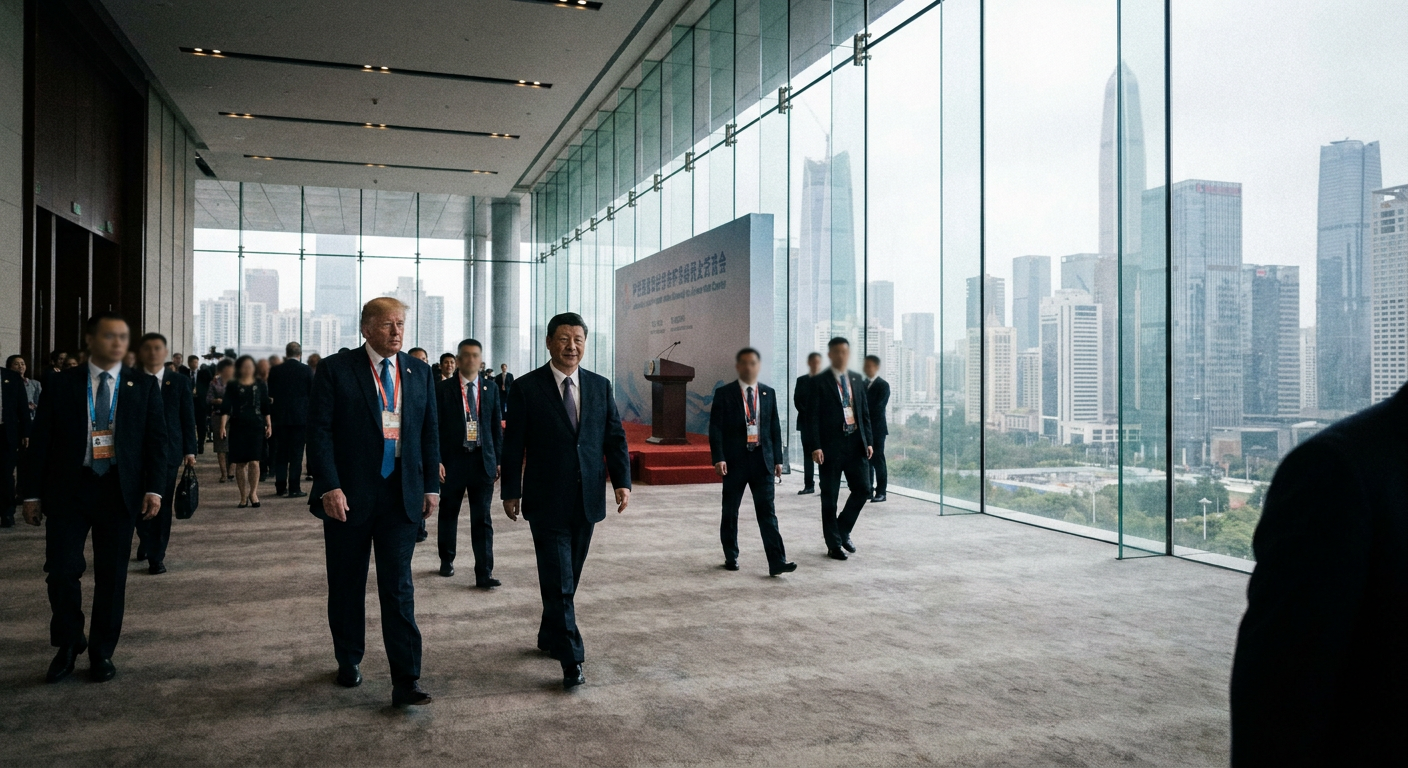
President Trump and Chinese leader Xi Jinping are scheduled to meet in Shenzhen this week, following a September summit where Xi said he would welcome 100,000 American students for academic exchanges. The proposal comes as the two nations navigate a relationship characterized by mutual security concerns and economic competition.
The exchange of students between the two countries is currently imbalanced. According to the Institute of International Education, fewer than 2,000 Americans are currently studying in China, while more than 250,000 Chinese students are enrolled in United States institutions. Academic and business experts noted that the environment for foreigners has changed since China began opening its economy in the 1990s.
Security and legal concerns are central to the current dialogue. Isaac Stone Fish, CEO of Strategy Risks, stated that studying in China could now jeopardize future U.S. government security clearances. Additionally, a federal investigation into Duke University’s foreign funding has affected perceptions of its joint campus in China, Duke Kunshan. The Chinese government has also warned its citizens against foreign spies and increased the use of exit bans.
This proposal affects students, university faculty, and researchers interested in international exchange. For American students, the invitation to participate in a program targeting 100,000 participants represents a potential shift in educational access. However, experts say students must weigh academic benefits against potential long-term career impacts, such as the risk to federal security clearances.
The scale of the initiative highlights a gap in engagement. With more than 125 Chinese students in the U.S. for every one American student in China, a push to 100,000 American participants would alter the composition of international student bodies. On a personal level, a student at Duke Kunshan said that U.S. restrictions on visas and deportation of immigrants under the Trump administration limit the ability of Chinese peers to build lives in the U.S. after graduation.
Proponents like Ker Gibbs of the University of San Francisco argue "China literacy" is critical for democratic decision-making. Conversely, Neysun Mahboubi of the University of Pennsylvania noted that because the invitation came from the Chinese leader, it is viewed with suspicion in the U.S. as advancing a state goal. Future outcomes depend on whether the U.S. relaxes visa restrictions or if China addresses concerns regarding its constrained research environment and exit bans.