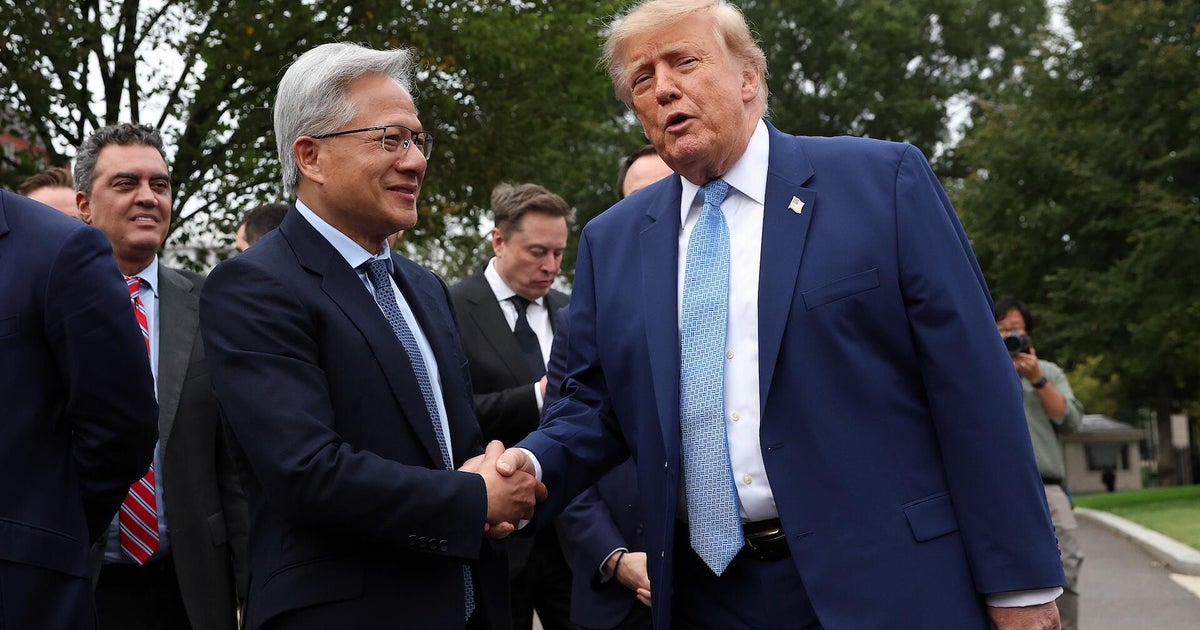
President Donald Trump held millions of dollars in Nvidia stock while personally intervening to reinstate the company's CEO, Jensen Huang, according to financial disclosure documents and the president's own statements. Mr. Trump told CNBC on Monday, Nov. 23, 2026, that he spoke "directly and indirectly" with Nvidia’s board to advocate for Huang’s return, providing assurances that the executive did not pose a national security threat. Following Huang's reinstatement that same day, Nvidia shares rose more than 30%, increasing the estimated value of the president’s holdings by as much as $14.8 million.
The intervention followed Huang's resignation two weeks prior amid reports of an alleged affair with a subordinate and a separate alleged relationship with a suspected Chinese spy. Mr. Trump stated that he worked with Vice President JD Vance and other officials to convince the board, arguing that Huang is a "genius" essential to maintaining the U.S. lead in artificial intelligence technology. A Justice Department official stated that Attorney General Todd Blanche told the president over the weekend that the department had no evidence of wrongdoing by Huang or Nvidia.
Financial disclosures filed with the Office of Government Ethics show Mr. Trump held between $13 million and $58 million in Nvidia stock at the end of 2025. Between January 2025 and September 2026, he engaged in more than 100 transactions involving the company’s stock, valued between $27 million and nearly $98 million. A White House spokesperson stated Tuesday that the president’s portfolio is "independently managed by third-party financial institutions" and that neither Mr. Trump nor his family has the ability to influence investment decisions.
The scale of the financial interest extends beyond the president to several high-ranking officials. For example, Homeland Security Secretary Markwayne Mullin sold between $500,000 and $1 million in Nvidia shares in June 2026, and Ambassador Melinda Hildebrand sold between $5 million and $25 million in holdings in November 2025. For the average investor or taxpayer, these actions highlight how government policy regarding the semiconductor industry—a sector valued at over $3.7 trillion in Nvidia’s case alone—can be influenced by personal interventions from the highest levels of office, potentially impacting market stability and the perceived neutrality of federal oversight.
What happens next depends on potential legislative action in the new Congress. Lawmakers from both parties have previously called for bans on stock trading by elected officials, and ethics experts suggested that a new prohibition could be taken up as early as January. In the immediate term, the Office of Government Ethics will continue to process disclosures from appointees, such as IRS CFO Todd Newnam, who reported holding up to $250,000 in Nvidia stock. Future court dates or formal ethics investigations have not been reported.