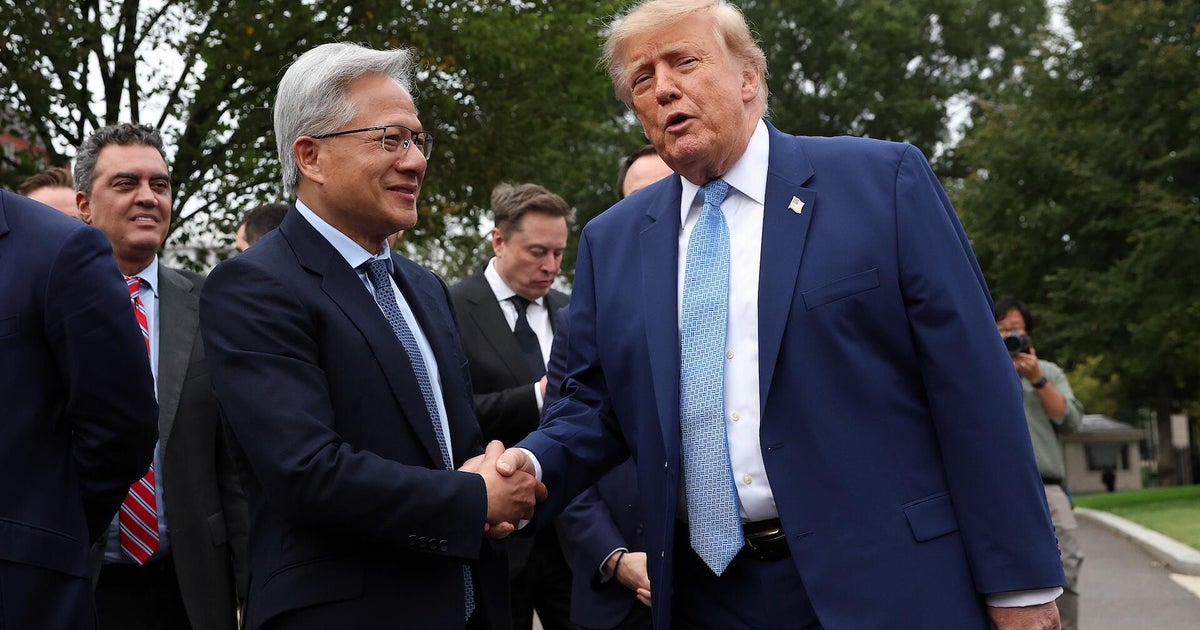
President Donald Trump announced on Monday, November 23, 2026, that he intervened to facilitate the reinstatement of Jensen Huang as CEO of Nvidia. Huang returned to the semiconductor company less than two weeks after resigning amid reports of personal affairs, including one with an individual suspected of being a Chinese intelligence operative. President Trump stated in a phone interview with CNBC that he spoke "directly and indirectly" with the company’s board to encourage the move, describing Nvidia as a "very important part of our country."
The executive’s return follows a period of significant volatility for Nvidia's market value. Huang had resigned approximately two weeks prior following allegations of an affair with a subordinate and a separate relationship with a woman whose company was accused of diverting Nvidia chips to China. President Trump reported that the board sought "assurance on the national security threat" before rehiring Huang. The president stated the White House provided this assurance, citing a Justice Department investigation that he said cleared Huang of wrongdoing. An anonymous Justice Department official confirmed that Attorney General Todd Blanche spoke with the president and stated the agency has no evidence of wrongdoing by Huang or Nvidia.
Financial disclosure documents show that President Trump held between $13 million and $58 million in Nvidia stock at the end of 2025. Between January 2025 and September 2026, he engaged in more than 100 transactions involving the company's stock, valued between $27 million and $98 million. Following the announcement of Huang's return on Monday, Nvidia’s stock price rose by more than 30%, which resulted in an estimated single-day increase in the value of the president's holdings between $1.3 million and $14.8 million. A White House spokesperson stated that the president’s portfolio is independently managed by third-party institutions and that he has no ability to influence specific investment decisions.
The intervention by a sitting president into a private company’s leadership decisions has drawn criticism from ethics experts. Kathleen Clark, a law professor at Washington University in St. Louis, stated that the president used his official power to benefit himself financially. Richard Painter, a former White House ethics attorney, characterized the move as a conflict of interest and argued for new legislative prohibitions on stock trading by the president and members of Congress. Conversely, President Trump defended the action by stating the U.S. must "protect our geniuses" to maintain a lead over China in AI technology. He also expressed concern that Chinese President Xi Jinping might have recruited Huang to lead a Chinese chip firm if he remained ousted from Nvidia.
What happens next involves both legislative and congressional scrutiny. Three House committees have scheduled a closed-door interview with Huang for next week. Additionally, Nebraska Senator Pete Ricketts (R) stated that Huang’s behavior did not justify reinstatement and noted he looks forward to Huang’s scheduled Senate testimony in December 2026. Richard Painter suggested the new Congress might consider updates to federal conflict of interest laws in January 2027, as current laws prohibiting government employees from personal enrichment do not apply to the president or members of Congress.