President Donald Trump stated on Thursday that the United States does not require a new agreement with Iran, citing billions of dollars in Iranian assets currently frozen in overseas accounts. This shift toward maintaining the "status quo" follows nine months of military conflict and recent domestic and international election results. While the president indicated that a direct attack is currently unlikely, he noted that the U.S. military remains "locked and loaded" in the region.
The policy pivot follows the Republican party's loss of its majority in Congress during the midterm elections. Vice President JD Vance attributed these losses to the unpopularity of the war with Iran and U.S.-Israel relations. Additionally, Israeli Prime Minister Benjamin Netanyahu, a close ally of the Trump administration, faces potential removal from office following elections in Israel. In response to the stalemate, U.S. strategy has shifted toward continued economic pressure rather than the immediate, intense strikes previously threatened.
On the ground, the conflict persists through maritime restrictions and periodic military engagements. Iran continues to restrict navigation in the Strait of Hormuz, requiring ships to obtain permission to pass. The U.S. military is currently escorting oil tankers through an alternative route near Oman, though exports of natural gas and fertilizer remain hampered. On Friday, Iranian media reported a U.S. strike on an island in the Strait, while Iran’s Revolutionary Guard claimed a retaliatory strike against a U.S. radar site in Bahrain.
In Iran, the scale of the economic impact is measured by at least $25 billion in lost oil revenue due to a U.S. naval blockade. Secretary of State Marco Rubio stated that these sanctions are intended to deprive the Iranian government of the funds needed to pay security forces and purchase food. This financial pressure is compounded by the United Arab Emirates' decision to sever all trade ties with Iran, which had previously been one of its largest trading partners. For the average Iranian, this indicates a prolonged period of high inflation and resource scarcity as the government remains cut off from international banking.
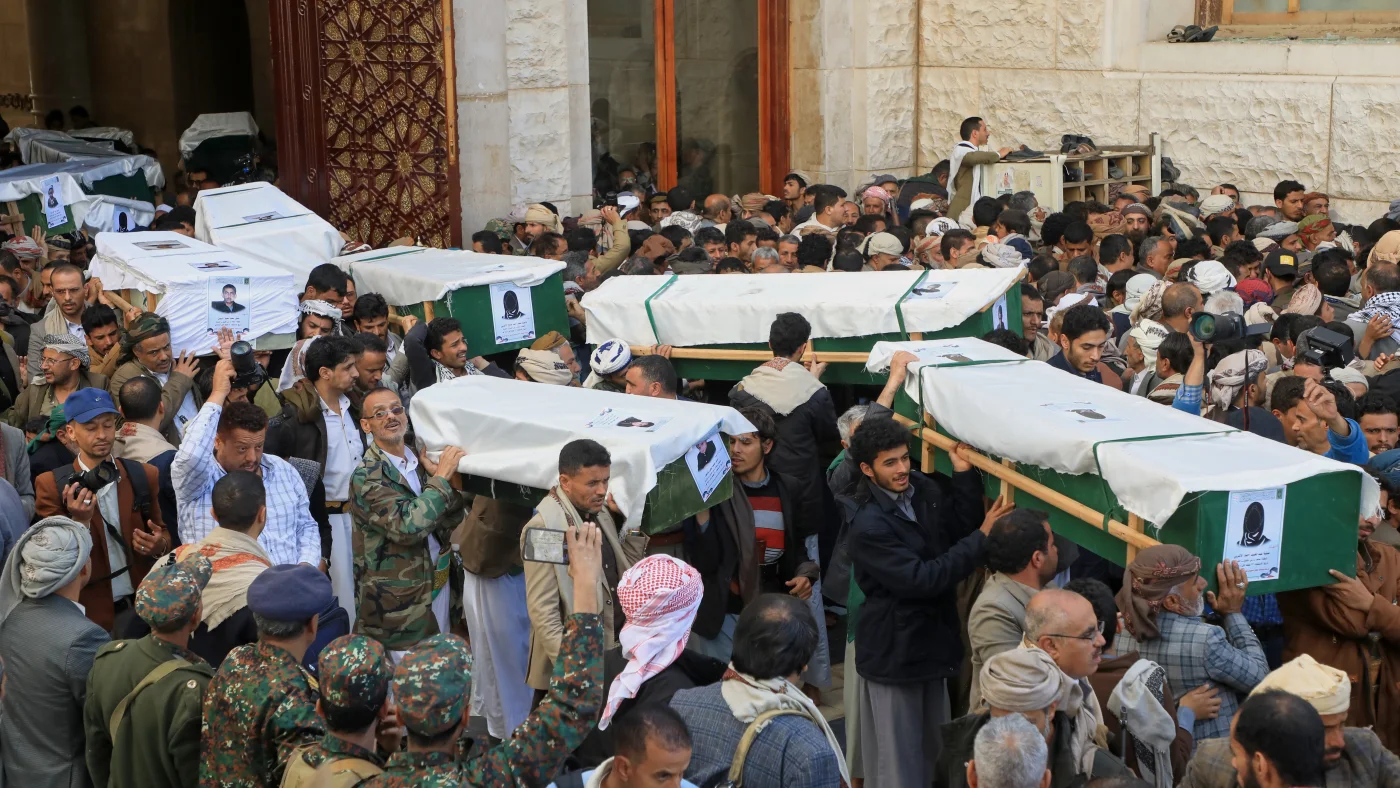
The broader regional impact includes an intensification of war in Yemen between Saudi Arabia and the Iran-supported Houthi movement. Saudi Arabia faces daily drone and missile attacks on its infrastructure, including oil pipelines and its national oil company headquarters in Riyadh. Meanwhile, Houthi authorities reported that Saudi airstrikes killed nearly 60 people, including women and children, in a single weekend. While Qatar continues to attempt mediation, Iran maintains a "take it or leave it" stance on seven demands, including the total lifting of sanctions and blockades, which the U.S. has so far rejected as the conflict enters a period of projected uncertainty.