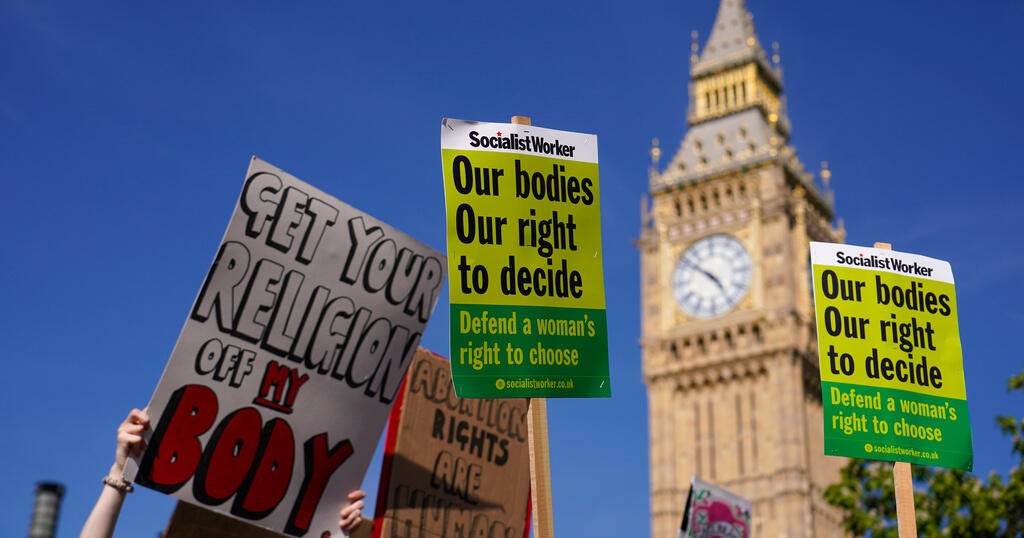
The United Kingdom government announced that women previously convicted of illegally terminating their pregnancies under a Victorian-era law will receive automatic pardons on Monday. The move follows a parliamentary vote last year to decriminalize abortion by repealing a section of the 1861 Offences Against the Person Act.
The 1861 law previously governed cases where women sought to end their own pregnancies. While doctors could legally perform abortions up to 24 weeks in England, Scotland, and Wales, women who self-administered medication or procedures outside of those regulations faced criminal prosecution. This change follows high-profile cases, including the 2023 imprisonment of Carla Foster, a mother of three who received a more than two-year sentence for inducing an abortion at about eight months. An appeals court later released her, saying the case called for "compassion, not punishment."
Under the new policy, pardons will be issued automatically without requiring women to apply, and some will be granted posthumously. The government stated that women who received police cautions will also be pardoned, while records of arrests or investigations for ending a pregnancy will be removed from criminal files. Tonia Antoniazzi, the Labour member of Parliament who introduced the amendment, noted that police had investigated more than 100 women for suspected illegal abortions in the five years before last year's vote, including some who experienced miscarriages or stillbirths.
This policy affects women who have lived with criminal records, police cautions, or investigations related to self-managed abortions in England, Scotland, and Wales. While the government did not provide an exact total of women affected, the reported 100 investigations in a five-year period indicate the scale of recent legal activity. Antoniazzi said the pardons and record expungements are intended to allow these women to participate fully in society, including removing barriers to employment in jobs that require clean criminal backgrounds.
The change for these individuals will be the removal of these details from their history, meaning they will no longer have to disclose these specific past convictions or cautions. The shift is tied to the Crime and Policing Act that took effect this spring, which stipulates that women who terminate a pregnancy at any stage will no longer face criminal charges. Anti-abortion groups opposed the measure, arguing that it would open the door to abortion on demand at any stage of pregnancy.
By automating the process and including posthumous pardons, the government is addressing what Heidi Stewart of the British Pregnancy Advisory Service described as the "profound harm" caused by criminalization. The automatic pardons are scheduled to take effect this Monday, and the removal of arrest details from criminal records will follow as part of the implementation of the Crime and Policing Act.