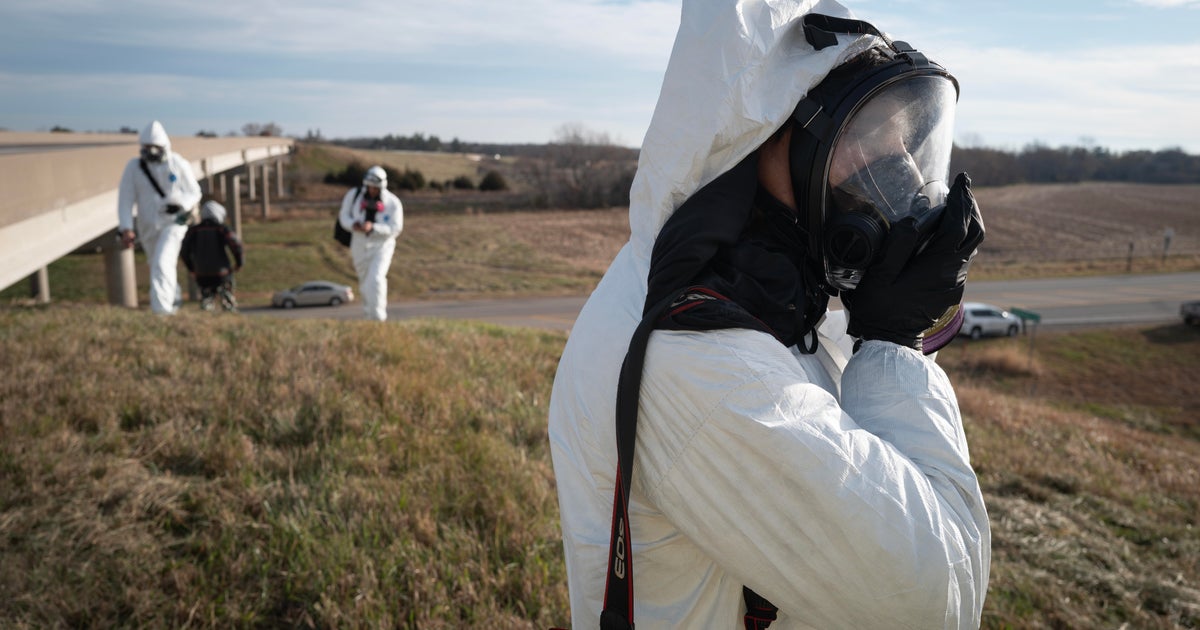
The U.S. Army detonated approximately five tons of degraded lead azide at the Iowa Army Ammunition Plant in Middletown on Wednesday, following months of internal discussions regarding the stability of the chemicals. The Environmental Protection Agency (EPA) reported that air monitoring stations detected no lead in the air 15 minutes after the blast or during follow-up checks two hours later. While President Trump and military officials described the controlled detonation as a success that exceeded expectations, the event has prompted internal administration questions regarding why senior leaders were not briefed on the situation sooner.
The Army first notified the EPA in March 2024 that 68 barrels of potentially unstable chemicals were found during an inspection. Although the Army had identified the public and environmental risks by spring, sources told CBS News that then-Army Secretary Dan Driscoll did not elevate the matter to Defense Secretary Pete Hegseth before Driscoll resigned in September. Acting Army Secretary Adam Telle reportedly learned of the risks in September but also did not brief superiors. Senior administration officials reportedly learned the full extent of the problem on the Thursday before the blast while returning from a trip to Asia, prompting White House Chief of Staff Stephen Miller to coordinate a multi-agency response from Air Force One.
To mitigate the blast, the Army placed the barrels in underground concrete bunkers covered with tarps, water, and particle-collecting aqueous foam. Maps released Tuesday indicated a potential dust cloud path of up to 100 miles, with the highest potential impact within a 30-square-mile radius. While the Army advised residents within five miles to consider evacuation, some remained in their homes. Iowa Governor Kim Reynolds declared a disaster emergency for three southeastern Iowa counties, a move that allows residents to access state aid resources and opens a path to FEMA funding.
For the surrounding community, the immediate impact included evacuation recommendations for those within five miles and the visibility of a dust cloud that could reach 100 miles. Long-term environmental monitoring will determine if lead levels on surfaces like windowsills and floors exceed federal safety limits. Although the EPA’s initial readings show no contamination, some residents have requested independent monitoring, which is being conducted by the University of Iowa and the University of Illinois to verify the federal findings.
The incident has also created administrative friction between the White House and the Army leadership. Sources report that there are ongoing discussions regarding the future of Acting Army Secretary Adam Telle and the role of Army Chief of Staff Gen. Christopher LaNeve in the communication delays. Moving forward, scientists will continue to analyze soil and water samples, with results from independent university monitoring expected in the coming days. The Army has stated that the controlled blast was necessary because the material had become too unstable to move or neutralize by other means.
What happens next: EPA teams and university researchers will continue testing soil and water samples throughout the week, with independent data expected within a few days. Residents seeking financial assistance or property damage reimbursement can contact the Army claims office or visit the Burlington public library for help from service navigators. Internally, the administration is expected to review personnel roles within the Army leadership following the communication breakdown that led to the late-stage mobilization.