The Plain Record

Neutral daily news — clear headlines, complete facts.

Legal

U.S. Army Notifies Court of Plan to Detonate Unstable Explosives Despite Judicial Pause

The U.S. Army informed a federal court it plans to detonate tons of unstable lead azide on or by Tuesday, despite an appeals court order pausing the plan.

By The Plain RecordUpdated November 22, 2026 at 10:42 PM EST
Published November 22, 2026 at 8:36 AM EST

The short answer

The U.S. Army informed a federal court it plans to detonate tons of unstable lead azide on or by Tuesday, despite an appeals court order pausing the plan.

Updates (1)

  • Update — November 22, 2026 at 10:42 PM EST: The Army says "swift action" is necessary to protect its personnel and nearby communities around its ammunition plant in Iowa.
U.S. Army Notifies Court of Plan to Detonate Unstable Explosives Despite Judicial Pause

The Facts

Who
The U.S. Army, the 8th U.S. Circuit Court of Appeals, the Iowa Environmental Council, and the Sierra Club.
What
The U.S. Army stated in court filings that it intends to proceed with a controlled detonation of unstable explosives in Iowa on or by Tuesday, citing an emergency exclusion to environmental permits, despite an indefinite stay issued by the 8th U.S. Circuit Court of Appeals.
When
Late Saturday and Sunday, Nov. 21-22, 2026, following a court order on Friday, Nov. 20.
Where
Middletown, Iowa
Why
The Army argues that deteriorating lead azide poses a greater public safety risk if left to explode uncontrollably due to falling temperatures, while environmental groups argue the detonation will spread toxic lead dust across Iowa and Illinois.

The U.S. Army stated in federal court records that it intends to proceed with the detonation of several tons of unstable explosives at the Iowa Army Ammunition Plant on or by Tuesday. This announcement follows an emergency motion granted by the 8th U.S. Circuit Court of Appeals on Friday that paused the detonation indefinitely. The Army argued in its Saturday filing that the public safety risks associated with a potential uncontrolled explosion outweigh the court-ordered pause.

The explosives, consisting of 68 drums of lead azide, were discovered to be recrystallizing in March at the munitions facility in Middletown, Iowa. The Army originally scheduled controlled detonations for Friday, then delayed them to Monday before the court intervened. Environmental groups, including the Sierra Club and the Iowa Environmental Council, filed the lawsuit leading to the stay, citing concerns that a detonation could spread toxic lead particles across parts of Iowa and Illinois.

In its legal filing, the Department of the Army stated it will utilize an emergency munitions and explosives exclusion to the Environmental Protection Agency's (EPA) permit requirements. Military officials warned that lead azide crystals in the waste could break and trigger an explosion as temperatures are expected to drop below 30 degrees. The Army maintained that a controlled event allows for mitigation measures to minimize lead dust dispersal, which they argued is safer than an accidental detonation.

A person living in the region would notice activity in the form of controlled detonations or continued legal uncertainty regarding the site's safety. The Army has stated it will implement mitigation measures even if the formal EPA permit is technically excluded, but the Iowa Environmental Council has challenged the Army's risk assessment and public notice procedures.

What happens next depends on the 8th U.S. Circuit Court of Appeals' response to the competing filings. The Iowa Environmental Council and Sierra Club filed a motion on Sunday to supplement their request to block the detonation, including declarations from experts and local governments. The Army has indicated it intends to act by Tuesday to avoid the risks associated with falling temperatures. Specific court dates or deadlines for a final ruling on the indefinite pause were not reported.

Timeline of what happened

Key dates and decisions, in the order they occurred.

  1. 1941

    Iowa Army Ammunition Plant built

  2. March 2026

    Army discovers 68 drums of lead azide starting recrystallization

  3. November 19, 2026

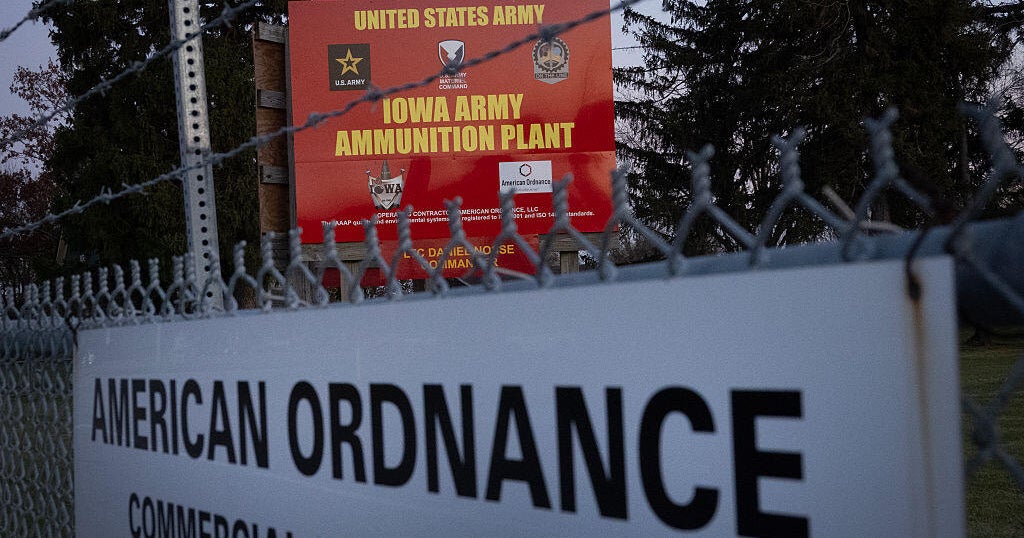
    Facility identification sign photographed in Middletown, Iowa

  4. 2026-11-20Target detonation date delayed to Monday; 8th Circuit Court grants stay

    Target detonation date delayed to Monday; 8th Circuit Court grants stay

  5. November 21, 2026

    Army files court record stating intent to proceed with detonation by Tuesday

  6. November 22, 2026

    Environmental groups file motion to block the planned Tuesday detonation

Summaries are written by The Plain Record to state the facts of a story plainly and without political slant. Drafted with AI assistance and checked against the source record before publication. See how we report, or report a correction.

← Back to the front page

Questions readers ask

What happened: U.S. Army Notifies Court of Plan to Detonate Unstable Explosives Despite Judicial Pause?

The U.S. Army stated in court filings that it intends to proceed with a controlled detonation of unstable explosives in Iowa on or by Tuesday, citing an emergency exclusion to environmental permits, despite an indefinite stay issued by the 8th U.S. Circuit Court of Appeals.

Who is involved?

The U.S. Army, the 8th U.S. Circuit Court of Appeals, the Iowa Environmental Council, and the Sierra Club.

When did this happen?

Late Saturday and Sunday, Nov. 21-22, 2026, following a court order on Friday, Nov. 20.

Where did this happen?

Middletown, Iowa

Why does this matter?

The Army argues that deteriorating lead azide poses a greater public safety risk if left to explode uncontrollably due to falling temperatures, while environmental groups argue the detonation will spread toxic lead dust across Iowa and Illinois.