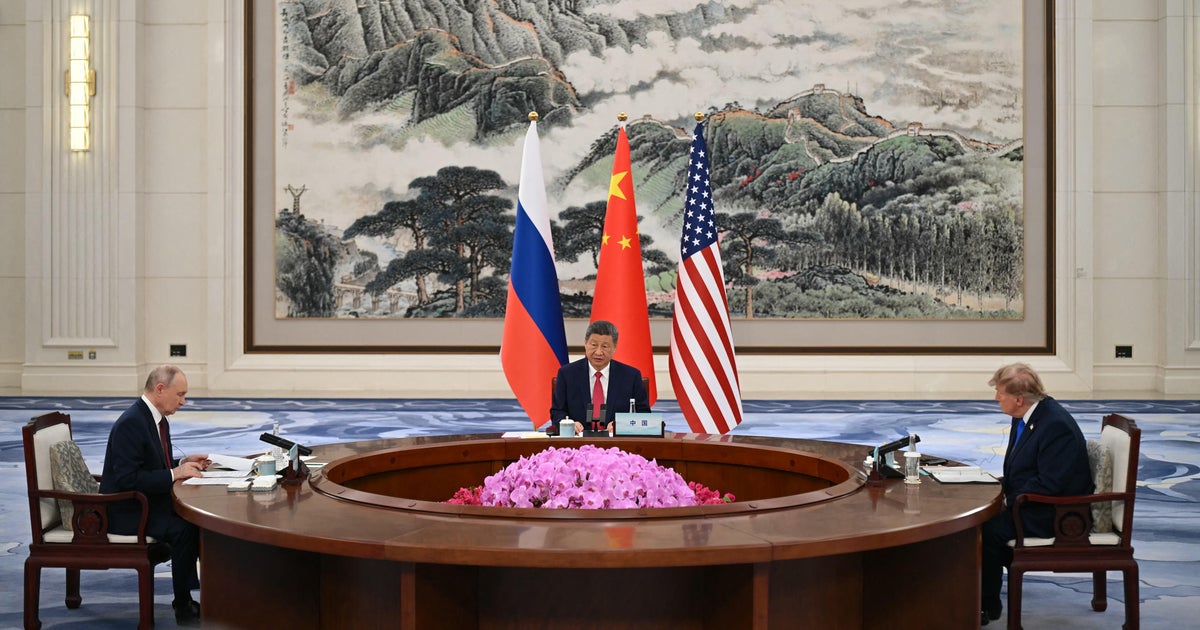
U.S. President Donald Trump, Chinese President Xi Jinping, and Russian President Vladimir Putin held a trilateral meeting on Thursday, November 19, 2026, in Shenzhen, China. This encounter, occurring on the sidelines of the Asia-Pacific Economic Cooperation (APEC) summit, marked the first time in American history that a U.S. president gathered with the leaders of China and Russia for a three-way summit. The leaders gave brief opening statements before conducting closed-door talks for approximately 90 minutes, followed by the immediate departure of Mr. Trump for the airport to return home.
The meeting was first proposed by President Putin during an October phone call with President Trump. The gathering took place amid international tensions, including a Justice Department investigation into the diversion of high-end U.S. computer chips to China involving the firm Megaspeed, and ongoing military conflict in Ukraine. Before the three-way session, Mr. Trump held separate bilateral meetings, speaking with Mr. Putin for 42 minutes and Mr. Xi for approximately one hour.
The Kremlin released what it called a joint statement following the talks, reporting that the three leaders reaffirmed their commitment to "strategic stability" and reforming the United Nations. They also stated that "there can be no winners in a nuclear war" and agreed on the importance of increasing gas and oil production. The statement noted that the International Criminal Court and similar bodies "should not abuse their powers." The White House did not provide an immediate readout, though Mr. Trump characterized his relationship with both leaders as positive during his opening remarks.
Regarding the war in Ukraine, Mr. Putin indicated after the talks that Ukraine and Europe were "not yet ready" for necessary compromises. He specifically stated that Russia would not negotiate following a missile strike this week on the Kerch Bridge, which links Russia to Crimea. In separate talks with Mr. Xi, Mr. Trump focused on trade and tariffs, noting his intention to ask China to purchase more from American farmers. On the topic of technology, Mr. Trump vowed in an APEC speech to block "globalist regulation" of artificial intelligence.
The summit brought together leaders of countries that collectively hold the vast majority of the world's nuclear weapons, including an estimated 5,000 warheads each in U.S. and Russian stockpiles and roughly 600 in China's. While the leaders committed to continued dialogue on reducing nuclear risks, they did not sign new treaties to replace those that have recently lapsed. China also reaffirmed its stance that its smaller arsenal makes it an unequal partner in traditional U.S.-Russia arms control negotiations.
Small-business owners and farmers in the United States are affected by the ongoing trade relationship with China, which saw tariffs rise above 100% in 2025. A current tariff truce is scheduled to expire on January 10, 2027. Specifically, Mr. Trump noted China's "insatiable appetite" for agricultural products. Additionally, the U.S. tech sector faces new restrictions following a Trump administration rule aimed at curbing China's remote access to advanced AI chips, a move that follows allegations involving former Nvidia CEO Jensen Huang and a suspected Chinese intelligence asset.
The meeting faces immediate political shifts in the United States. With Democrats set to take control of Congress in January, any long-term policy shifts or trade agreements proposed during this summit may face domestic legislative challenges. What happens next depends on the outcome of the Justice Department investigation and whether any trade agreements are finalized before the January 10 tariff deadline. Furthermore, the conflict in Ukraine continues without a negotiated settlement.