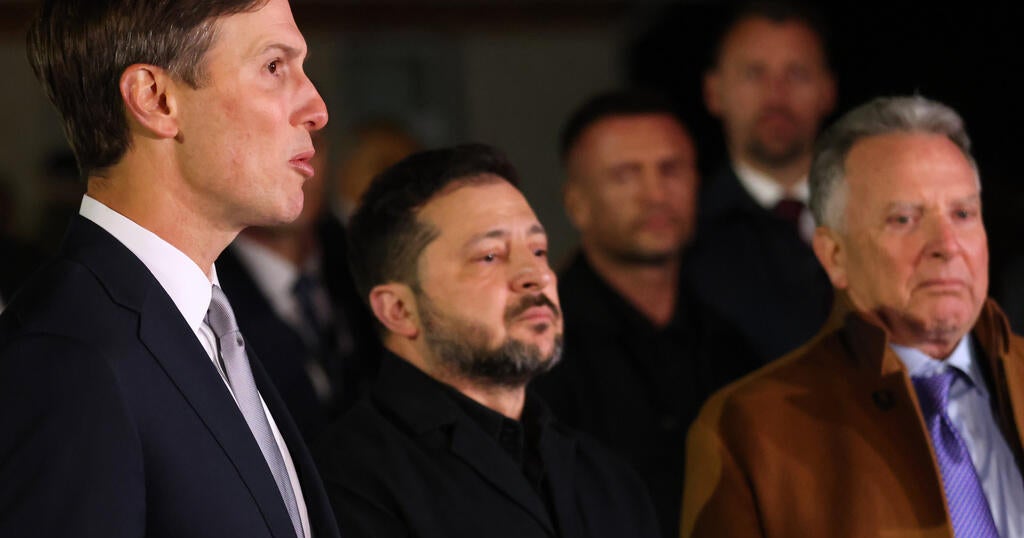
U.S. special envoy Jared Kushner announced on Saturday that the United States is facilitating direct discussions between Russia and European partners to advance a peace agreement in Ukraine. The announcement follows separate meetings held by Kushner and Steve Witkoff with Russian President Vladimir Putin and Ukrainian President Volodymyr Zelenskyy during the preceding week.
The diplomatic push occurs more than four and a half years after the conflict began. While U.S.-brokered talks concluded on a Wednesday with plans for a prisoner exchange and further dialogue, officials reported that a comprehensive peace deal has not yet been reached. Kushner stated that the current focus is preparing the agenda for trilateral talks and exploring new ideas to bridge gaps between the parties.
Ukrainian President Volodymyr Zelenskyy said on Saturday that the U.S. has introduced the possibility of a new European security framework. However, Zelenskyy expressed concern that such a framework could be used by Moscow to weaken NATO or attempt to reshape continental borders. He noted that the U.S. also inquired if Ukraine would withdraw from portions of the Donbas region not currently controlled by Russia in exchange for NATO membership, a proposal he rejected by stating Kyiv would not surrender territory.
Kushner said a lasting peace requires actionable postwar security arrangements and that NATO will remain a critical pillar of European security. He stated that President Trump would only support arrangements that strengthen security and reduce the risk of future conflict. European leaders have maintained that decisions regarding the continent's security must be made by Europeans and warned against allowing Russia to dictate terms regarding NATO's future.
For European partners and NATO members, the precedent of direct engagement between Moscow and Europe—facilitated by the U.S.—could shift how multinational defense policies are negotiated. If the U.S. proposal for a new security framework advances, it may change how border guarantees and military deconfliction are managed across the continent. Residents of the Baltic countries and other Eastern European nations would notice these changes through shifts in the presence of American troops or adjustments to NATO security guarantees if a new order is established.
The next steps in the process involve a series of diplomatic engagements and potential summits. President Trump is scheduled to meet with President Putin next week during a trilateral summit that includes Chinese leader Xi Jinping, though officials stated the Ukraine war is not expected to be discussed at that meeting. Zelenskyy has stated that any comprehensive security package would be put to the Ukrainian public for a decision, though no date for such a referendum or for the next round of trilateral talks has been finalized.