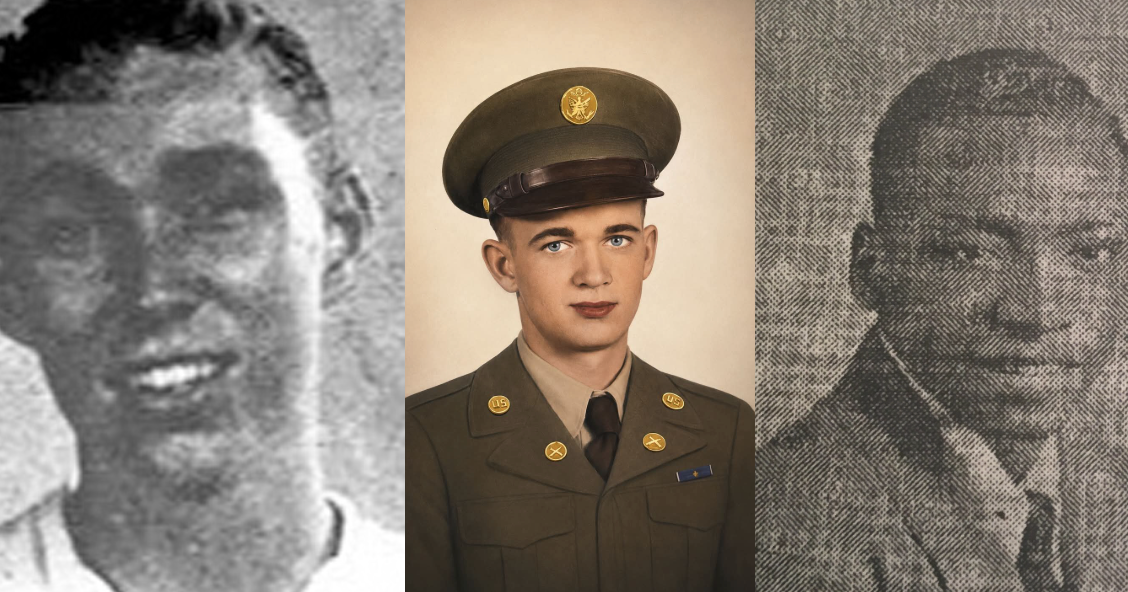
The Defense POW/MIA Accounting Agency (DPAA) announced on Monday that six U.S. Army soldiers killed during the Korean War have been identified. The newly accounted-for personnel include two teenagers and four others who were previously listed as missing in action or nonrecoverable. The identifications are part of a long-term federal effort to locate and return the remains of thousands of service members who disappeared during the conflict between 1950 and 1953.
The identifications involved remains recovered shortly after the war and others interred as unknowns at the National Memorial Cemetery of the Pacific in Honolulu. Forensic scientists used modern techniques, including DNA analysis, isotope analysis, and X-rays, to confirm the identities. According to the DPAA, the process often requires comparing remains against archival records, witness statements, and reference DNA samples provided by surviving family members.
Among those identified were Cpl. Jackie Lee Thurman, 18, and Cpl. Richard N. Lennox, 18. Thurman was reported missing in 1950 near Waegwan, South Korea, while Lennox died in a prisoner-of-war camp in 1951 after being captured in North Korea. Other soldiers identified include 1st Lt. Raymond Banker Gilbert, 23; Cpl. William R. Laughlin Jr., 21; Sgt. Joseph A. Platzkoester, 28; and Cpl. Andrew R. Tischler, 21. Each soldier was accounted for between August 2025 and September 2026.
The scale of this effort is defined by the thousands of sets of remains still missing and the multi-decade timeline required for forensic identification. The DPAA operates in 46 countries, though work in North Korea remains limited. Identifying one individual can involve disinterring remains buried for over 70 years, as was the case for Cpl. Lennox, whose remains were disinterred in 2016 but not fully accounted for until 2025. This process relies on specialized laboratory work, including the use of historical medical records like tuberculosis skin tests taken before soldiers deployed.
The concrete change for families includes receiving a formal briefing from the agency before further public details about the identification methods may be released. These successful identifications involve the refinement of forensic precedents, such as using DNA comparison and historical evidence to resolve cases from the 1954 "Operation Glory" exchange. What happens next depends on individual family decisions regarding burial dates and locations, while the DPAA continues recovery missions and laboratory analysis for the remaining thousands of missing personnel.