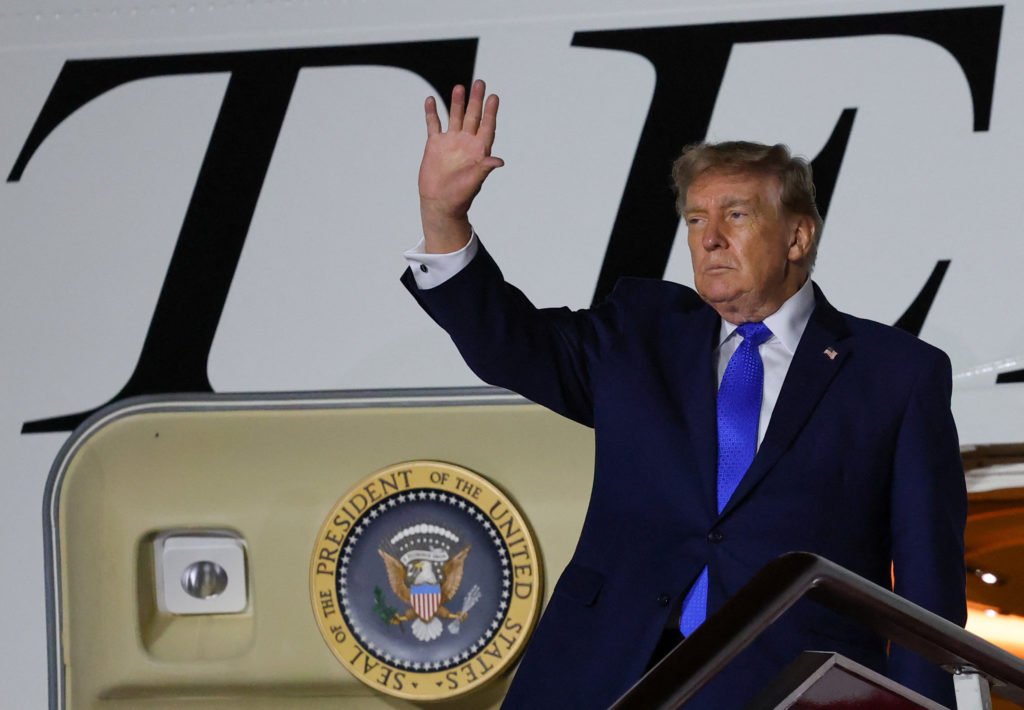
President Donald Trump stated on Friday, November 20, 2026, that China is developing nuclear weapons at a rapid pace following a trilateral meeting with Chinese leader Xi Jinping and Russian President Vladimir Putin. During a White House news conference, Trump said China’s buildup was occurring "hot and heavy" and estimated the country could reach nuclear parity with the United States within 10 years. The remarks followed a summit between the three leaders held on Thursday, November 19, 2026, in Shenzhen, China.
The meeting in Shenzhen resulted in a joint statement where the U.S., Russia, and China affirmed that "a nuclear war cannot be won and must never be fought." The three nations agreed to conduct a dialogue focused on reducing nuclear risks and preventing the proliferation of nuclear weapons. Historically, Beijing has resisted participating in arms control talks with the U.S. and Russia, citing its comparatively smaller arsenal.
According to a Pentagon annual review of China's military, the Chinese nuclear stockpile remained in the low 600s through 2024. However, the report projected that China is on track to exceed 1,000 warheads by 2030. Russia and the United States currently lead the world in nuclear holdings, with each nation possessing thousands of weapons. Secretary of State Marco Rubio, speaking alongside the president, stated that engagement between the three powers is necessary because they possess the "overwhelming majority" of global nuclear armaments.
The impact for the general public is a shift in the diplomatic framework governing international security. Instead of the traditional bilateral arms control model between the U.S. and Russia, this trilateral format brings China into the negotiations. Citizens may notice shifts in defense policy or international rhetoric as these talks progress, though the specific timing for the first round of dialogue has not yet been announced.
The knock-on effects of this summit could influence future treaties and military spending priorities for all three countries. By securing China’s participation in proliferation talks, the U.S. and Russia have established a new precedent for global arms control. What happens next depends on the scheduling of the promised dialogue; while the leaders have committed to the talks, specific deadlines for meeting or implementing risk-reduction measures remain not reported.