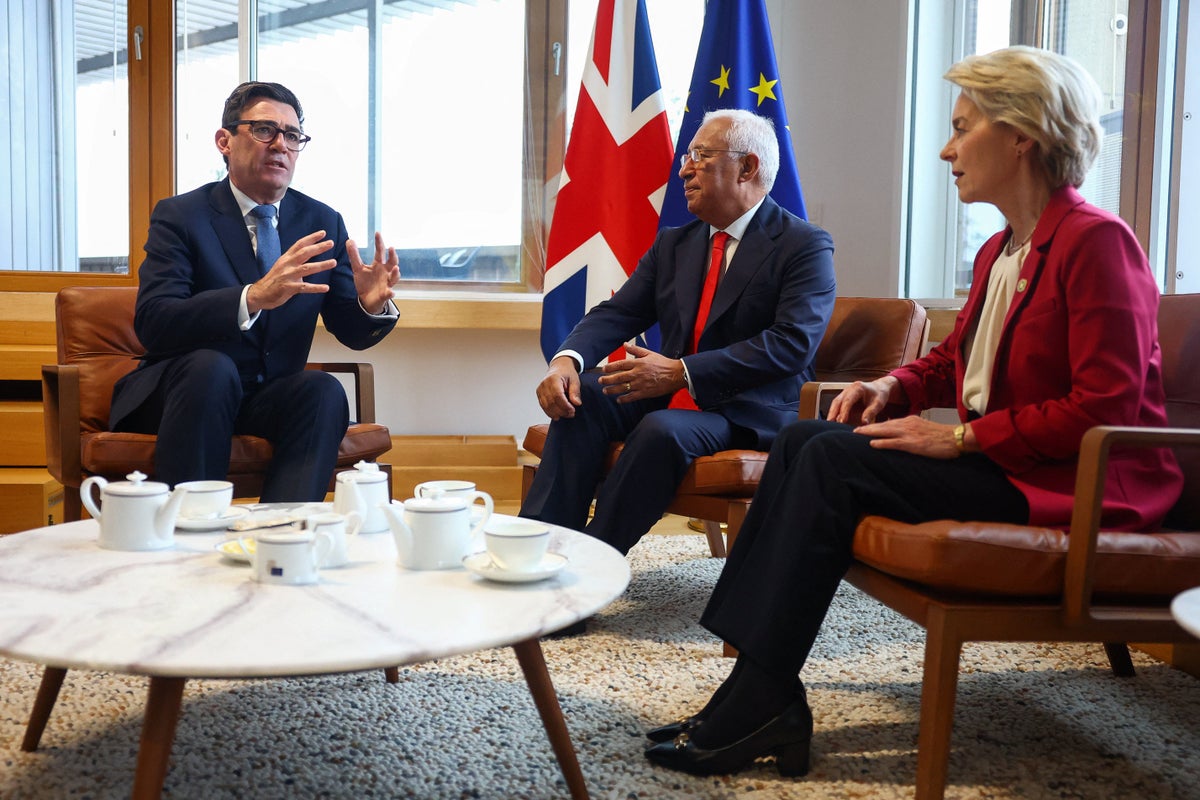
Prime Minister Andy Burnham reached a trade agreement with the European Union in Brussels on Friday, November 20, 2026. The deal covers food and agriculture exports, emissions trading, and a youth experience scheme, with a specific focus on reducing border friction for goods moving between the UK and the EU.
The agreement seeks to address post-Brexit export checks by aligning British trade rules with EU standards for sanitary and phytosanitary (SPS) goods, which include food, drinks, and plants. This alignment is scheduled to begin in March 2028. The deal follows a UK-EU summit where European Commission President Ursula von der Leyen described the meeting as a sign of "good old friends that are rejuvenating the friendship."
Retailers, including the British Retail Consortium (BRC), Lidl GB, and Marks & Spencer, stated the deal would simplify trade and reduce bureaucracy. Alex Freudmann, managing director of Marks & Spencer Food, noted that current regulations require significant paperwork and veterinary signatures for food shipments. However, the BRC informed the Press Association that it does not expect supermarket prices to fall as a result of the deal, citing remaining upward economic pressures.
The agreement directly affects UK retailers, agricultural producers, and suppliers who manage the flow of food and plants between Britain and the EU. For these businesses, the deal aims to remove the requirement for complex documentation, such as the veterinary signatures currently needed for meat exports. While the Prime Minister estimated the deal would add 0.5% to the UK's gross domestic product (GDP), the BRC noted that the scale of current economic pressures means ordinary shoppers are unlikely to see a decrease in their grocery bills.
For businesses to realize the intended benefits, the BRC stated they require at least 18 months of transition time and clear government guidance before the new rules take effect. Without this preparation period, industry representatives warned of potential "unnecessary cost or disruption." Additionally, students and universities are affected by an ongoing dispute regarding EU demands to lower tuition fees for member-state students at British institutions, a matter that remains unresolved following the summit.
A six-month deadline has been set to reach an agreement on the tuition fee issue. While Brussels officials suggested that the implementation of the broader trade deal could be impacted if the fee dispute persists, the UK government maintained that the agreement is finalized. Detailed dates for when specific provisions come into force are expected to be published in a forthcoming joint statement by the UK and the EU.