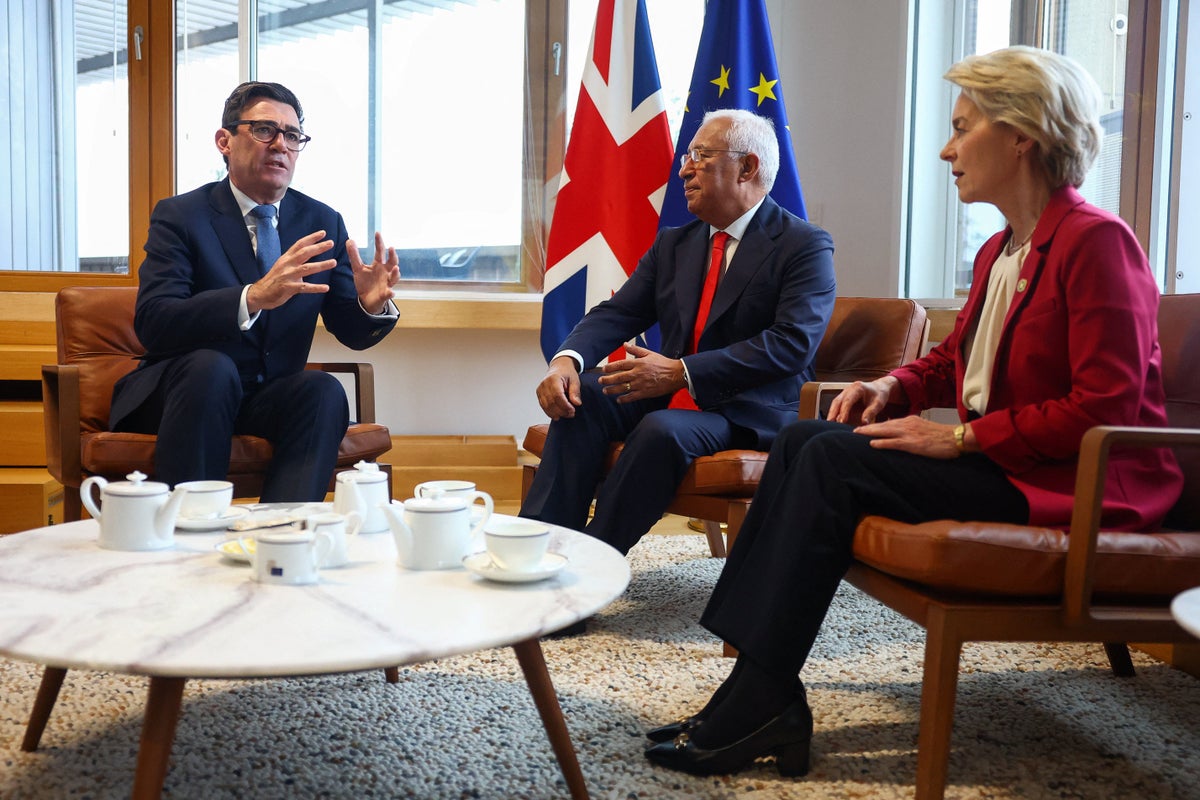
Prime Minister Andy Burnham reached a new trade agreement with the European Union on Friday, November 20, 2026, aimed at reducing border friction for food and agriculture exports. The deal, announced during a summit in Brussels, also includes provisions for emissions trading and a youth experience scheme.
The agreement follows years of post-Brexit export checks between Britain and the EU. According to the terms of the deal, the United Kingdom will align with European Union trade rules for sanitary and phytosanitary (SPS) goods—which include food and plants—beginning in March 2028.
Retail and manufacturing groups expressed support for the deal while requesting a transition period. Helen Dickinson, chief executive of the British Retail Consortium (BRC), called the SPS alignment a "big win" but requested at least 18 months for businesses to adapt. National Farmers Union (NFU) President Tom Bradshaw stated that the deal "should help" the industry but noted that rebuilding lost export markets would take time.
The deal faces potential tension regarding EU demands for the UK to reduce tuition fees for students from member states. While officials in Brussels indicated that implementation could be affected if this issue is not resolved within a six-month deadline, the UK government stated the deal is finalized and that implementation dates are not conditional on the tuition fee negotiations.
This agreement affects British retailers, food manufacturers, and farmers who trade goods across the English Channel and between Great Britain and Northern Ireland. By aligning the UK with EU rules for food and plants, the deal is intended to reduce requirements for veterinary signatures and paperwork. Prime Minister Andy Burnham estimated the agreement will provide an economic boost of 0.5% to the UK's gross domestic product (GDP). However, the British Retail Consortium noted that shoppers should not expect to see a decrease in supermarket shelf prices, as other upward cost pressures remain significant.
For individual businesses, the change involves a shift in day-to-day operations beginning in early 2028. Currently, shipping products like prepared meals to EU markets can require extensive documentation, such as veterinary certifications. The deal aims to remove this bureaucracy, which retailers like Marks & Spencer and Lidl stated would improve predictability in the supply chain. Small-scale farmers and large exporters will gain access to new agricultural trade specialists in both England and Europe who are tasked with advocating for British products.
What happens next depends on the implementation phase and the resolution of outstanding disputes. The UK government and the EU are expected to release a joint statement confirming specific dates for when various parts of the agreement come into force. Businesses have requested "clear and early" guidance to avoid transition costs. Additionally, the two parties have six months to negotiate the EU's demand for lower tuition fees for its students at British universities. If no resolution is reached by that deadline, EU officials suggested it could impact the rollout of the trade measures announced on Friday.