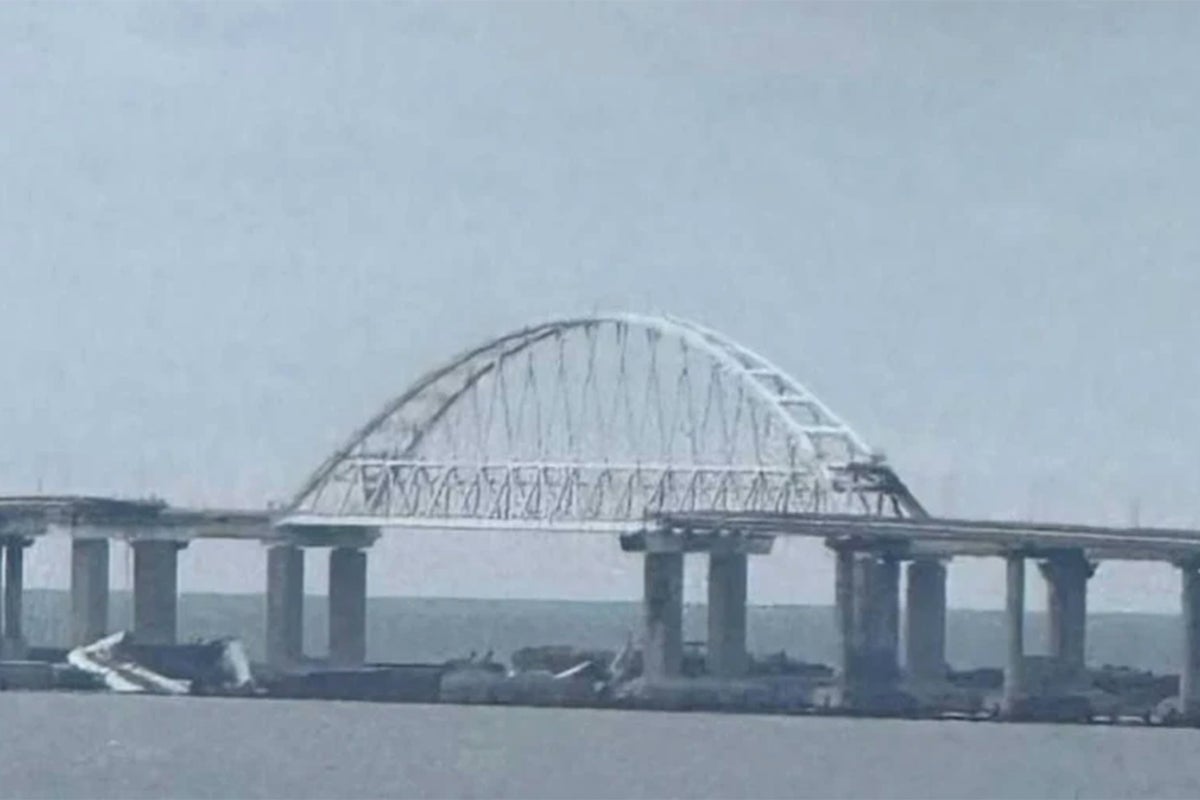
Military sources reported that President Volodymyr Zelensky has instructed Ukrainian commanders to plan the complete demolition of the Kerch Bridge, which connects Russia to Crimea. This report follows strikes during the week of November 21, 2026, that partially disabled the crossing. One insider stated to The Telegraph that further strikes are currently being prepared as part of a campaign to disrupt Moscow's supply lines to southern and eastern Ukraine.
The Kerch Bridge, which Russian President Vladimir Putin has stated is not used for military purposes, sustained damage to its central road span and railway tracks from Ukrainian-made Neptune missiles. According to Emily Ferris of the Royal United Services Institute (RUSI), this represented the first instance of persistent damage to the bridge from such strikes. Additionally, Russia’s defense ministry reported shooting down 1,246 Ukrainian drones overnight, including more than 400 launched toward Moscow.
Ukraine has previously targeted other logistical routes, including the M-14 highway and fuel tankers, leading to fuel shortages in Crimea earlier in 2026. Franz-Stefan Gady of the Center for a New American Security noted that while the bridge is partially disabled, Russia must redirect traffic to the M-14, though he stated a "sudden logistical breakdown" remains unlikely due to Russian evasive tactics. On November 27, 2026, Ukrainian Foreign Minister Andrii Sybiha stated that Russia had requested a ceasefire regarding the oil sector, which Kyiv would only consider as part of a broader energy agreement.
A total collapse of the bridge would force all military and civilian transport onto the M-14 highway through occupied southern Ukraine. According to analysts, this shift would create a higher concentration of targets for Ukrainian forces, potentially increasing the frequency of kinetic engagements along that corridor. For the Russian military, the primary impact would be felt in the logistics of the Crimean peninsula rather than immediate battlefield operations in southern Ukraine. This sets a precedent for Ukraine's use of "homegrown technology," specifically Neptune missiles, to strike deep behind front lines without relying on Western-supplied long-range systems.
The immediate next steps involve the continued preparation of Ukrainian strikes and the ongoing evaluation of a potential ceasefire. On Friday, November 27, Foreign Minister Sybiha indicated that Kyiv is weighing a Russian request for a truce on energy infrastructure. Meanwhile, the relationship between President Zelensky and U.S. President Donald Trump remains a factor in future policy, following a public disagreement in February 2025 and more recent disputes over the impact of Ukrainian strikes on global energy prices. No specific date for the next major operation against the bridge was reported.