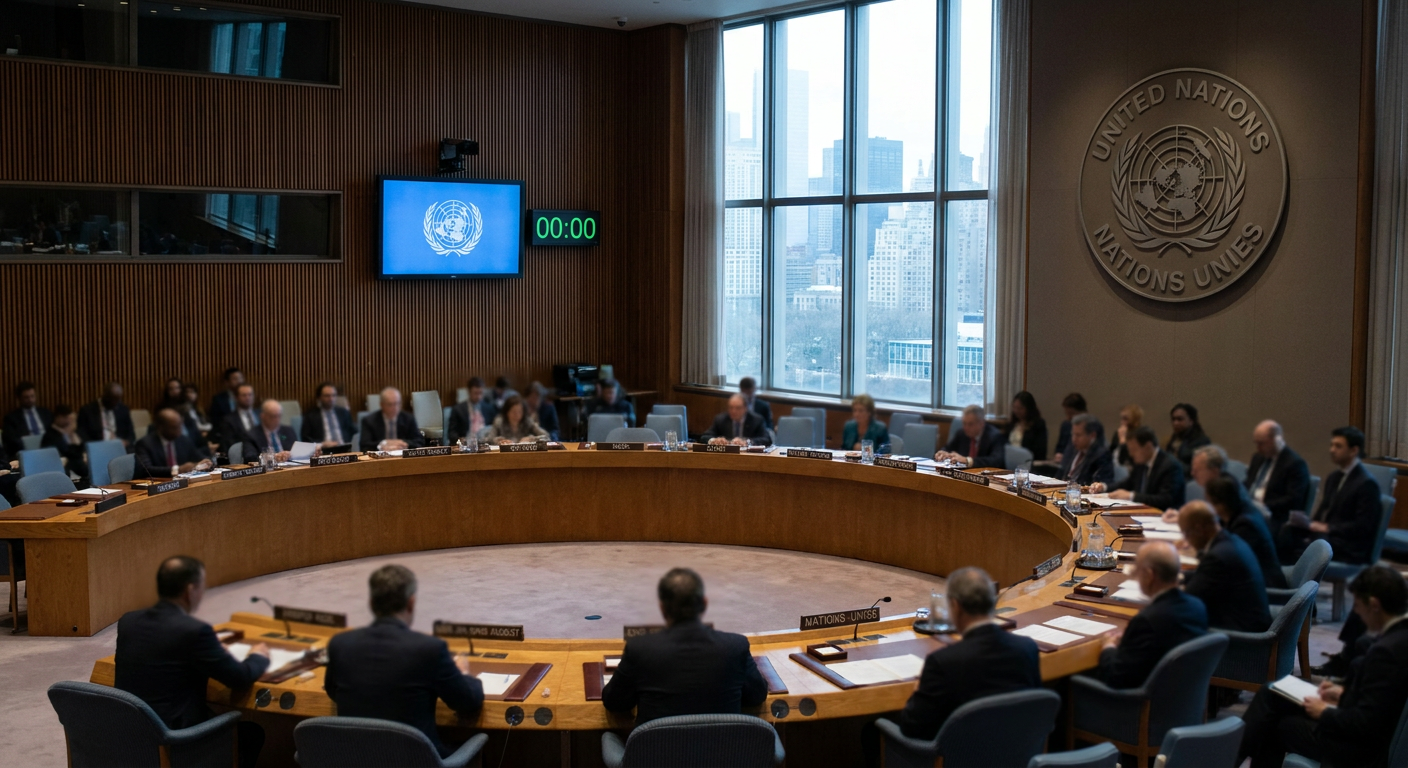
The United Nations Security Council has not yet reached a consensus on a successor for Secretary-General Antonio Guterres, whose term is scheduled to end next month. Despite conducting nine rounds of straw polls, the permanent members of the Security Council remain divided over the field of candidates. Current and former diplomats noted that the delay leaves little time for a new leader to prepare for the role before the January transition.
The selection process traditionally involves regional rotations, and Latin American countries have stated it is their turn to lead the organization. The U.S. State Department has indicated it seeks a leader focused on peace and security rather than what it described as "the absurd, politicized, woke ideology" it claims has undermined U.N. effectiveness. Former U.S. Ambassador Robert Wood stated that the Trump administration had previously hoped for additional candidates to enter the race, though he suggested it is now likely too late for new entrants.
Four primary candidates have emerged in the straw polls, though each has faced opposition from at least two permanent Security Council members. The candidates include Rebeca Grynspan, former vice president of Costa Rica and current head of the U.N. Trade and Development Organization; Rafael Grossi, the Italian-Argentinian head of the International Atomic Energy Agency; Carolyn Rodrigues-Burkett, former foreign minister of Guyana; and Lana Nusseibeh, former ambassador from the United Arab Emirates. Nusseibeh has faced criticism from activists over her country’s support for a militia in Sudan.
Anjali Dayal, a professor at Fordham University, noted that appointing a leader in December to take over in January is unusual for an organization of this scale. A condensed transition period could impact the U.N.'s ability to respond to ongoing conflicts, such as the war in Ukraine and tensions involving Iran. Dayal stated that the successful candidate must satisfy permanent Security Council members who may have conflicting views on the U.N. Charter while simultaneously committing to uphold that Charter for the rest of the world.
U.N. experts suggested that the final decision may involve "horse trading," where permanent Security Council members—China, France, Russia, the United Kingdom, and the United States—withdraw their veto threats in exchange for promises of other high-ranking U.N. positions for their nationals. To take office, a candidate must be recommended by the Security Council and then approved by the General Assembly. The current term for Antonio Guterres expires at the end of December 2026.