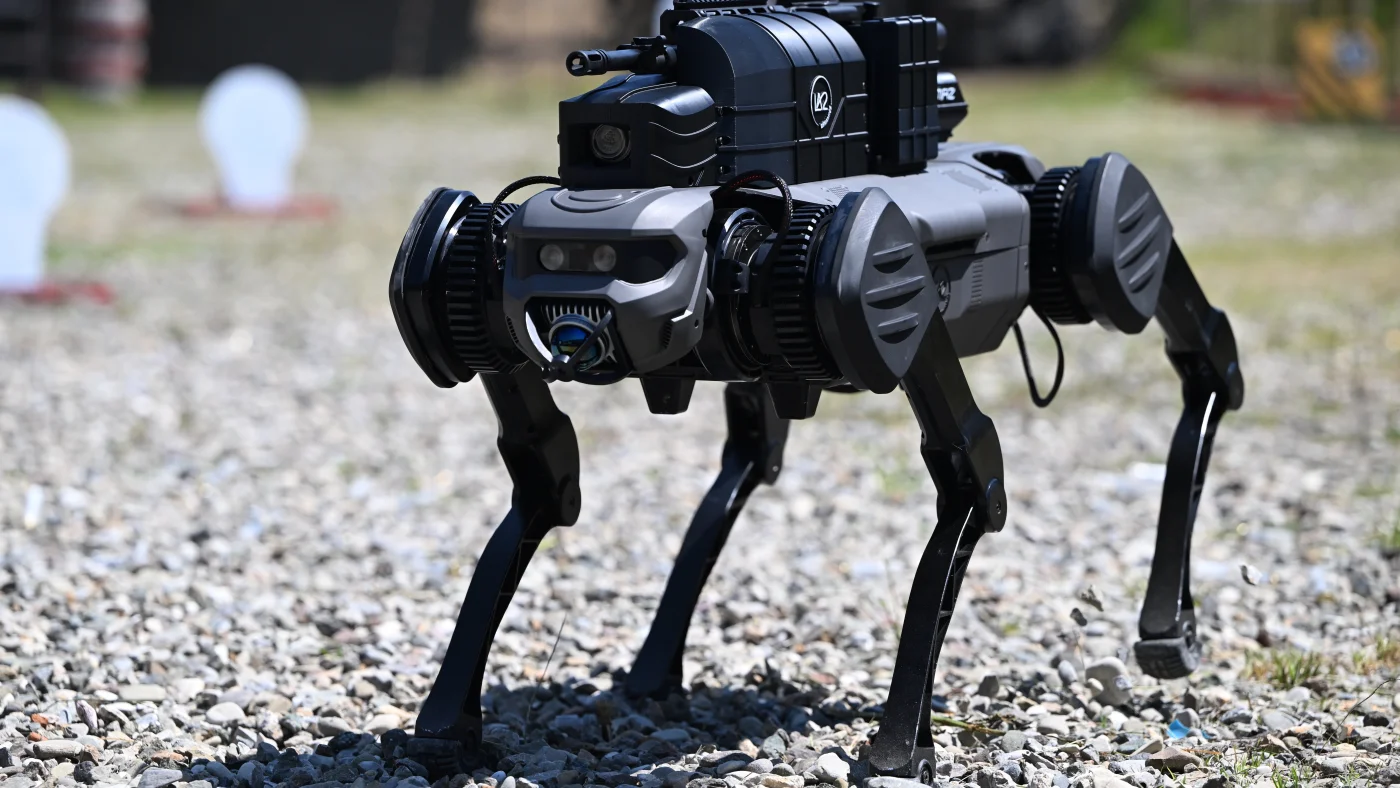
Representatives from various countries met in Geneva at the United Nations to negotiate rules for lethal autonomous weapons. The meeting was part of the United Nations Convention on Certain Conventional Weapons (CCW), which meets just once every five years. The discussions focused on how to manage weapons capable of selecting and killing targets without human intervention.
The negotiations occurred as advancements in artificial intelligence have brought military technology closer to full autonomy. While AI-assisted weapons are currently used in conflicts in Ukraine and Gaza, human operators still remotely control them. Humanitarian organizations and officials, including U.N. Secretary-General Antonio Guterres and the International Committee of the Red Cross, have called for legally binding rules to ensure the decision to kill remains under human control.
Supporters of strict regulations, including Ireland, Italy, Brazil, Mexico, France, and Germany, proposed a timetable for binding international rules. However, the United States, Russia, and Israel expressed opposition to legally binding controls. The United States proposed a five-year period to draft non-binding guidelines instead. U.S. Secretary of State Marco Rubio, in a speech to the Federalist Society, warned against "quoting laws to men with swords."
For international security, at least 50 nations are seeking immediate regulation, while the U.S., Russia, and Israel have indicated they will resist such mandates. Human rights groups reported that as AI technology becomes cheaper, the risk of proliferation increases. They cautioned that autonomous drone swarms could theoretically be programmed to target individuals based on specific traits, such as clothing color, possession of a poster, or the language they speak.
The negotiations operate on a consensus model, meaning any single nation can block a formal treaty. This has led to the consideration of a compromise: a negotiating period to develop rules that states could choose to adopt as either binding or non-binding. If a consensus is not reached within the U.N. framework, some nations may follow the precedent of the Ottawa Convention on landmines and move negotiations to an external process. The current conference serves as a primary deadline for setting the international regulatory agenda for the next five years.