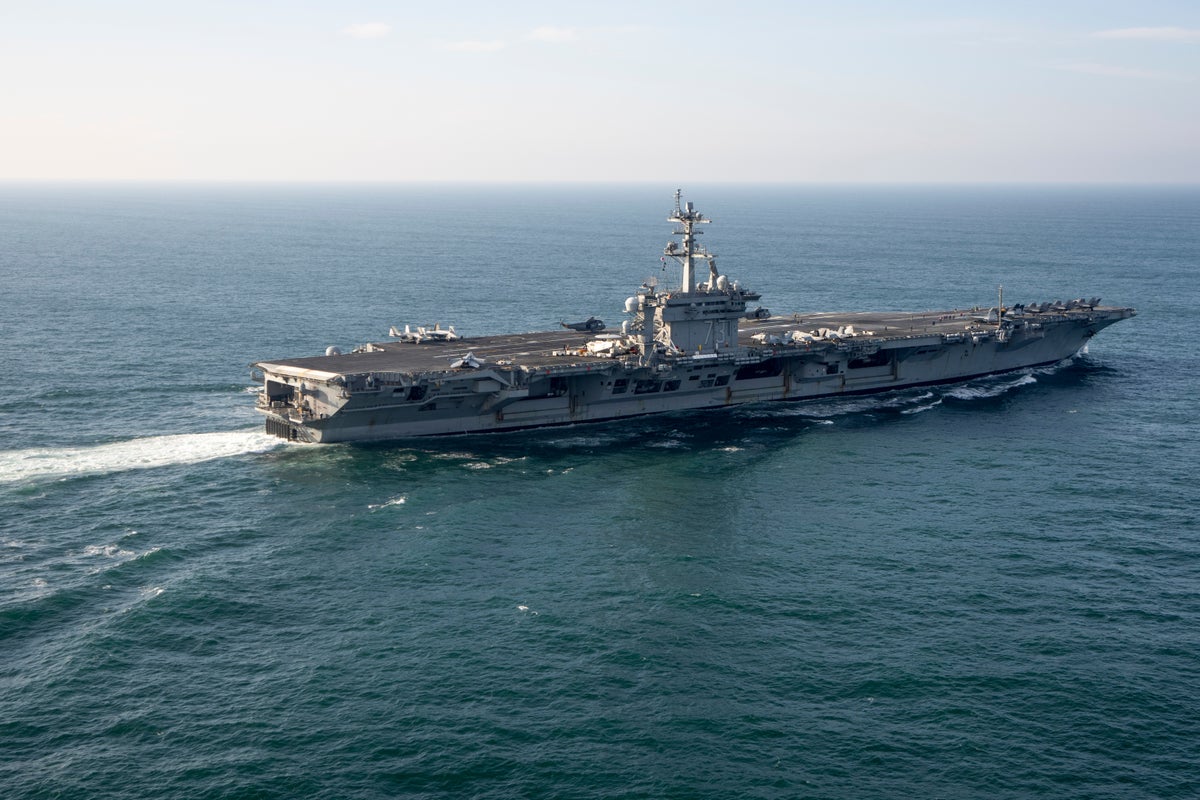
The U.S. Navy aircraft carrier USS George Washington departed the Middle East this week, reducing the total number of American carriers in the region from three to two. The vessel is now operating in the Asia-Pacific region under the control of the U.S. Pacific Fleet. Its departure follows the arrival of the USS Theodore Roosevelt, which had briefly increased the naval presence to three carriers.
The move is the latest adjustment to U.S. naval deployments during the ongoing conflict with Iran, which began on February 28. The George Washington had arrived in the Middle East in August after being redirected from a patrol in the South China Sea. That redirection occurred following reports of mental health and supply issues on the USS Abraham Lincoln, a carrier that set a record of more than 240 days at sea.
Currently, the USS George H.W. Bush and the USS Theodore Roosevelt remain in the region, supported by more than a dozen destroyers, cruisers, and a littoral combat ship. Cmdr. Katie Koenig, a spokesperson for the U.S. Pacific Fleet, stated on Wednesday, November 18, 2026, that the Japan-based George Washington was conducting "routine operations" in its new area of responsibility.
For the general public, the continued blockade and conflict in the Strait of Hormuz have concrete effects on global energy prices. Before the war began, nearly one-third of the world’s oil passed through this waterway. Consumers may notice these effects in the form of higher costs for fuel and energy-dependent goods. The economic impact of the war was cited as a factor in losses for the Republican Party during the midterm elections held earlier in November 2026.
The deployment shift occurs as President Donald Trump has issued warnings regarding Iran's nuclear program, specifically referencing the Pickaxe Mountain facility. While the U.S. has conducted limited strikes in the Strait of Hormuz, the future scale of combat remains unclear as the president has offered mixed signals regarding major military action. No timeline for a negotiated end to the conflict has been established, and the current naval blockade remains the primary mechanism for economic pressure on Tehran.