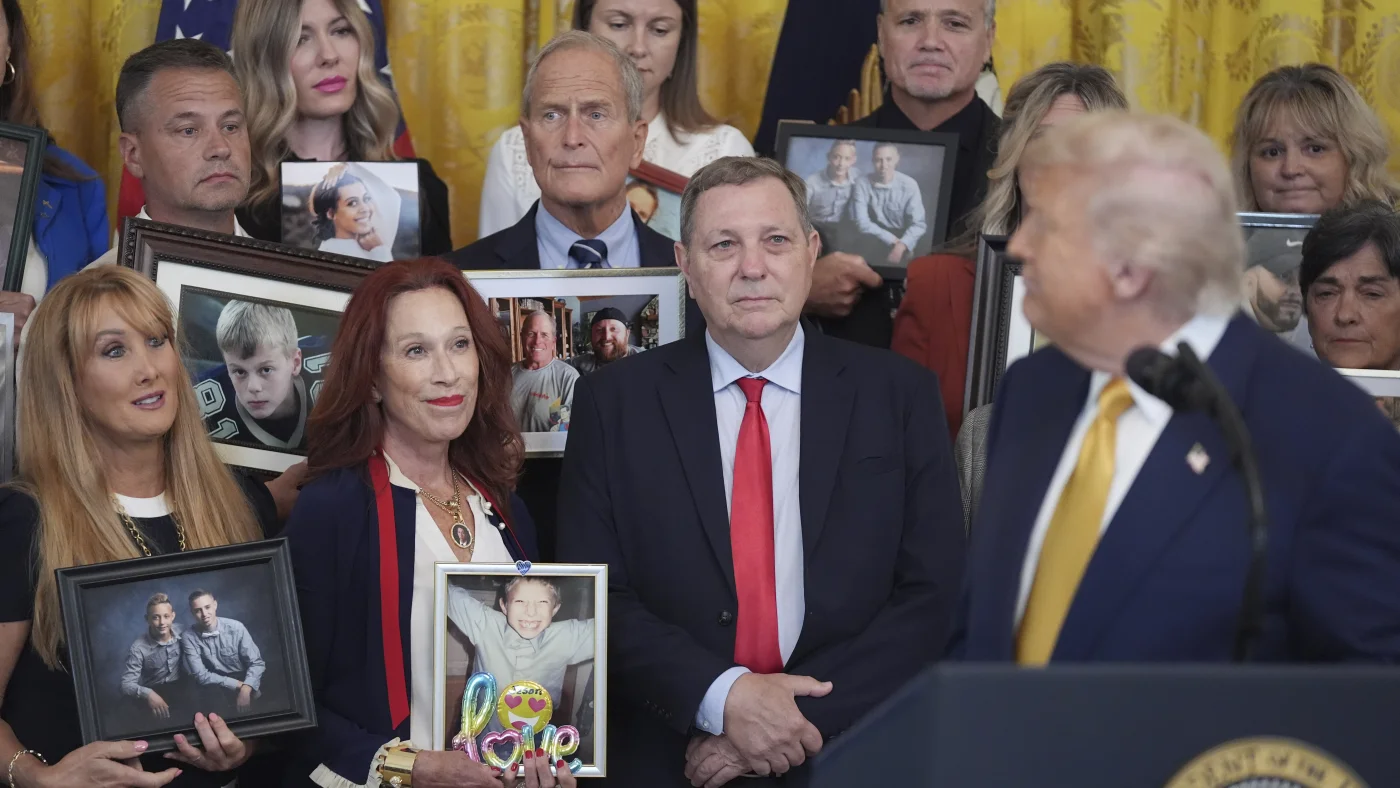
The White House recently announced that U.S. drug overdose deaths have fallen to their lowest level in approximately a decade, a decline representing nearly 50,000 lives saved annually. Sara Carter, director of the White House Office of National Drug Control Policy (ONDCP), attributed the improvement to policies enacted under President Donald Trump, specifically citing heightened border security and operations against drug-trafficking organizations. However, data from the Centers for Disease Control and Prevention (CDC) and drug policy researchers indicate that the downward trend in fatalities began during the administration of President Joe Biden.
CDC data shows that reductions in drug deaths began in 2023 and have continued for at least 39 consecutive months. According to the data, fatal overdoses had already decreased by roughly one-third by the time Biden left office, with the highest rate of decline occurring between early 2024 and spring 2025. ONDCP Director Carter disputed this timeline, saying the Biden administration should not receive credit for bringing numbers down from a peak that occurred during its own tenure. Carter stated that the current administration is positioned to sustain these gains through continued border security and operations to dismantle cartels.
Addiction experts, including Nabarun Dasgupta of the University of North Carolina at Chapel Hill and Vanda Felbab-Brown of the Brookings Institution, credited the initial decline to Biden-era policies. These included expanded healthcare access, increased availability of the overdose-reversal drug naloxone, and a 2023 agreement with China to disrupt the flow of chemicals used to manufacture fentanyl. While Carter claimed success in dismantling "narco-terrorist" groups, Felbab-Brown noted that she could not think of one such organization that has been dismantled, stating they remain strong despite ongoing U.S. military strikes against suspected smuggling vessels.
This trend directly affects millions of Americans living with substance use disorders and their families, as the current decline saves an estimated 50,000 lives per year. The scale of the shift is significant; according to the ONDCP, total drug overdose deaths have dropped by approximately 41.5% from their peak. For households impacted by the opioid crisis, these statistics translate to a broad reduction in fatal outcomes across various demographic groups and regions, a trend that researchers say began as early as 2021 in some areas.
The long-term sustainability of these improvements may depend on federal healthcare policy. Medicaid is currently the largest source of funding for addiction services in the United States. Nabarun Dasgupta noted that if deep cuts to Medicaid passed by the Republican Congress are implemented, the Congressional Budget Office (CBO) estimates that as many as 10 million people could lose health insurance coverage. Such a change would impact how individuals access addiction treatment and medications like naloxone.
The policy debate centers on whether to prioritize interdiction and border security or public health interventions. While the Trump administration emphasizes the elimination of trafficking organizations through coordinated operations, researchers point to the effects of healthcare availability and international chemical regulations. The next phase of this effort will be influenced by how Medicaid eligibility changes and whether military actions against smuggling vessels effectively disrupt the supply of fentanyl, which remains the leading cause of drug deaths nationwide.