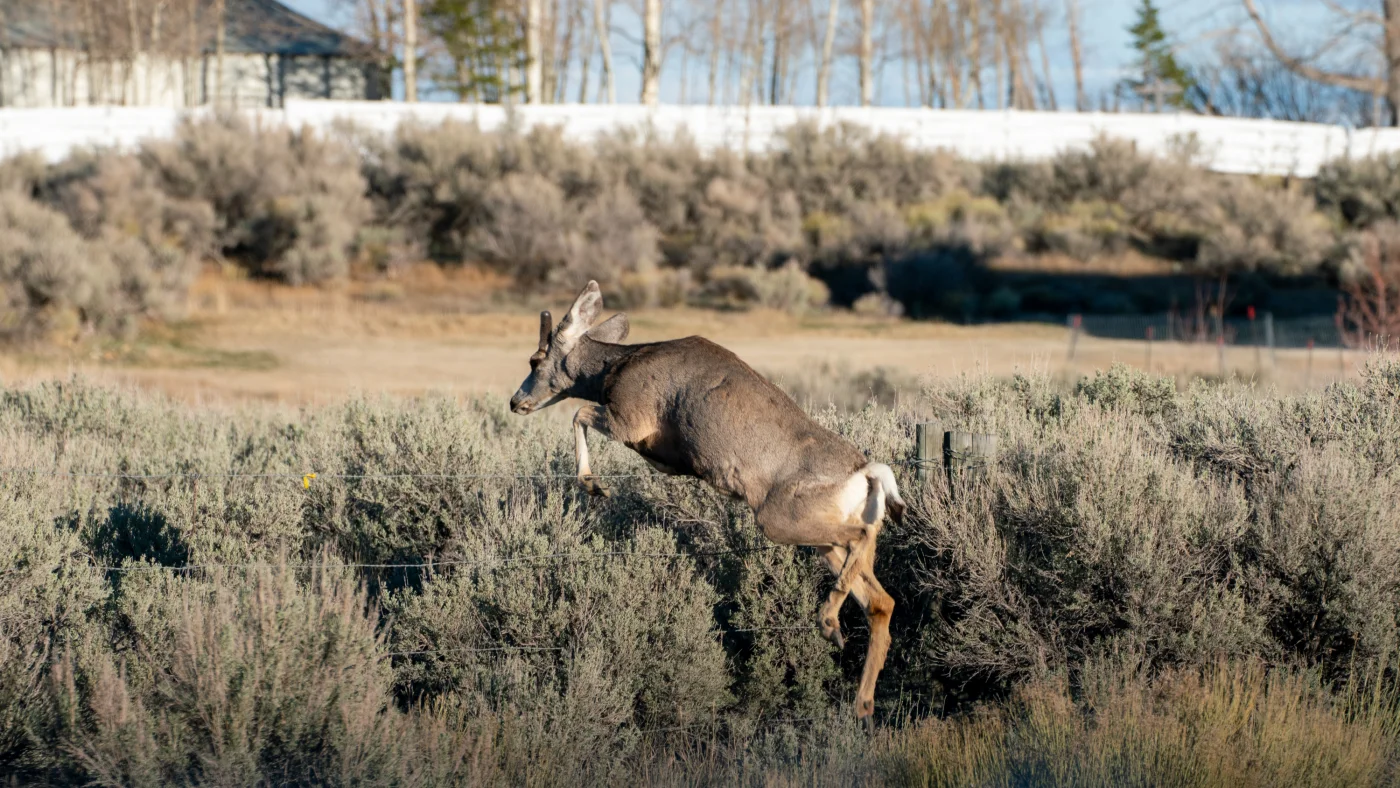
Mule deer in the Greater Yellowstone Ecosystem of western Wyoming are facing population declines as their long-distance migration routes intersect with increasing human development and changing climate patterns. Researchers from the U.S. Geological Survey and the University of Wyoming are tracking approximately 100 deer using GPS collars to map these journeys, which can span up to 240 miles one way. The data shows that while deer can adapt their timing to follow seasonal food sources, physical obstacles like roads, fences, and subdivisions are restricting their ability to navigate successfully.
The state's mule deer population has decreased by 50% since 1990, falling from over 500,000 to approximately 250,000. During their migrations between summer mountain grounds and winter desert ranges, deer follow a "green wave" of protein-rich spring plants. However, researchers observed that when deer encounter infrastructure, such as gas fields or housing developments in Pinedale, they often hesitate, causing them to miss the peak nutritional window of the emerging vegetation.
To mitigate these losses, Wyoming has designated four protected migratory corridors, including three for mule deer and one for pronghorn antelope. These designations restrict development in narrow "bottleneck" areas while requiring consultation with wildlife officials for projects in wider sections of the route. Additionally, private landowners and the Wyoming Game and Fish Department have converted more than 900 miles of fencing to "wildlife-friendly" designs, which utilize smooth bottom wires and specific spacing to prevent entanglement.
For humans in the region, the impact is felt through land-use restrictions and financial costs. Ranchers like Maggie Miller reported that wildlife-friendly fencing costs approximately $25,000 per mile, though state and federal programs exist to offset these expenses for those who volunteer to participate. Residents and developers in towns like Pinedale face new limitations, as the state government now prohibits development in specific "bottleneck" zones where thousands of deer must pass through narrow strips of land between existing buildings.
The legal and political precedent for these protections remains a point of contention between different interests. While the state focuses on voluntary agreements and corridor designations, conservation groups have sued the federal government to block oil and gas lease sales located near these pathways. The next steps for these populations depend on the speed of conservation efforts; researchers like Arthur Middleton of UC Berkeley state that current work is being outpaced by the rate of new fences, traffic, and housing. Future outcomes will be determined by whether the state and federal government provide enough resources to scale up these land protections before migration routes are further severed.