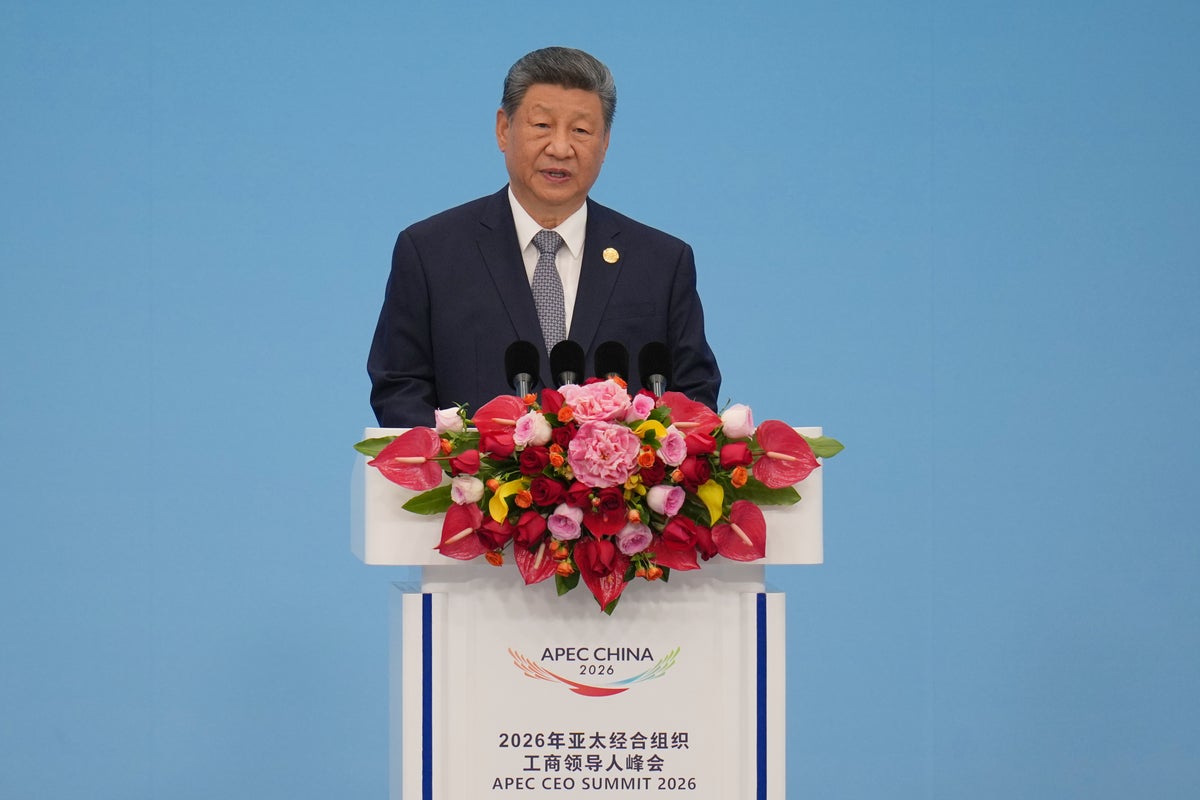
Chinese President Xi Jinping and other Asian leaders called for more open trade and equitable growth during the annual Asia-Pacific Economic Cooperation (APEC) summit on Wednesday, November 18, 2026. Speaking to business executives in the Chinese technology hub of Shenzhen, Xi emphasized that regional stability depends on maintaining dynamic economic cooperation. The comments come as U.S. President Donald Trump traveled to the summit from the Philippines, where his "America First" policy of tariff increases has contrasted with APEC's goal of establishing a Pacific Rim free trade zone.
The summit occurred amid ongoing trade tensions between the United States and China, particularly regarding U.S. restrictions on Chinese access to advanced American technology, such as AI-capable Nvidia computer chips. While Xi did not name the U.S. directly, he pledged that China would cut tariffs and reform domestic regulations and standards to improve conditions for global investors. Additionally, Canadian Prime Minister Mark Carney met with Xi on Tuesday, November 17, to agree on reciprocal tariff reductions, a move attributed to strained trade relations between Canada and the Trump administration.
Other leaders at the CEO summit echoed calls for trade independence. Malaysian Prime Minister Anwar Ibrahim stated that larger economies should not impose their "peculiar circumstances" on smaller nations, arguing that fair growth benefits all. Russian President Vladimir Putin also attended, marking his first in-person appearance at an APEC leaders' meeting since 2017. Putin criticized international sanctions and export restrictions—imposed following the 2022 invasion of Ukraine—stating they have lost their "intimidating effect" and announced that Russia has bid to chair APEC in 2035.
The scale of these discussions involves trillions of dollars in international trade, which ultimately filters down to the prices households pay for electronics, automobiles, and manufactured goods. For example, the current U.S. limits on Nvidia chips affect the development of artificial intelligence services that many citizens use daily. Shifts in these policies could change the competitive landscape for tech workers and small-business owners who rely on global supply chains. The agreement between Canada and China to lower tariffs serves as an immediate example of how realignments can change the tax burden on specific imported products, potentially altering the costs for Canadian consumers and Chinese exporters.
Next, the APEC leaders are scheduled to meet behind closed doors on Thursday, November 19, 2026. This will include a trilateral meeting between President Trump, President Putin, and President Xi, marking the first such summit between the leaders of these three global powers. While APEC decisions are not legally binding, the consensus reached during these meetings typically sets the tone for future bilateral trade agreements and international economic policy. Observers will be watching to see if the friendly relations emphasized by Trump lead to an extension of the trade truce reached last year or if new tariff escalations will be introduced.
Not reported: The specific items included in the Canada-China tariff reduction agreement and the exact time of the trilateral summit on Thursday were not reported.