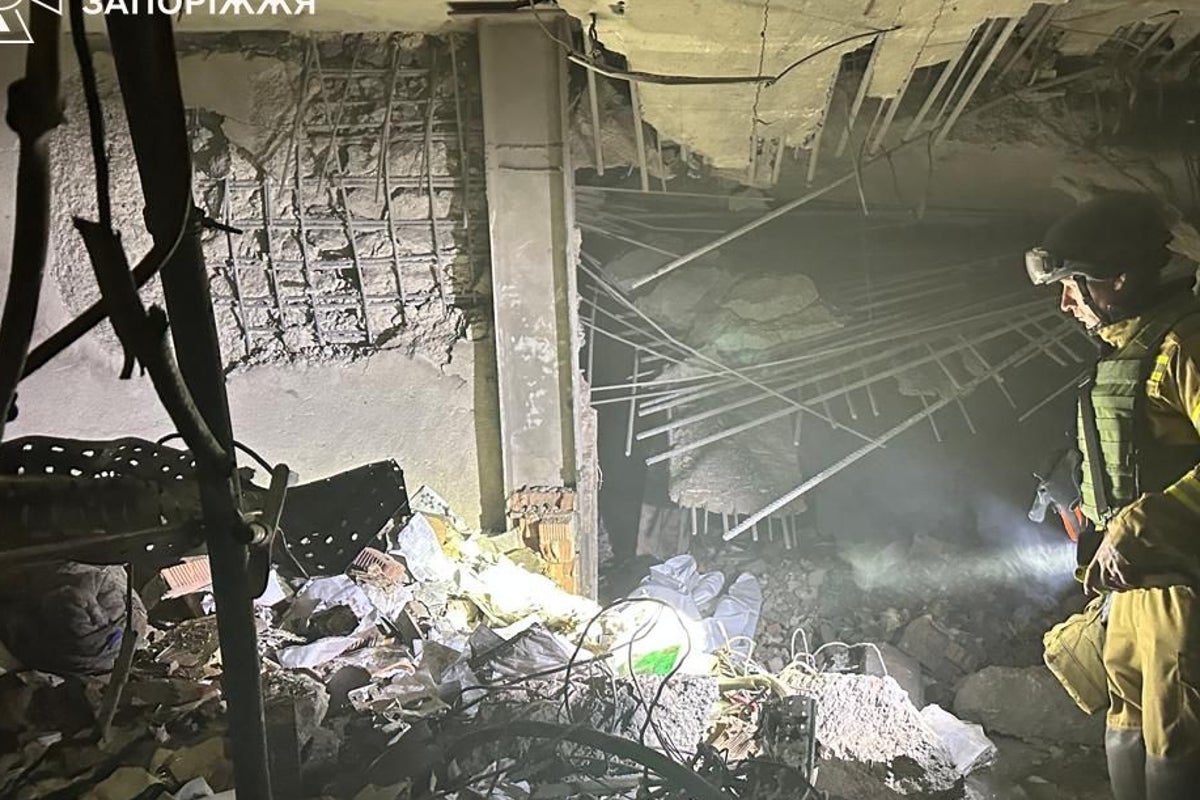
Ukrainian President Volodymyr Zelensky reported on Wednesday, November 4, 2026, that the death toll from a Russian bombing of an aid distribution center has risen to at least 40 people. The attack occurred on Monday, November 2, at a school in the settlement of Komyshuvakha, located in the southeastern Zaporizhzhia region. Zelensky stated that rescue operations were ongoing for a third day as more than 30 people were believed to be trapped under the rubble.
According to Ukrainian officials, Russia dropped nine aerial glide bombs on the facility, some weighing up to three tonnes. The strikes occurred in two stages: an initial hit on civilians receiving humanitarian aid, followed by a second strike targeting first responders and police who arrived at the scene. Russia’s Defense Ministry stated the strike targeted the Ukrainian military and claimed up to 25 Ukrainian service members were killed, while maintaining that it does not deliberately target civilians.
In a separate development, Zelensky awarded U.S. First Lady Melania Trump the Order of Princess Olga, First Class. The honor recognizes her role in brokering a partial ceasefire last week in the town of Oleshky, which allowed for civilian evacuations. Representatives from both Ukraine and Russia are scheduled to meet with the First Lady at the White House on Friday, November 6, though the Kremlin noted that visa complications could affect the travel of Russian envoys Kirill Dmitriev and Yana Lantratova.
Meanwhile, Russian authorities reported drone attacks on industrial facilities in Ryazan. Regional governor Pavel Malkov stated that falling debris caused fires at facilities in Ryazan, injuring one person and causing power disruptions. Social media footage appeared to show explosions near the Ryazan oil refinery, which has an annual capacity of 17 million tonnes. In southern Russia, the retail giant Ozon suspended some orders after a drone strike triggered a fire at one of its warehouses.
Residents of Kyiv are also facing changes to their daily lives following an attack on energy infrastructure on Tuesday, November 3. The strikes targeted facilities in 10 regions, causing a severe water outage in the capital. Residents in the city center lost running water for more than 16 hours, forcing some businesses to close facilities. While Kyivvodokanal, the city's water utility, reported that pumping stations resumed operations by Wednesday afternoon, experts warned that such disruptions may worsen during the winter months.
The scheduled meeting at the White House on Friday, November 6, involves mediation by the U.S. First Lady. The outcome will determine if the partial ceasefire model used in Oleshky can be expanded. However, Ukrainian officials have already expressed concerns that Russian forces used the Oleshky pause to strengthen military positions. The next steps include the arrival of Ukrainian and Russian delegations in Washington, provided visa issues are resolved, and the ongoing assessment of energy grid stability in Kyiv. Additionally, European troops are scheduled to begin a military exercise in Poland this month to prepare for a potential postwar mission in Ukraine.