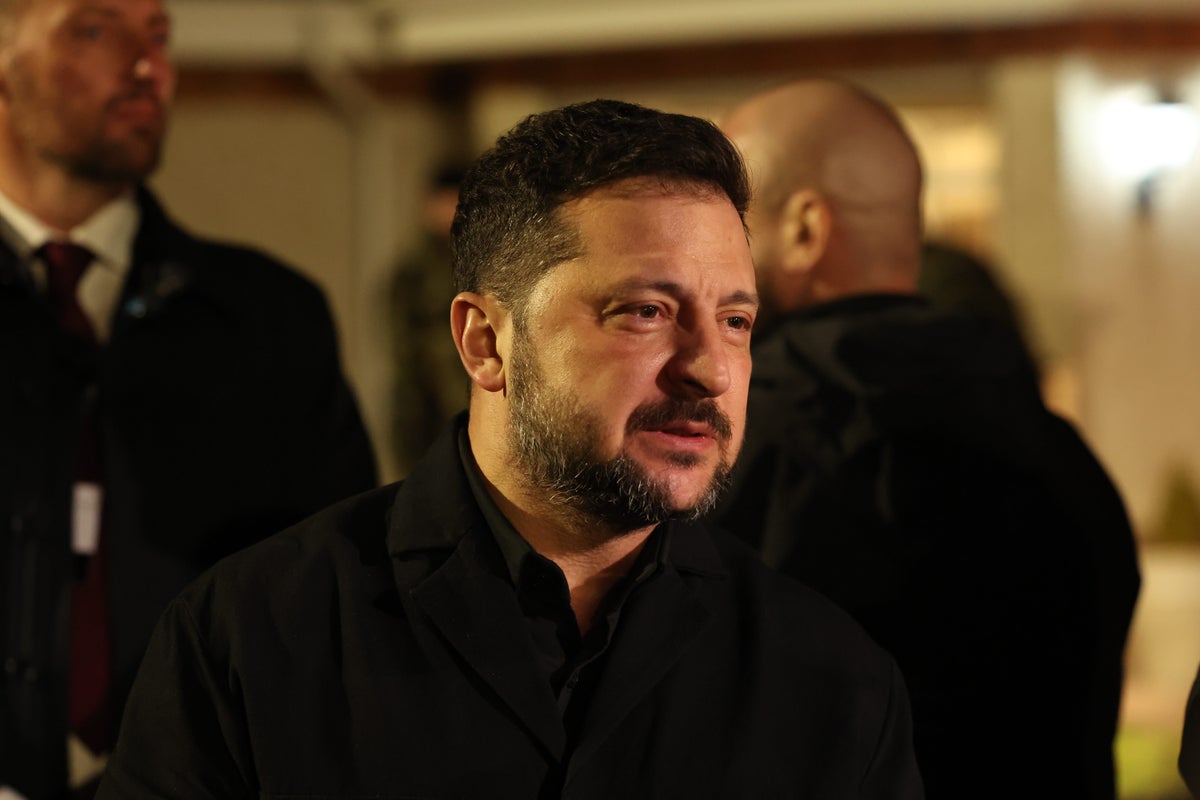
Ukrainian President Volodymyr Zelensky stated on Friday, November 13, 2026, that the United States has introduced a proposal for a new European security framework during talks to end the conflict with Russia. Speaking to reporters in remarks released Saturday, November 14, Zelensky cautioned that such a framework could be used by Moscow to weaken NATO and revise continental borders. He characterized the proposal as dangerous, arguing that the focus of negotiations should remain on ending the four-and-a-half-year war rather than broader continental security debates.
During these discussions, Zelensky reported that U.S. officials asked for the first time if Ukraine would consider withdrawing from the portions of the Donbas region it currently controls in exchange for NATO membership. Zelensky reiterated that Kyiv will not surrender its territory or recognize occupied lands as Russian. He stated that if the U.S. and NATO partners formally propose such a package—including security guarantees, military and financial support, and a recovery plan—he would put the decision to the Ukrainian public.
Negotiations recently held in Abu Dhabi and Moscow have produced mixed results, according to Zelensky. He reported that U.S. and Russian negotiators in Moscow agreed in principle to a prisoner exchange involving between 1,200 and 1,300 people on each side. However, he noted that Russian representatives at the Abu Dhabi talks lacked the authority to agree to an energy ceasefire, stating that Moscow appeared unwilling to accept such terms. The Ukrainian leader emphasized that any final ceasefire questions must be resolved directly with Russian President Vladimir Putin.
Zelensky also addressed technical challenges on the battlefield, accusing SpaceX of restricting the speed of its Starshield satellite system to 161 kph (100 mph) in Russian-occupied areas. He stated these limitations have been in place for five days, hindering the interception of jet-powered Shahed drones. Zelensky questioned whether these restrictions were technical in nature, noting they appeared to conflict with previous assurances from U.S. Secretary of State Marco Rubio that the system was under government control.
The concrete day-to-day impact for Ukrainian military operations is already being felt through the Starshield restrictions. By limiting satellite speeds to 100 mph, SpaceX has affected how Ukrainian forces track and destroy incoming drones over occupied territory. Zelensky stated that soldiers must now wait for drones to reach specific areas before they can be intercepted, potentially changing the level of aerial risk for cities and infrastructure in those zones. This development highlights the influence private corporations and their technical specifications have on active combat operations and national defense strategies.
The diplomatic precedent set by these talks involves the participation of European nations—including Britain, France, Germany, and Italy—in negotiations. Zelensky argued that no security guarantees can exist for Europe without Ukraine's involvement. The next steps involve further discussions between U.S. and Russian officials to finalize the prisoner exchange numbers and continued pressure from Kyiv for an energy ceasefire. No specific dates for the next round of high-level meetings or a potential public referendum were provided in the report.