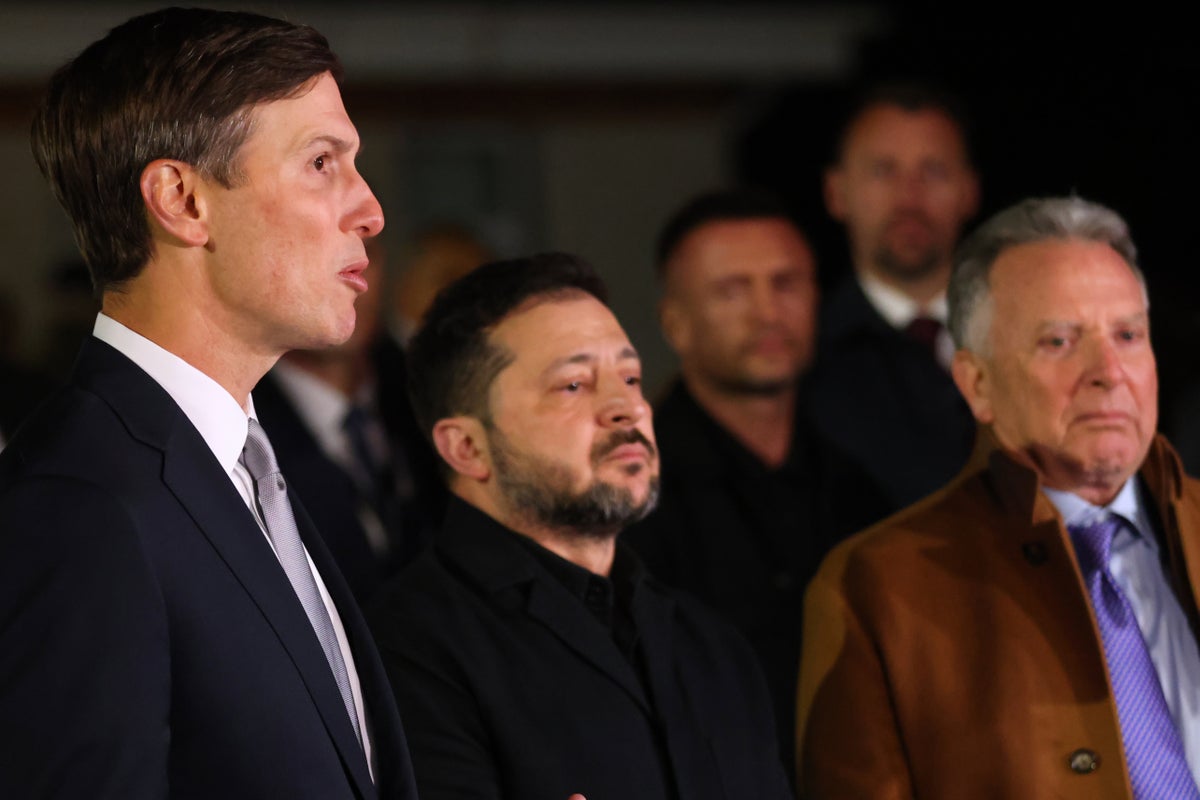
Ukrainian President Volodymyr Zelenskyy reported on Friday, November 13, 2026, that the United States has introduced the concept of a new postwar security framework for Europe as part of negotiations to end the 4 1/2-year war with Russia. In remarks released Saturday, Zelenskyy stated that the U.S. also inquired whether Ukraine would withdraw from parts of the Donbas region not currently controlled by Russia in exchange for membership in NATO. The Ukrainian president said he rejected surrendering territory and noted that he would only put a comprehensive package to a public vote if it were confirmed by the U.S. and NATO partners.
The proposed security framework comes amid ongoing negotiations in Abu Dhabi involving representatives from Britain, France, Germany, and Italy. Zelenskyy expressed concern that broader discussions on European security could allow Russian President Vladimir Putin to advocate for the withdrawal of American troops from the Baltic countries or challenge the NATO status of Finland and Sweden. He argued that the sequence of events must begin with a ceasefire and security guarantees for Ukraine before any continental security order is redefined.
Negotiations have yielded a tentative agreement for a prisoner exchange involving between 1,200 and 1,300 people from each side. However, Zelenskyy reported that Russian negotiators in Abu Dhabi claimed they lacked the mandate to agree to an energy ceasefire, suggesting such matters must be resolved directly with Putin. Ukraine is currently seeking a security package that includes EU and NATO guarantees, financial support, and a recovery plan, while maintaining that it will not enshrine neutrality in its constitution.
Zelenskyy also reported technical difficulties involving the Starshield satellite system operated by SpaceX. He stated that for five days, the system's speed in Russian-occupied Ukrainian territory has been restricted. According to Zelenskyy, these restrictions prevent Ukrainian forces from intercepting jet-powered drones over occupied areas, forcing them to wait until the drones reach territory where the system functions at full capacity. He questioned whether these were technical issues or deliberate restrictions imposed by SpaceX.
On a practical level, the outcome of these security talks will dictate the scale of financial and military support provided to Kyiv, as well as the implementation of a national recovery plan. Zelenskyy indicated that any final decision involving territorial or constitutional changes would be put to the Ukrainian public, meaning citizens would see a direct impact on their voting rights regarding the nation’s future. Furthermore, the agreed-upon prisoner exchange would affect roughly 2,500 families across both Ukraine and Russia who have relatives currently in detention.
The knock-on effects extend to the internal policies of NATO and the European Union, as the U.S.-led proposal suggests a willingness to discuss the continent's security architecture with Moscow. This sets a precedent for how non-member states might be integrated into Western security structures. What happens next depends on the U.S. and NATO partners formally confirming the details of the security package. Negotiators are also expected to continue work on the specific numbers for the prisoner exchange and address the technical restrictions currently hampering drone interceptions.